AQA A Level Physics复习笔记2.5.3 Wave-Particle Duality
Wave-Particle Duality Light can behave as a particle (i.e. photons) and a wave This phenomenon is called the wave-particle nature of light or wave-particle duality Light interacts with matte...
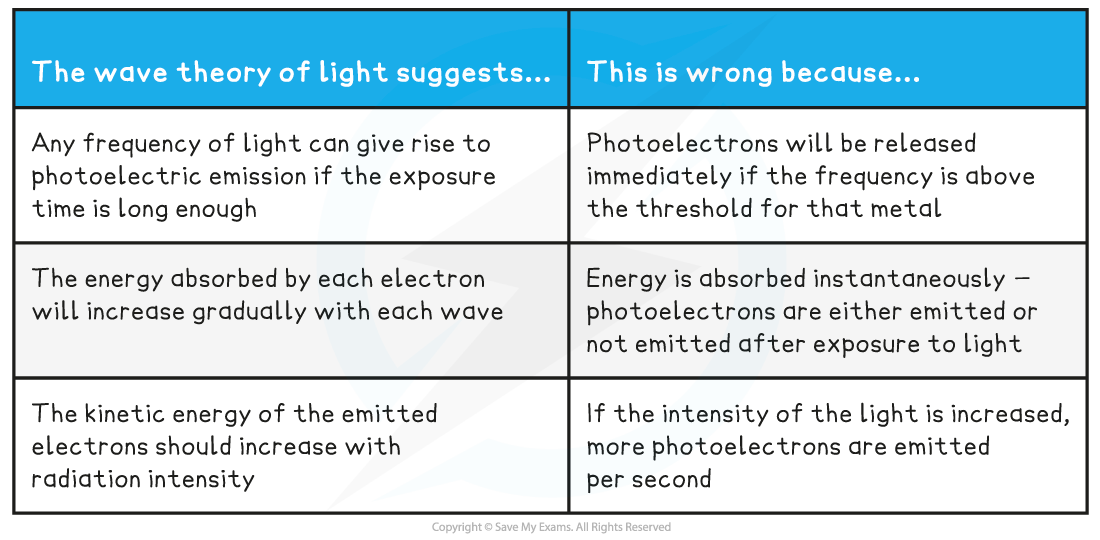
Wave-Particle Duality Light can behave as a particle (i.e. photons) and a wave This phenomenon is called the wave-particle nature of light or wave-particle duality Light interacts with matte...
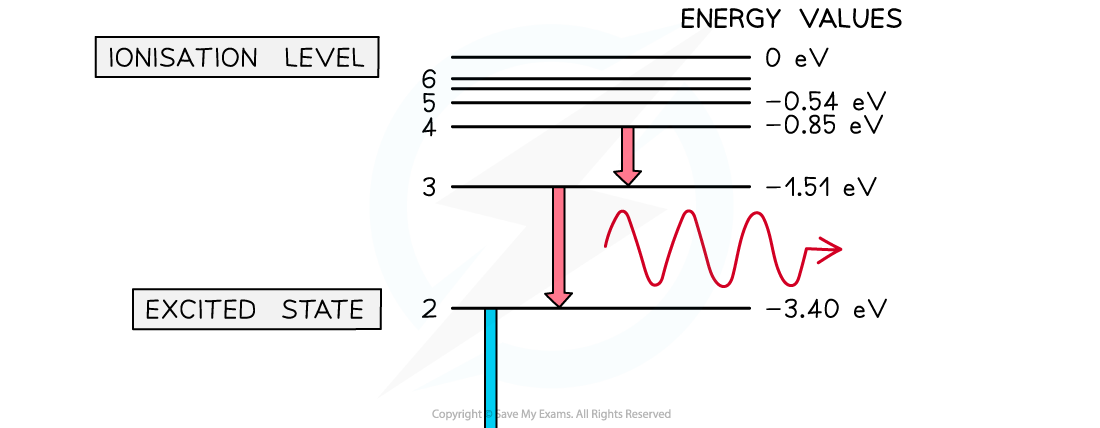
Line Spectra & Energy Levels Atomic Energy Levels Electrons in an atom can have only certain specific energies These energies are called electron energy levels They can be represe...
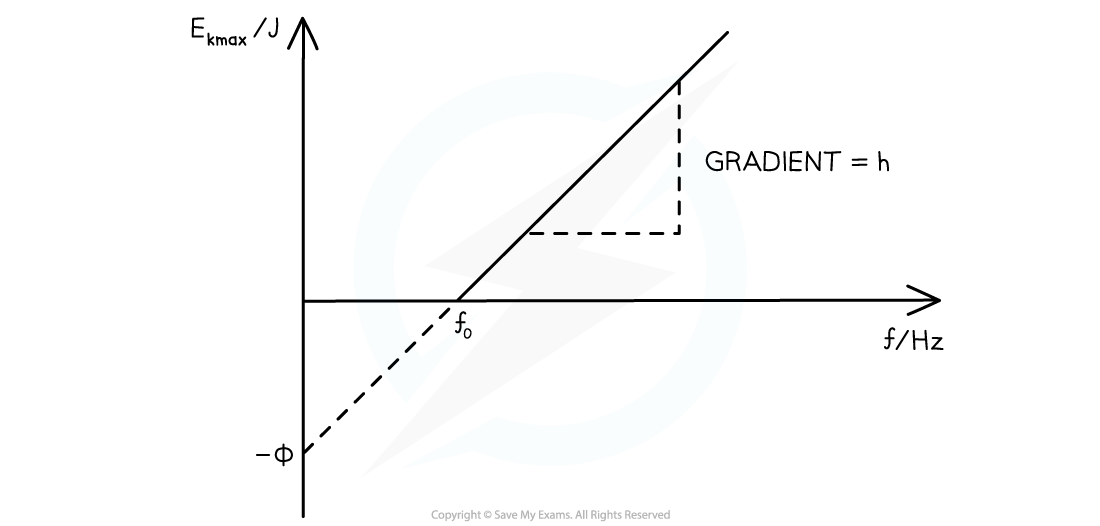
The Photoelectric Equation Since energy is always conserved, the energy of an incident photon is equal to: The work function + the maximum kinetic energy of the photoelectron The energy with...
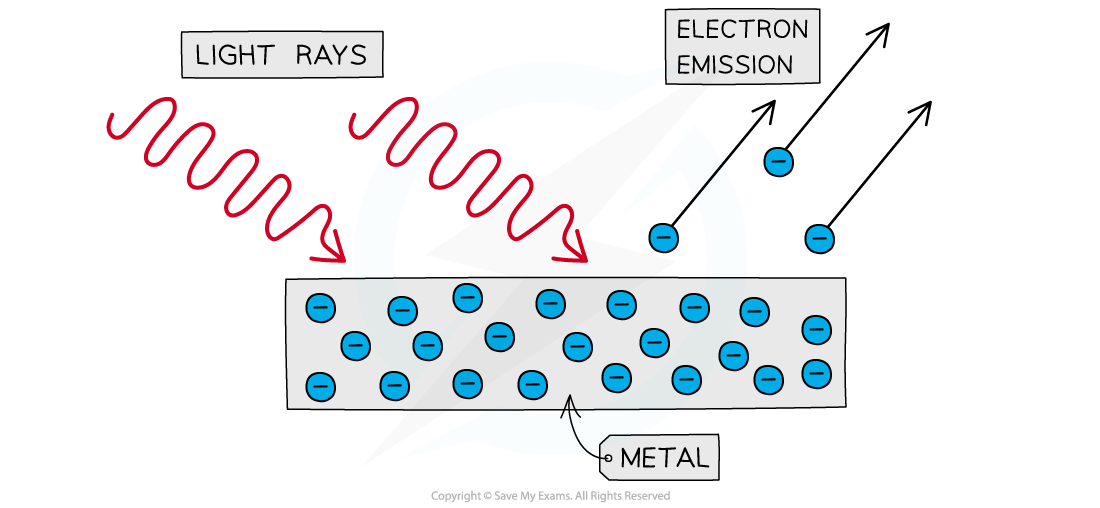
Threshold Frequency The photoelectric effect is the phenomena in which electrons are emitted from the surface of a metal upon the absorption of electromagnetic radiation Electrons removed fr...
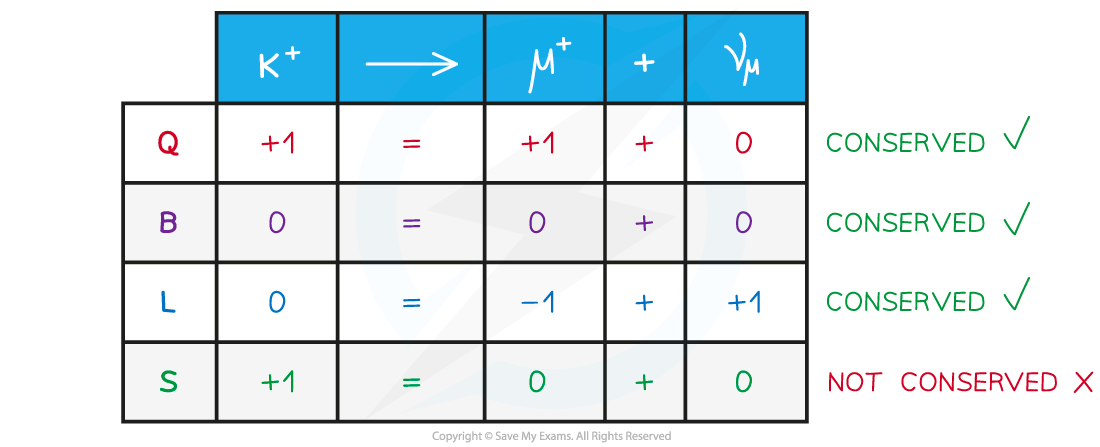
Application of Conservation Laws All particle interactions must obey a set of conservation laws. These are conservation of: Charge, Q Baryon number, B Lepton Number, L Strangeness, S Energy ...
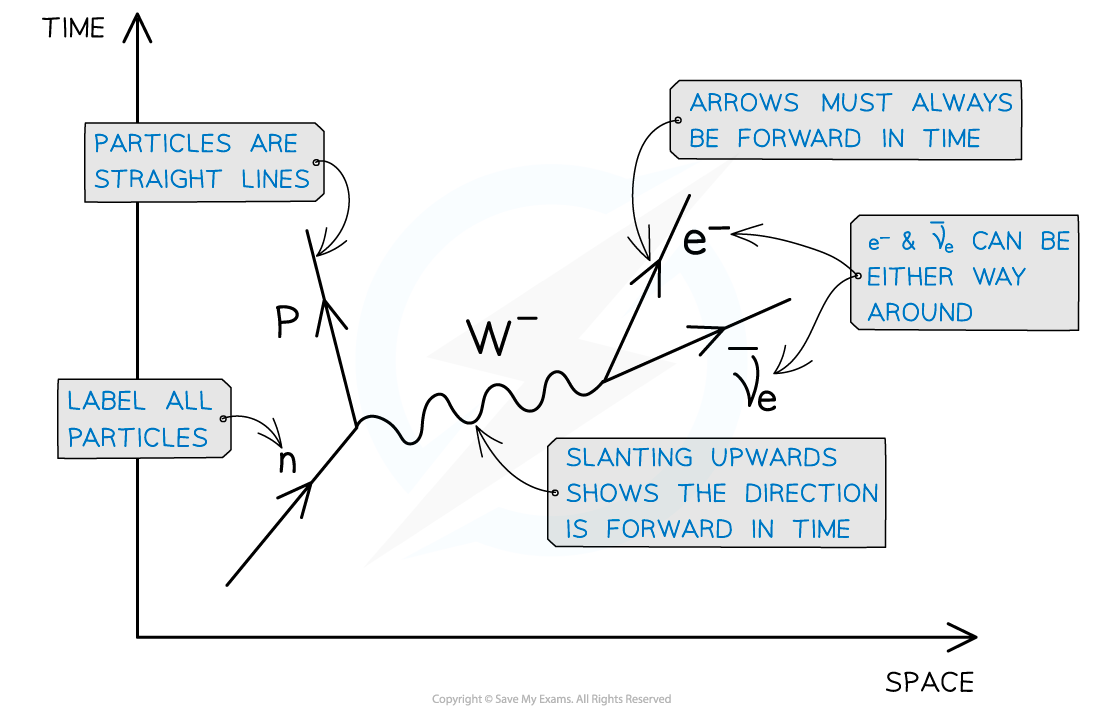
Feynman Diagrams Feynman diagrams are a clear way of representing particle interactions in terms of their incoming and outgoing particles and exchange particles Although there are many varia...

The Weak Interaction The weak interaction is responsible for the radioactive decay of atoms The exchange particle that carries this force is the W–, W+ or Z0 boson The type of exchange parti...
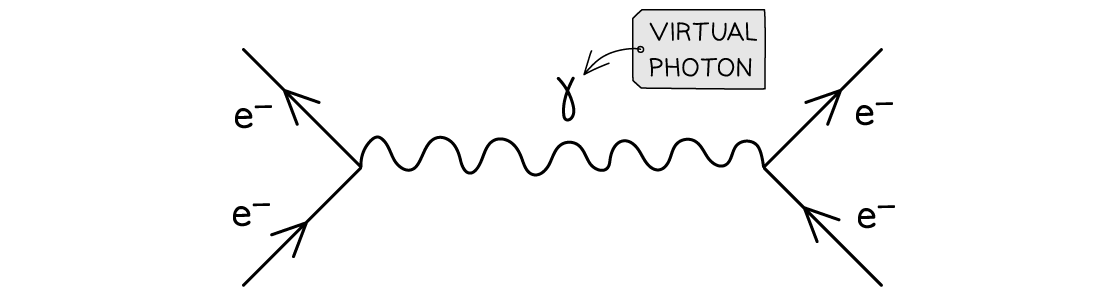
The Electromagnetic Force The electromagnetic force is only between charged particles The exchange particle that carries this force is the virtual photon, γ Properties of the photon are: It ...
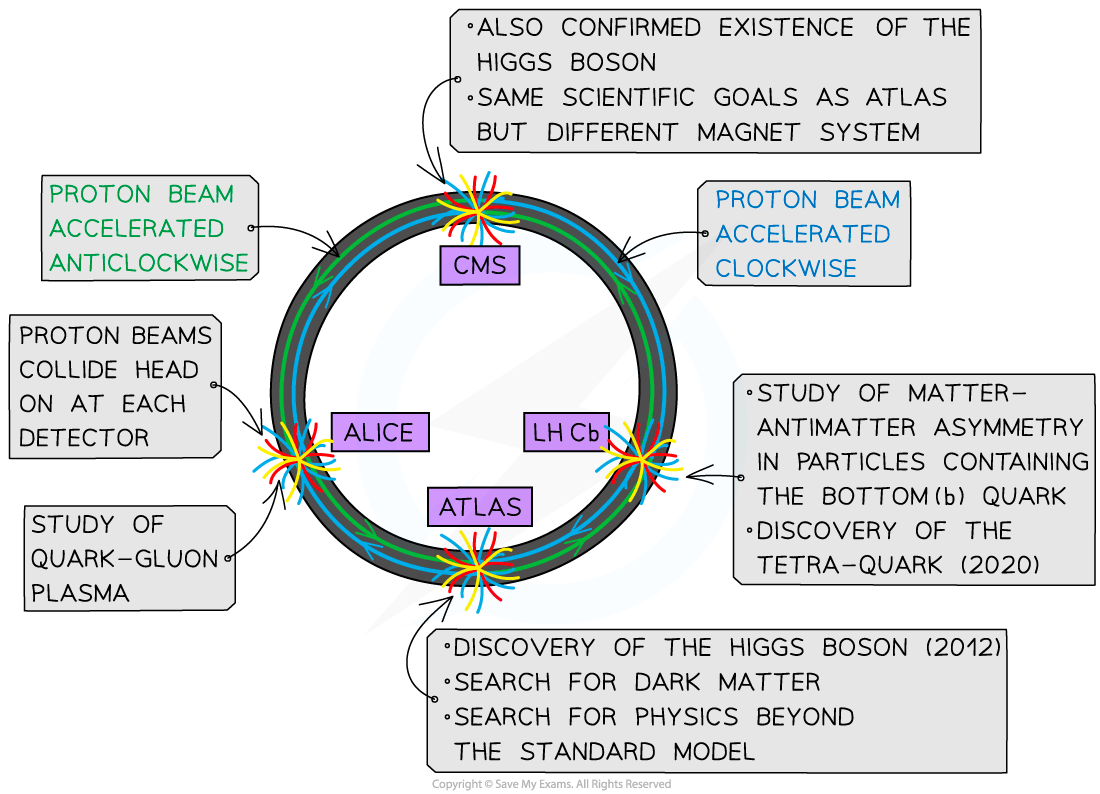
Collaborative Efforts in Particle Physics The field of particle physics is constantly changing and as time goes on, our knowledge and understanding of the nature of particles changes too Par...





