IB DP Physics: HL复习笔记9.4.1 The Rayleigh Criterion

Diffracting Aperture
- A circular aperture allows a cone of light to enter a region behind the aperture
- Examples of circular aperture include:
- A lens within an optical device such as a camera
- The pupil of an eye
- A circular aperture allows light to act like a point source once passing through
- Placing two point sources near each other or viewing those sources too far away, will make them appear to be a single unresolved source of light
- Consider car headlights which are distant on a highway:
- Initially, when the car is far away, the headlights appear as one point source
- It is not until the car comes closer that the two individual headlights can be resolved individually
- Light from any object passing through a circular aperture, including the human eye, will diffract and create a diffraction pattern upon the detector inside
- In the case of the human eye, for example, the detector is the retina
- Each of these diffraction patterns need space on the detector to be resolved
- If they are too close, then they will appear as one single source
- Resolution is defined as:
The capability of an imaging system to be able to tell if two sources are independent and produce individual images of those two sources
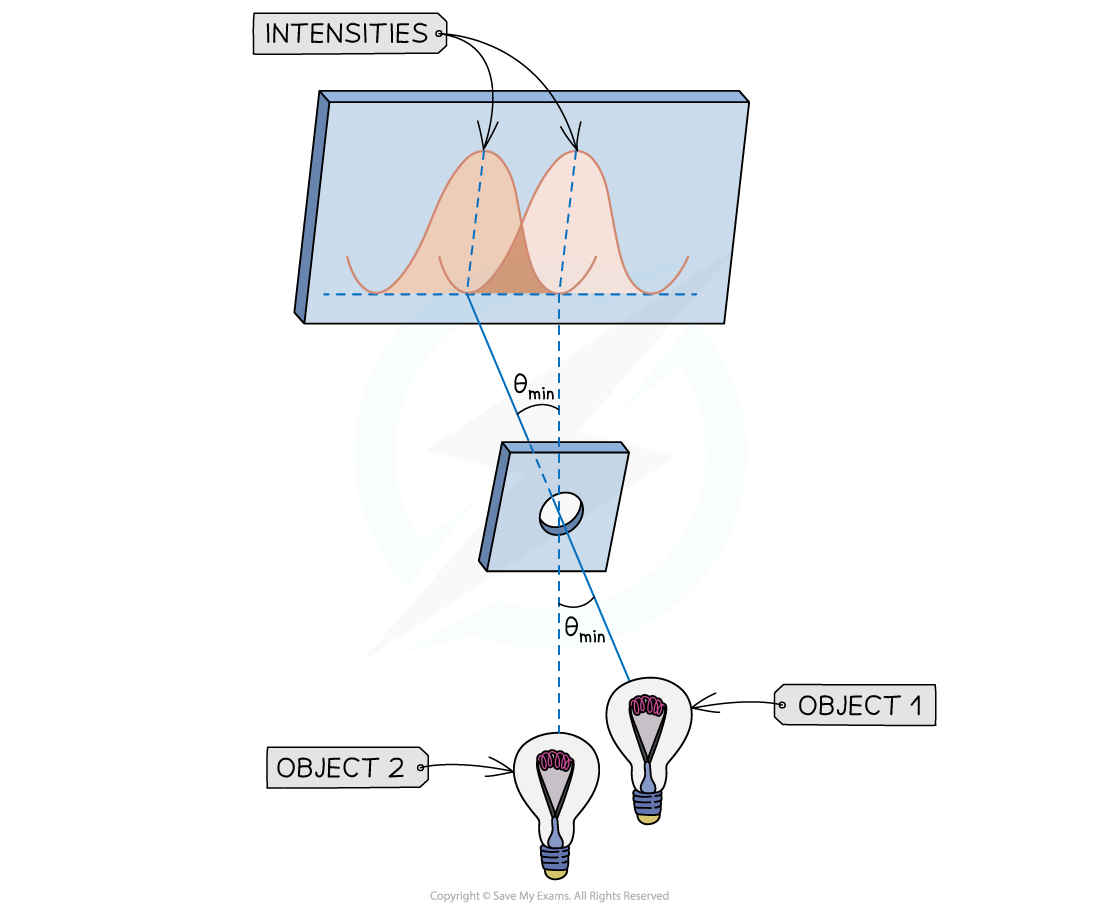
Two light sources outside a circular aperture produce diffraction patterns that have a minimum angle of resolution determined by the Rayleigh criterion
The Rayleigh Criterion
- The Rayleigh Criterion describes the limit of resolution of a system to separate two sources
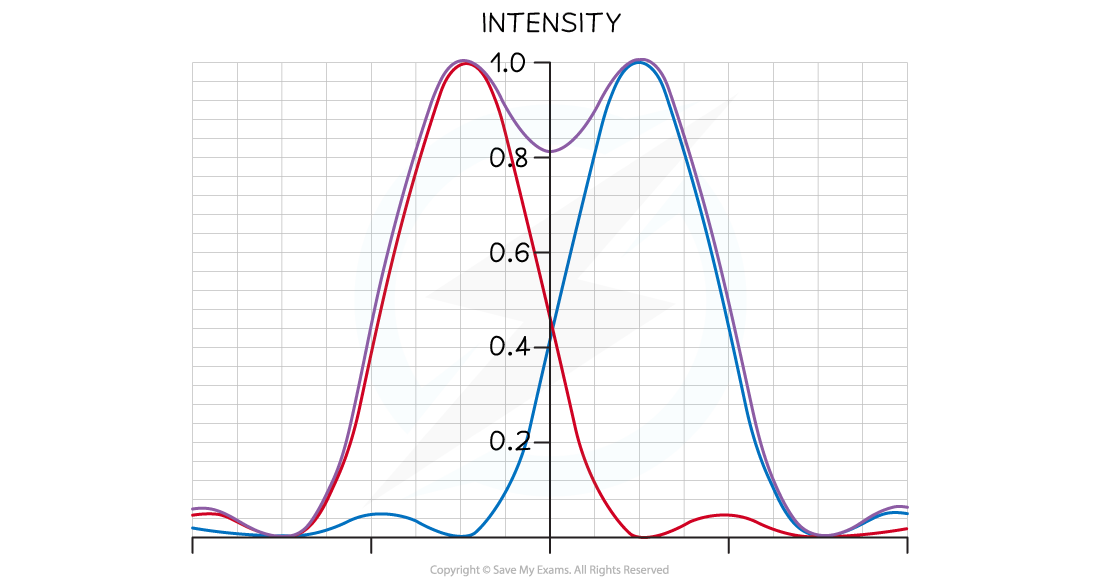
Two sources that only just be resolved. The red is a single source, the blue is the other source and the purple line represents their combined intensity
- The Rayleigh Criterion states that:
Two sources are able to be just resolved if the principal maximum from one diffraction pattern is aligned with the first minimum of the other diffraction pattern
- Two sources that can be fully resolved:
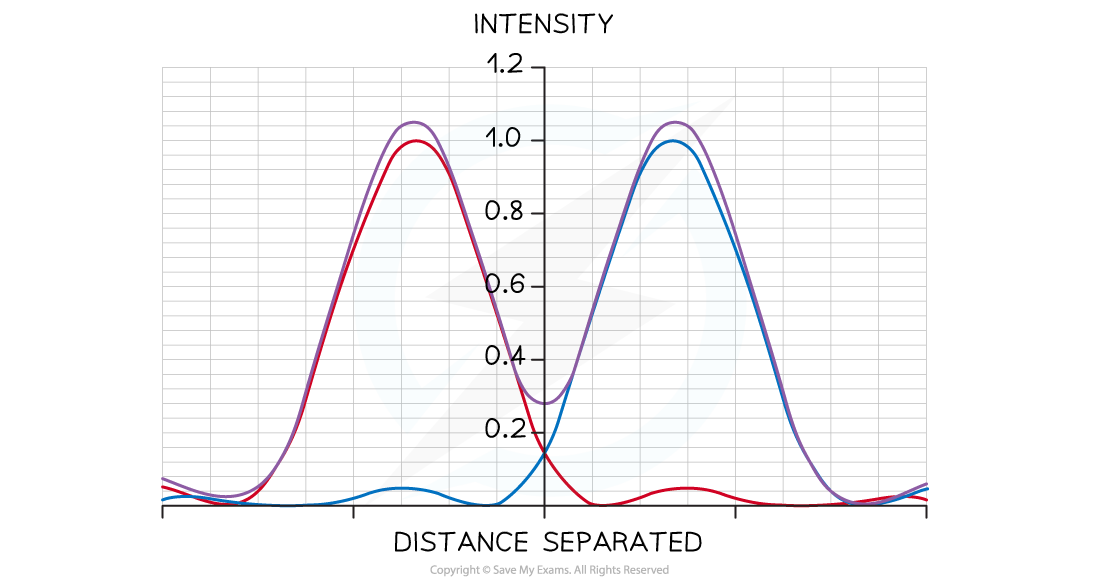
Two sources that can be fully resolved. The red is a single source, the blue is the second source and the purple line represents their combined intensity
- Visually, two sources that could clearly be resolved would look like the above
- Two sources that cannot be resolved:
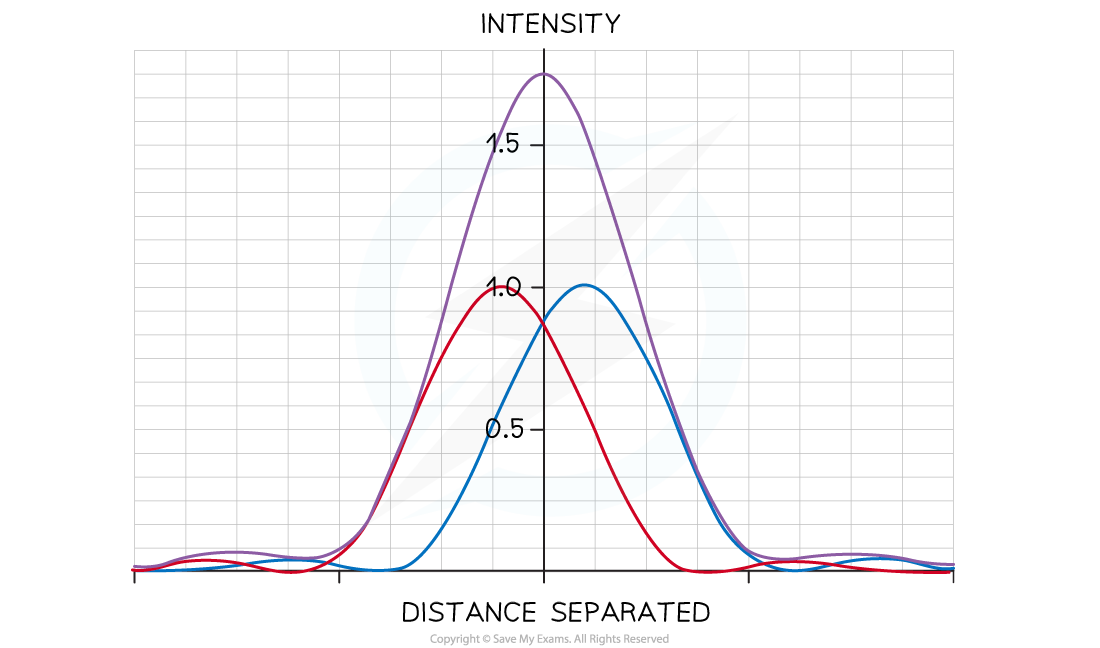
Two sources that cannot be resolved. The red is a single source, the blue is the second source and the purple line represents their combined intensity
- Visually, two sources that could not be resolved:
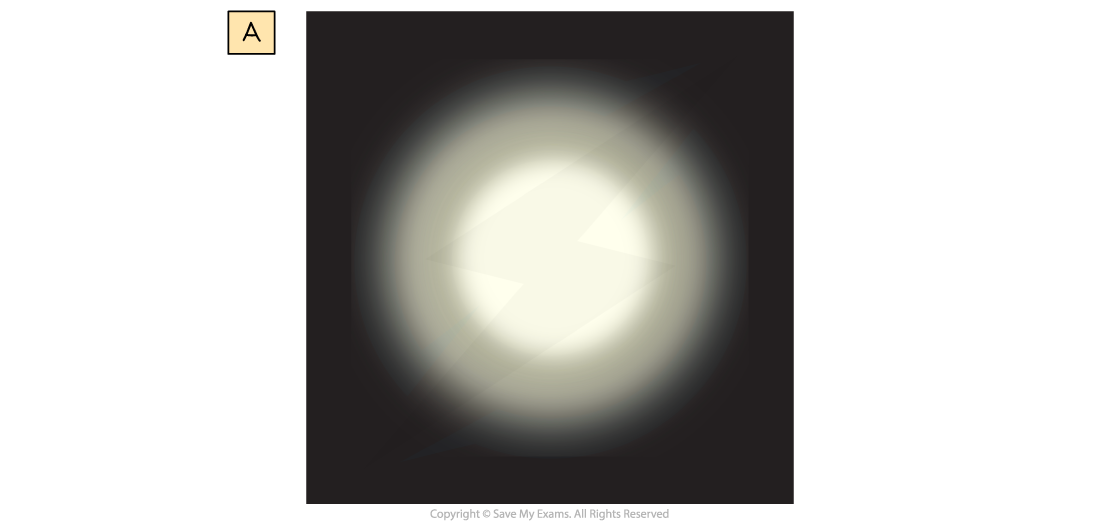
Visually, two sources that could not be resolved
- Visually, two sources that are only just resolved:
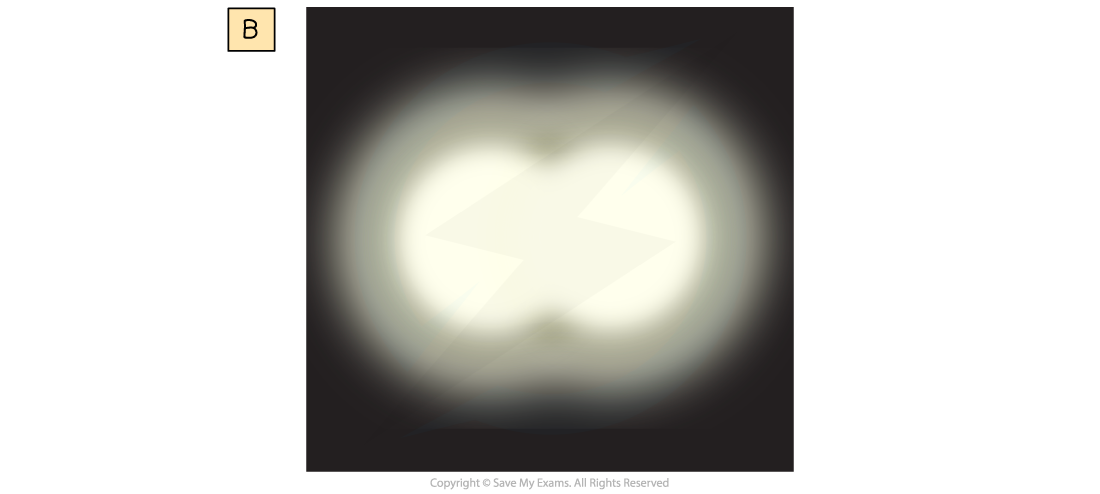
Visually, two sources that could only just be resolved
- This final example is the limiting case of the Rayleigh criterion
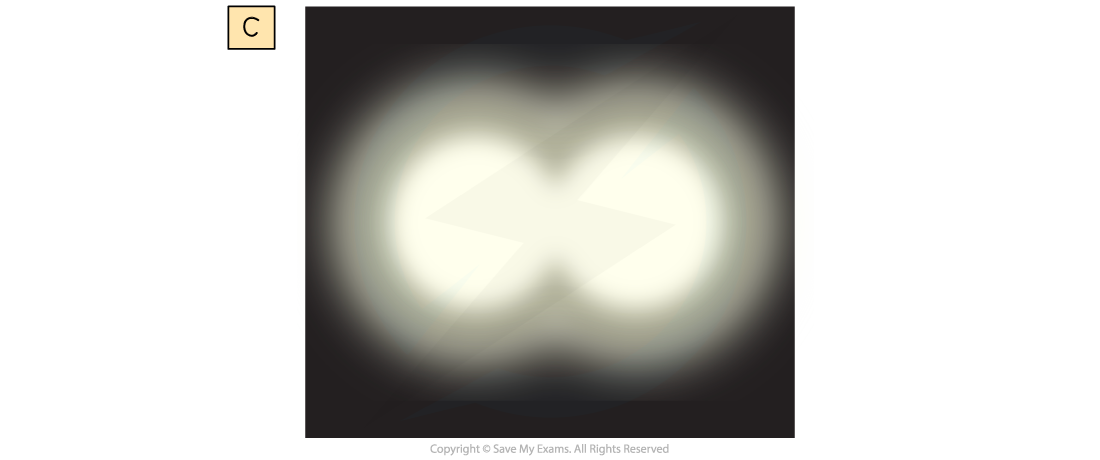
Visually, two sources that could clearly be resolved would look like the above
- If the two sources are separated further apart than maximum to minimum, they can be resolved
- If the two sources are brought closer together, they cannot be resolved
转载自savemyexams
以上就是关于【IB DP Physics: HL复习笔记9.4.1 The Rayleigh Criterion】的解答,如需了解学校/赛事/课程动态,可至翰林教育官网获取更多信息。
往期文章阅读推荐:
翰林独家 | 经济学竞赛核心精讲,一册打通NEC/IEO/USAEBO!
2026 AMC10/12美国数学竞赛新赛季!【翰林教育 × 清华大学出版社】独家教材全面发售!


翰林AMC8视频课重磅上线!

国际竞赛真题资源免费领取






