Edexcel IGCSE Chemistry 复习笔记 2.3.1 Composition of Air
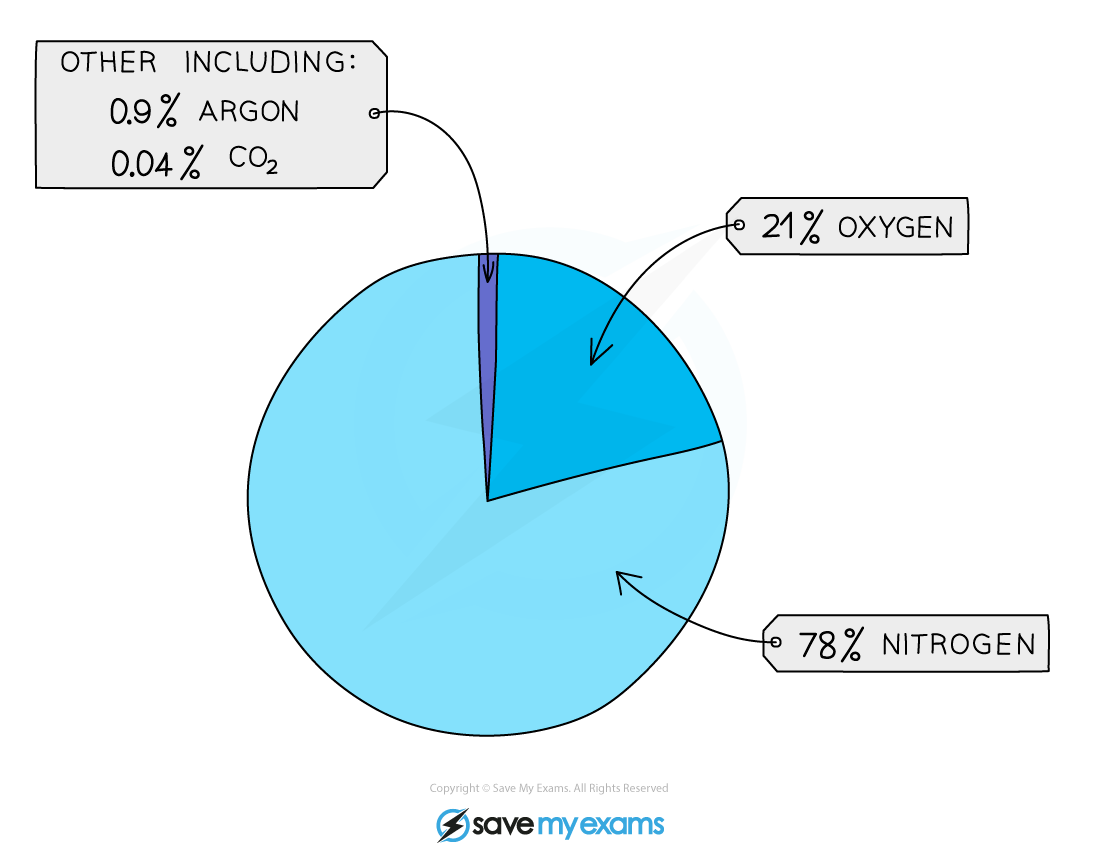
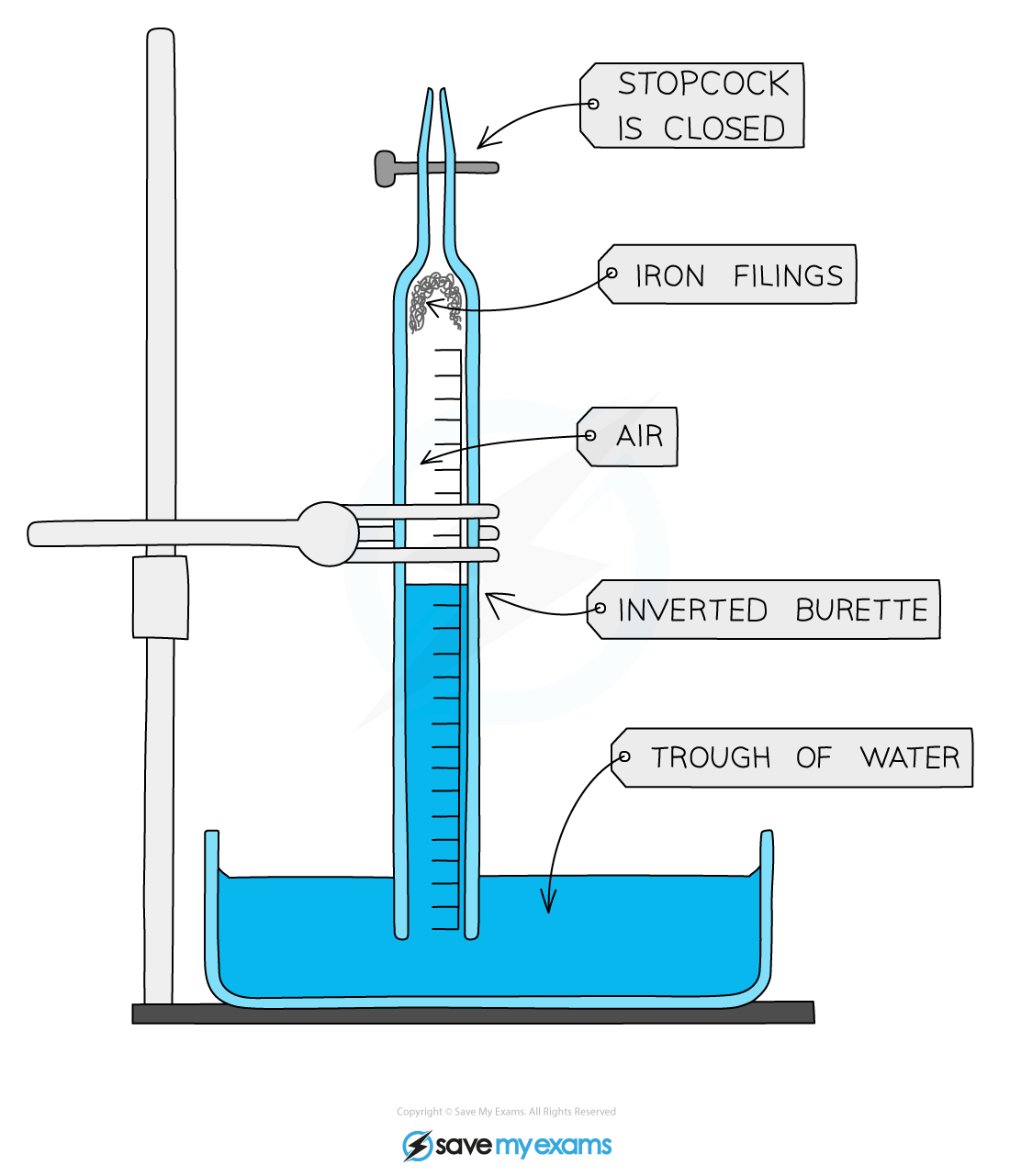
Edexcel IGCSE Chemistry 复习笔记 2.3.1 Composition of Air Composition of Air The proportion of gases in the air has not changed much in 200 million years About four fifths of the air is nitr...
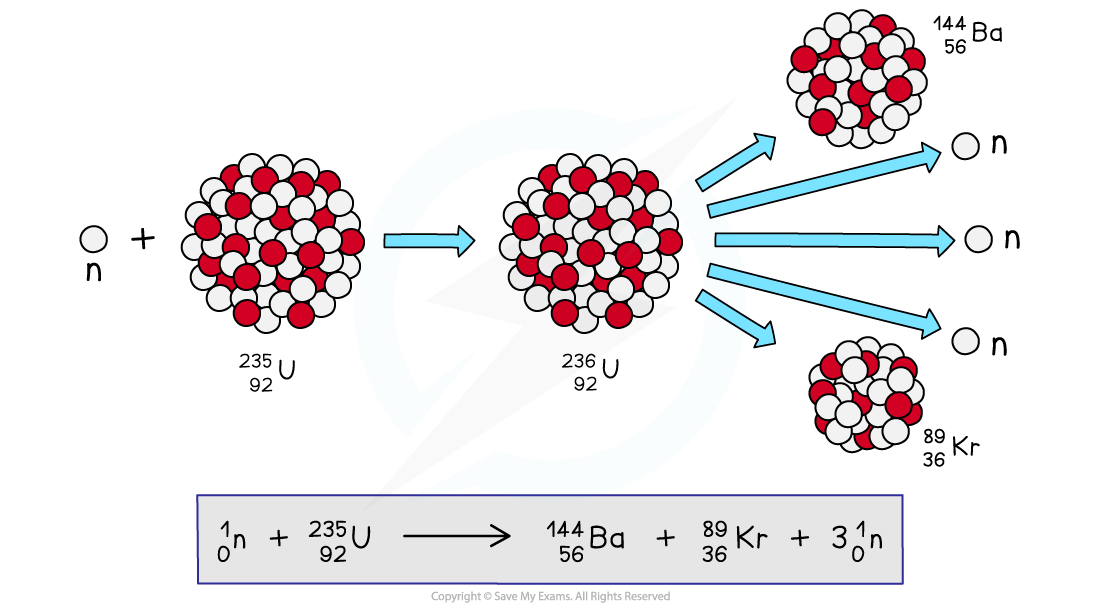
Induced Fission Induced nuclear fission occurs: When a stable nucleus splits into small nuclei from the bombardment of a slow-moving neutron For example, when a uranium-235 nucleus absorbs a...
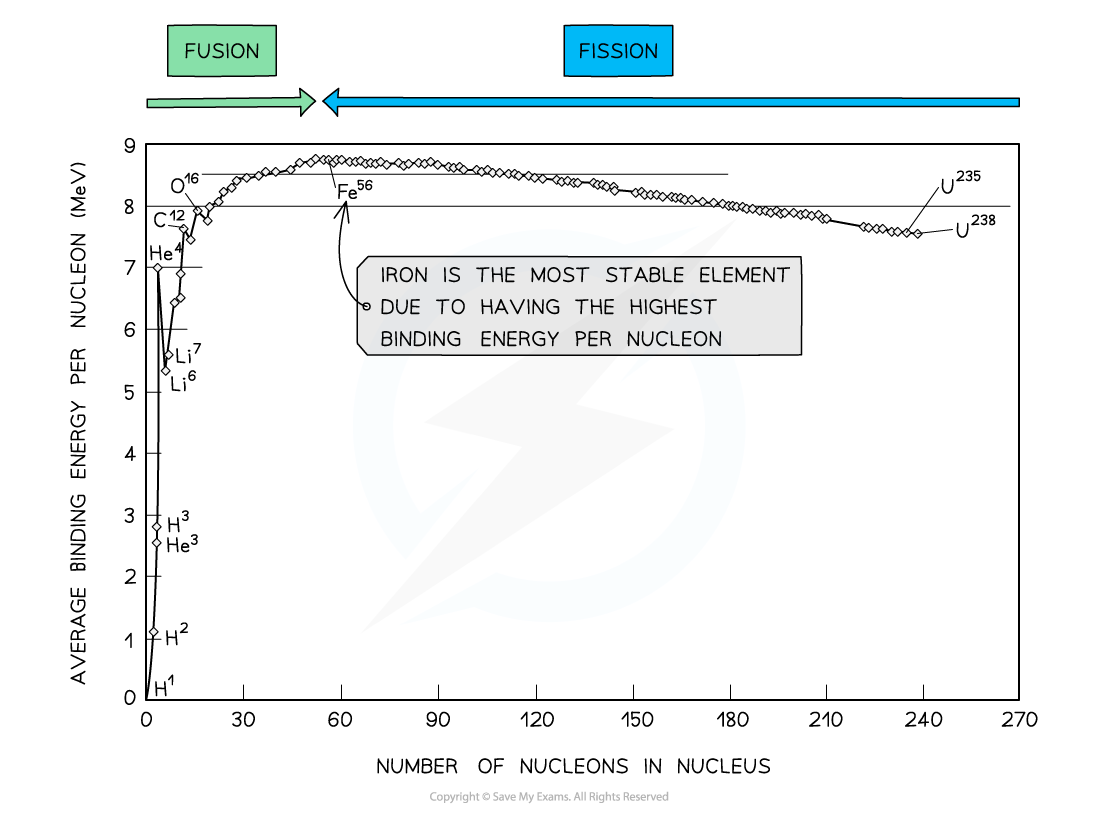
Binding Energy per Nucleon Graph In order to compare nuclear stability, it is more useful to look at the binding energy per nucleon The binding energy per nucleon is defined as: The binding ...
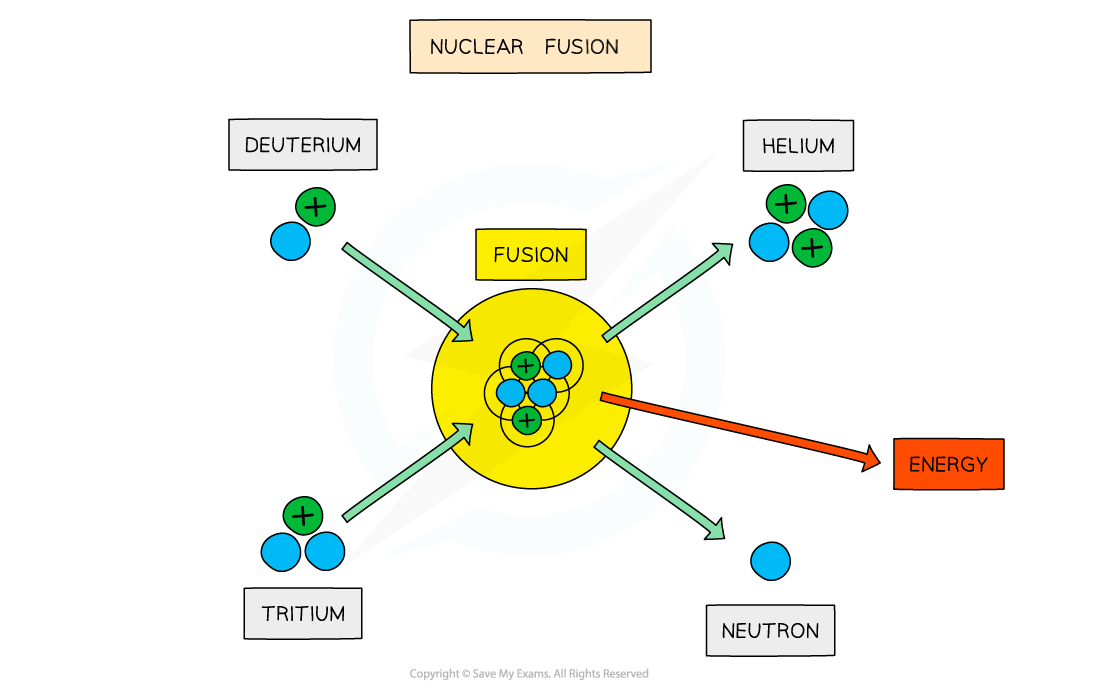
Nuclear Fusion & Fission Nuclear Fusion Fusion is defined as: The fusing together of two small nuclei to produce a larger nucleus Low mass nuclei (such as hydrogen and helium) can underg...
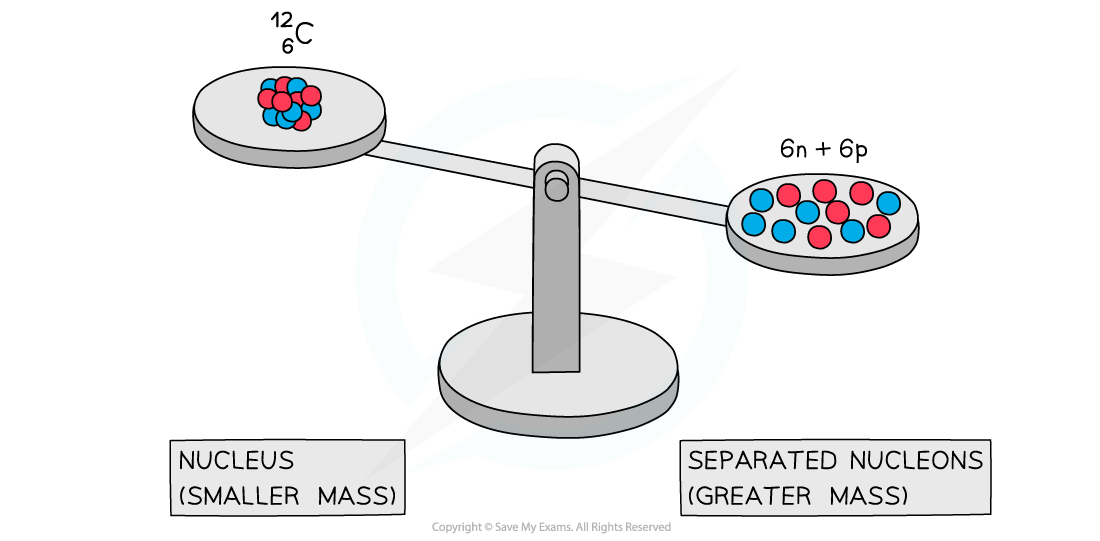
Mass Difference & Binding Energy Experiments into nuclear structure have found that the total mass of a nucleus is less than the sum of the masses of its constituent nucleons This differ...
Energy & Mass Equivalence Einstein showed in his theory of relativity that matter can be considered a form of energy and hence, he proposed: Mass can be converted into energy Energy can ...
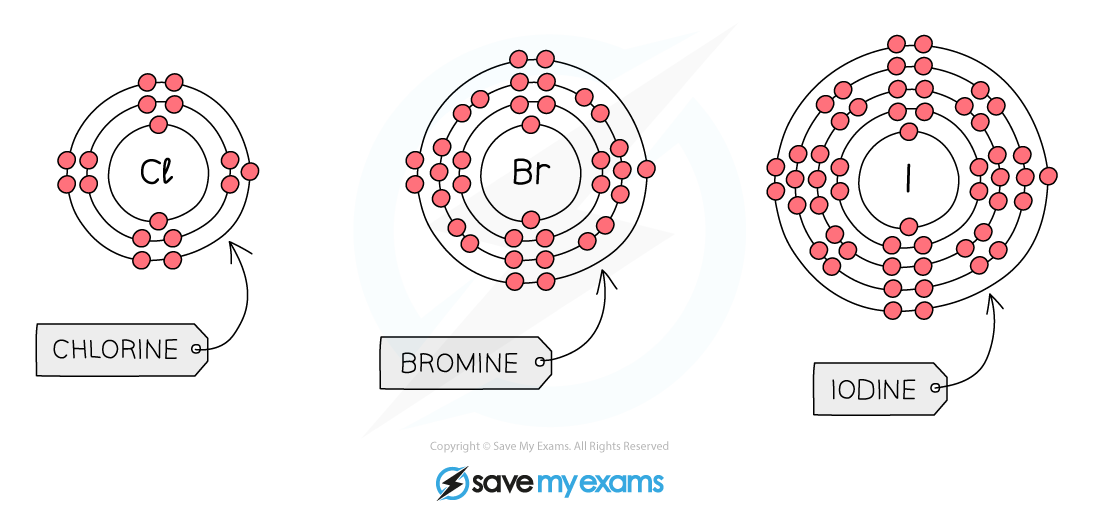
Edexcel IGCSE Chemistry 复习笔记 2.2.2 Group 7: Reactivity & Electronic Configurations Group 7: Reactivity & Electronic Configurations When halogen atoms gain an electron during reac...
Constant Density of Nuclear Material Assuming that the nucleus is spherical, its volume is equal to: Where R is the nuclear radius, which is related to mass number, A, by the equation: Where...
Edexcel IGCSE Chemistry 复习笔记 2.2.1 Group 7 (Halogens) Physical Properties The elements in group 7 are known as the halogens These are fluorine, chlorine, bromine, iodine and astatine &nb...
© 2026. All Rights Reserved. 沪ICP备2023009024号-1