OCR A Level Biology:复习笔记2.6.8 The Organisation of Cells

The Organisation of Cells
- As seen on the last page, in complex multicellular organisms eukaryotic cells become specialised for specific functions. For example:
- Epithelial cells in the small intestine are specialised to absorb food efficiently
- Red blood cells are specialised to transport oxygen
- In multicellular organisms, specialised cells of the same type group together to form tissues
- A tissue is a group of cells that work together to perform a particular function. For example:
- Epithelial cells group together to form epithelial tissue (the function of which, in the small intestine, is to absorb food)
- Muscle cells (another type of specialised cell) group together to form muscle tissue (the function of which is to contract in order to move parts of the body)
- Different tissues work together to form organs. For example:
- The heart is made up of many different tissues (including cardiac muscle tissue, blood vessel tissues and connective tissue, as well as many others)
- Different organs work together to form organ systems
Xylem vessel cells
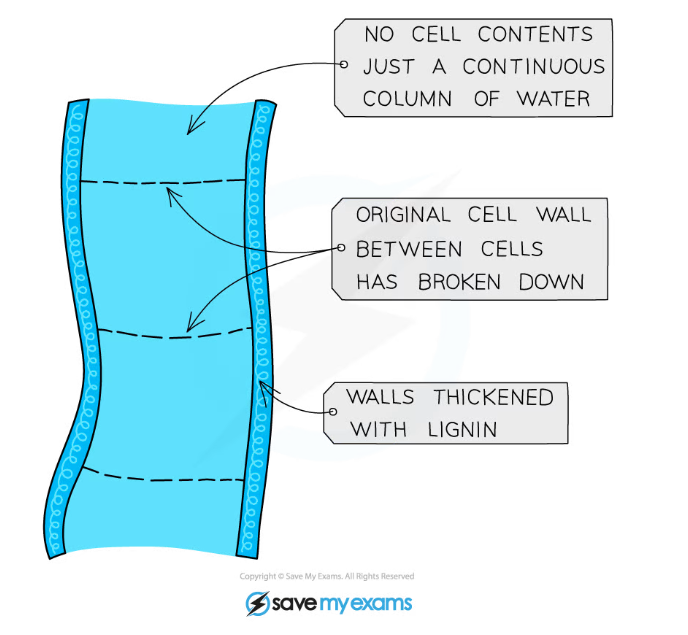
Xylem cells lose their top and bottom walls to form a continuous tube through which water moves from the roots to the leaves.
- Function: transport tissue for water and dissolved ions
- Adaptations:
- No top and bottom walls between cells to form continuous hollow tubes through which water is drawn upwards towards the leaves by transpiration
- Cells are essentially dead, without organelles or cytoplasm, to allow free movement of water
- Outer walls are thickened with a substance called lignin, strengthening the tubes, which helps support the plant
Phloem vessel cells
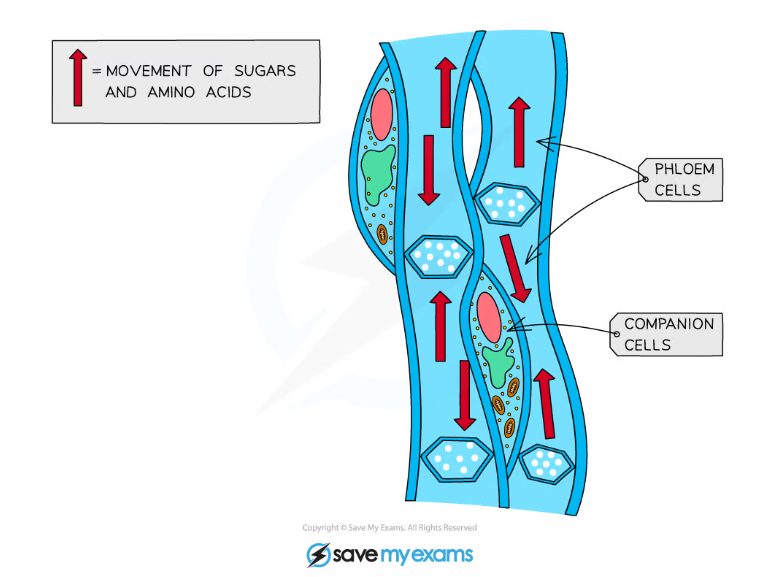
Phloem cells form tubes similar to xylem vessels, except the cells still retain some subcellular structures and are therefore living
- Function: transport of dissolved sugars and amino acids
- Adaptations:
- Made of living cells (as opposed to xylem vessels which are made of dead cells) which are supported by companion cells
- Cells are joined end-to-end and contain holes in the end cell walls (sieve plates) forming tubes that allow sugars and amino acids to flow easily through (by translocation)
- Cells also have very few subcellular structures to aid the flow of materials
Muscle cells
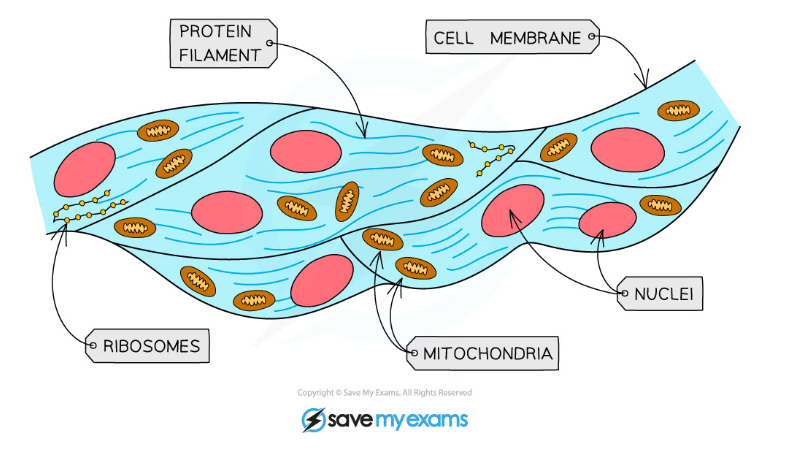
Muscle cells contain layers of fibres that allow them to contract. The image above shows skeletal muscle cells
- Function: contraction for movement
- Adaptations:
- There are three different types of muscle in animals: skeletal, smooth and cardiac (heart)
- All muscle cells have layers of protein filaments in them, these layers can slide over each other causing muscle contraction
- Muscle cells have a high density of mitochondria to provide sufficient energy (via respiration) for muscle contraction
- Skeletal muscle cells fuse together during development to form multinucleated cells that contract in unison
Ciliated epithelium
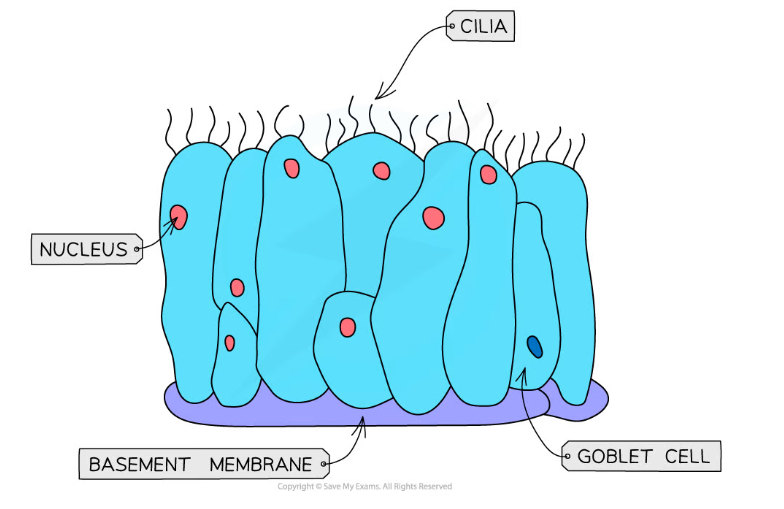
The structure of a ciliated epithelial cell
- Function: moving substances across the surface of a tissue
- Adaptations:
- Have cilia (hair-like structures), which beat in a coordinated way to shift material along the surface of the epithelium tissue
- Goblet cells secrete mucus which helps to trap dust, dirt and microorganisms - preventing them from entering vital organs where they may cause infection
Squamous epithelium
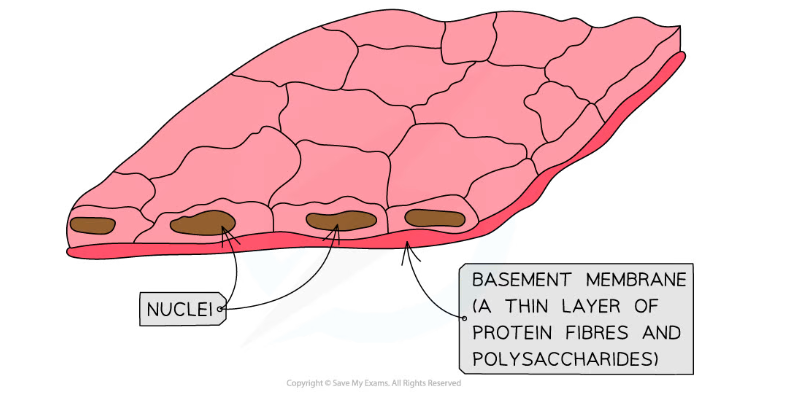
The structure of a squamous epithelial cell
- Function: provide a surface covering or outer layer. Found on a variety of organs and structures e.g. blood vessels and alveoli
- Adaptations:
- Squamous epithelium consists of a single layer of flattened cells on a basement membrane
- The layer of cells forms a thin cross-section which reduces the distance that substances have to move to pass through - it shortens the diffusion pathway
- It is permeable, allowing for the easy diffusion of gases
Cartilage
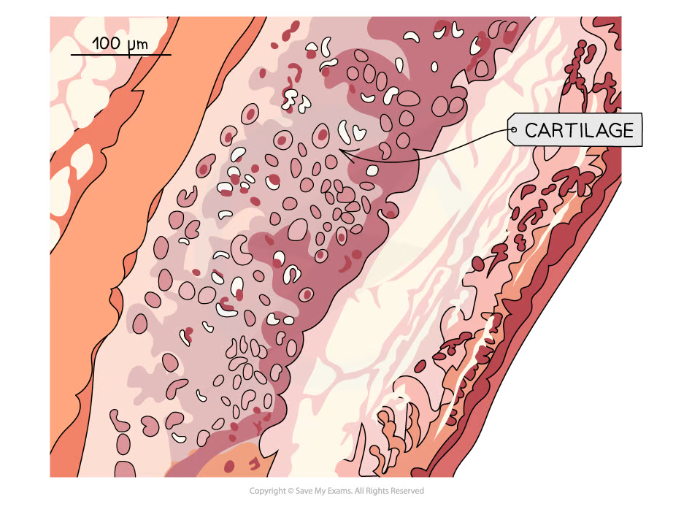
Cartilage micrograph
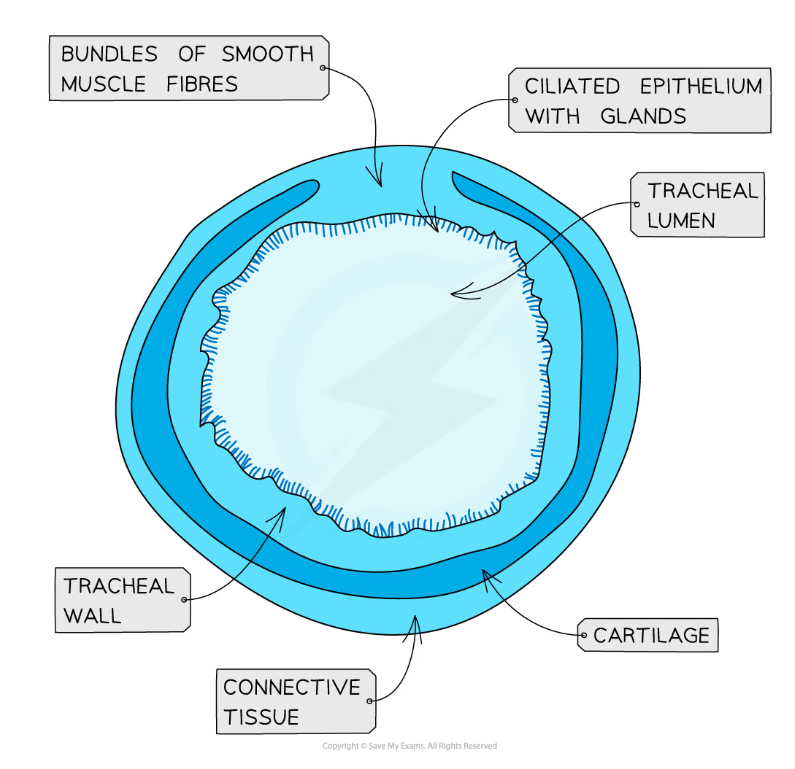
Structure of the trachea. The ends of the cartilage rings are connected by smooth muscle and elastic fibres.
- Function: to provide support
- Cartilage is a strong and flexible tissue found in various places around the body
- One place is in rings along the trachea, called Tracheal rings
- These rings help to support the trachea and ensure it stays open while allowing it to move and flex while we breathe
Examples of specialised cells being organised into tissues, tissues into organs and organs into organ systems
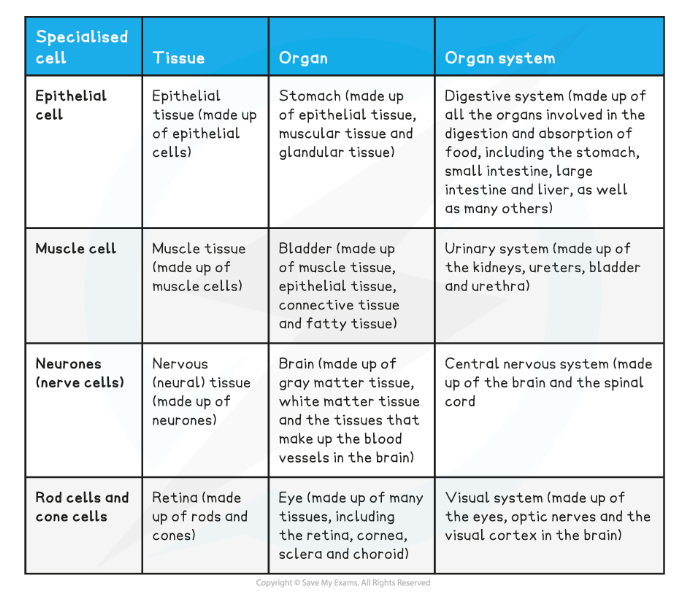
Exam Tip
It’s important to start learning some biological examples of each of these levels of organisation. Try and start with an organ system, such as the circulatory system or nervous system, and work your way down the levels of organisation noting down examples of organs, tissues and specialised cells as you go! Alternatively, start with a specialised cell you know of, such as a red blood cell, and work your way up the levels of organisation until you reach an organ system.
转载自savemyexams
以上就是关于【OCR A Level Biology:复习笔记2.6.8 The Organisation of Cells】的解答,如需了解学校/赛事/课程动态,可至翰林教育官网获取更多信息。
往期文章阅读推荐:
翰林独家 | 经济学竞赛核心精讲,一册打通NEC/IEO/USAEBO!
2026 ALEVEL 夏考A率出炉!爱德思vs牛津AQA,哪些科目真的“好出分”?


翰林AMC8视频课重磅上线!

国际竞赛真题资源免费领取






