Edexcel A (SNAB) A Level Biology:复习笔记4.2.2 Plant Stems

Plant Stems
Xylem vessels
- The functions of xylem tissue in a plant are:
- Vascular tissue that transports dissolved minerals and water around the plant
- Structural support
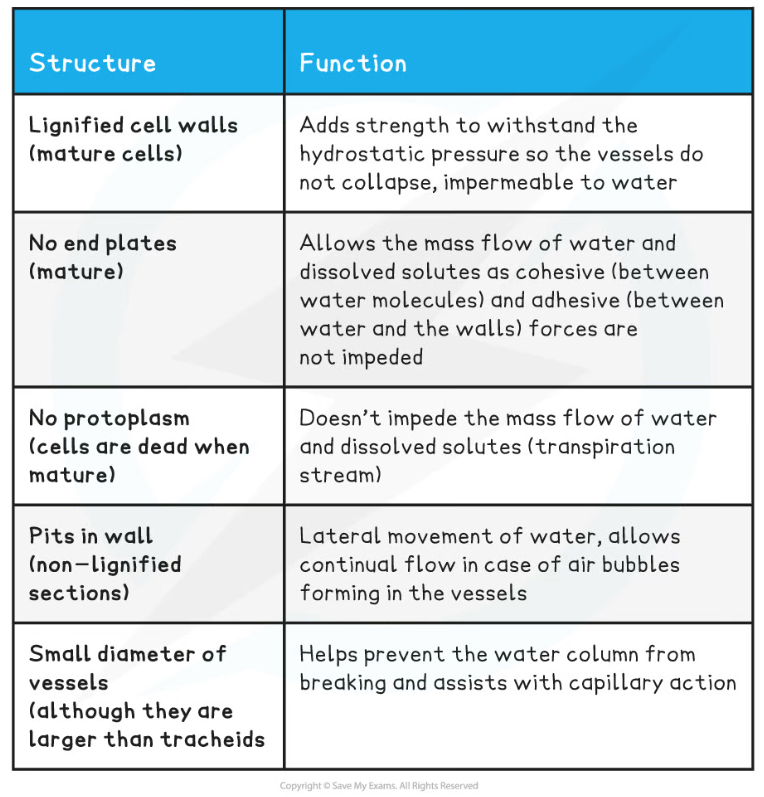
- Their cell walls contain lignin, which enables the vessels to withstand the pressure created by the moving column of water
- Xylem vessels form long, hollow straw-like structures that are formed by dead cells (due to lignification of cell walls)
- This means that they do not contain any cytoplasm or organelles that could slow down the flow of water
- There are small regions in the walls that are not lignified, known as pits, which allows for lateral movement of water and minerals between xylem vessels
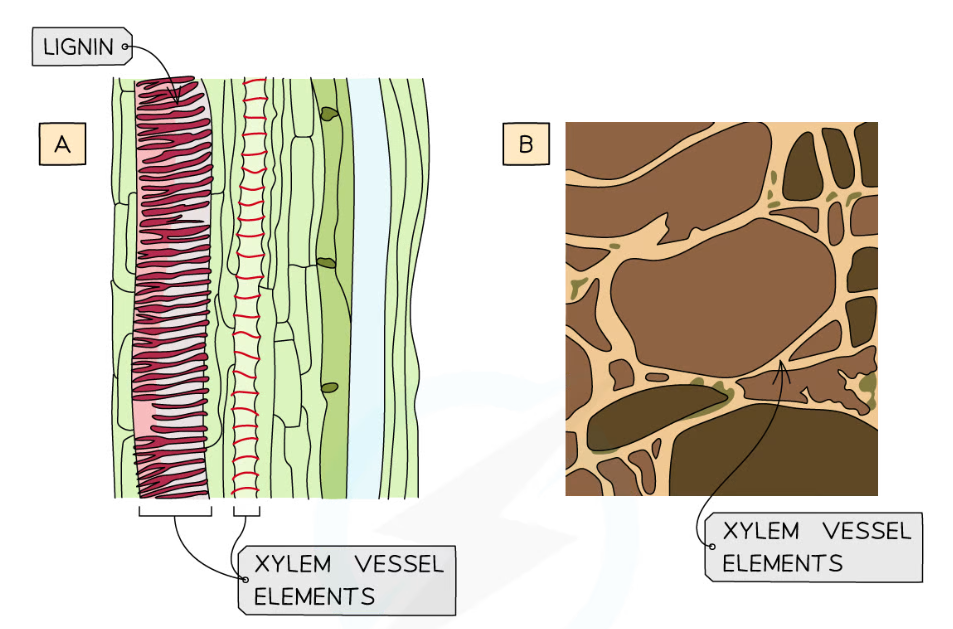
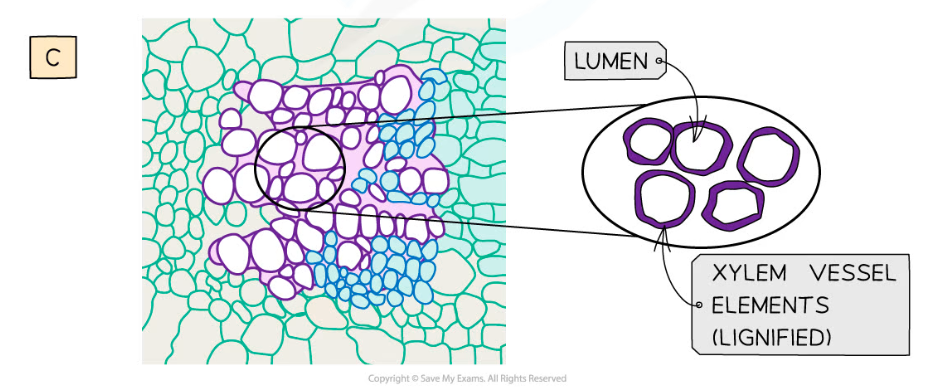
Images of xylem vessel elements: A = photomicrograph (drawing) in longitudinal section (lignin is stained red), B = scanning electron micrograph (drawing) in transverse section, C = microscope image (drawing) in transverse section (lignin is stained purple)
Structure and Function of Xylem Vessels Table
Sclerenchyma fibres
- Sclerenchyma fibres are not involved in transport of substances, they provide support
- Similar to xylem, they consist of bundles of dead cells
- They form long, hollow tubes, but they do have end walls present
- Lignification of cell walls occur, but they do not have pits like xylem vessels
- They have more cellulose in their walls compared to other plant cells
Phloem tissue
- The functions of phloem tissue in a plant are:
- Transport organic compounds (assimilates), particularly sucrose, from sources (e.g. leaves) to sinks (e.g. roots). The transport of these compounds can occur up and down the plant
- This is known as translocation
- Phloem has no support function in a plant
- The organic compounds are dissolved in water to form sap
- Phloem is a complex tissue made up of various cell types; its bulk is made up of sieve tube elements which are the main conducting cells and companion cells
- Other cell types of phloem tissue also include parenchyma for storage and strengthening fibres
- Mature phloem tissue contains living cells, unlike xylem tissue
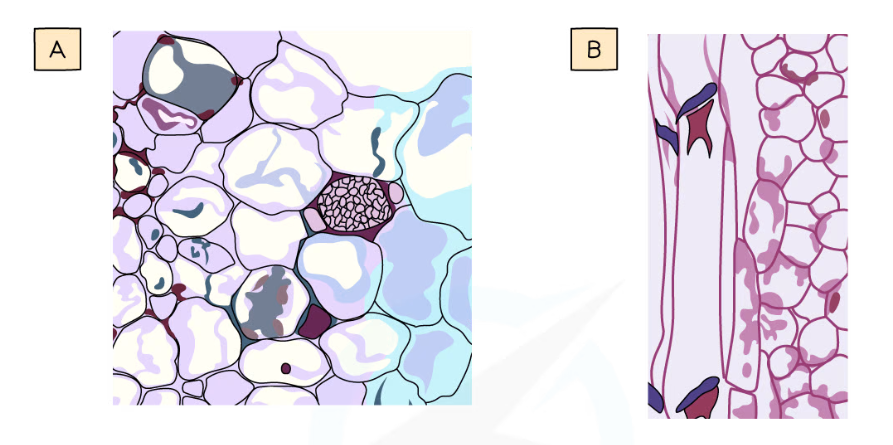
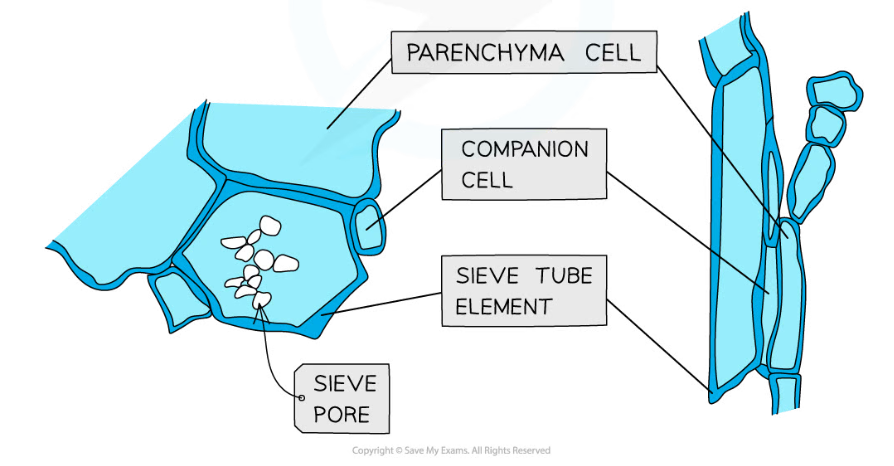
Structure of phloem tissue: A = microscope slide image (and below drawing) of a sieve tube element and companion cell in transverse section, B = photomicrograph image (and below drawing) of a sieve tube element and companion cell in longitudinal section
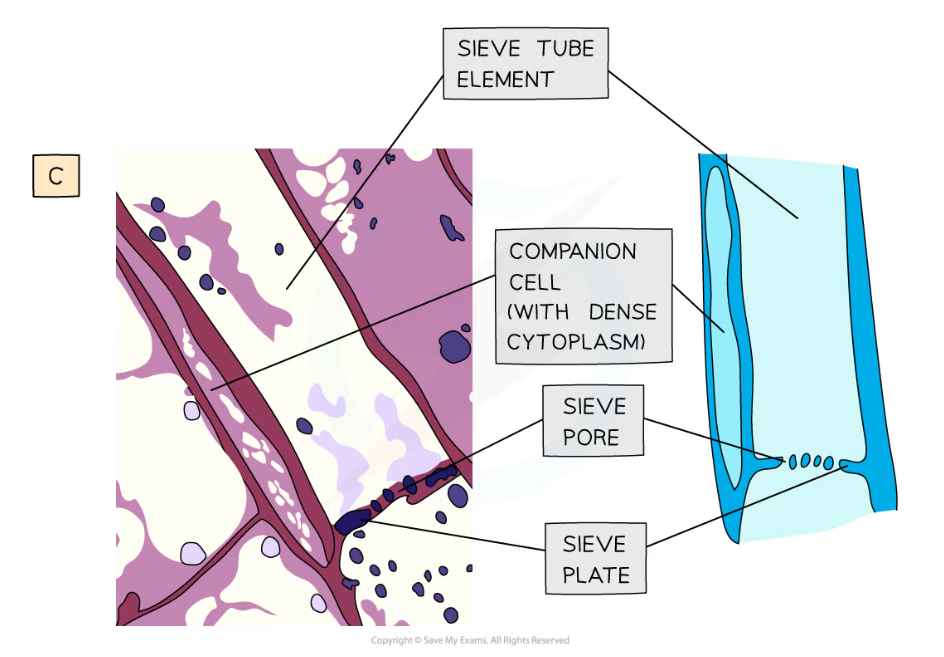
Structure of phloem tissue: C = transmission electron micrograph image (and drawing) of a sieve tube element and companion cell in transverse section
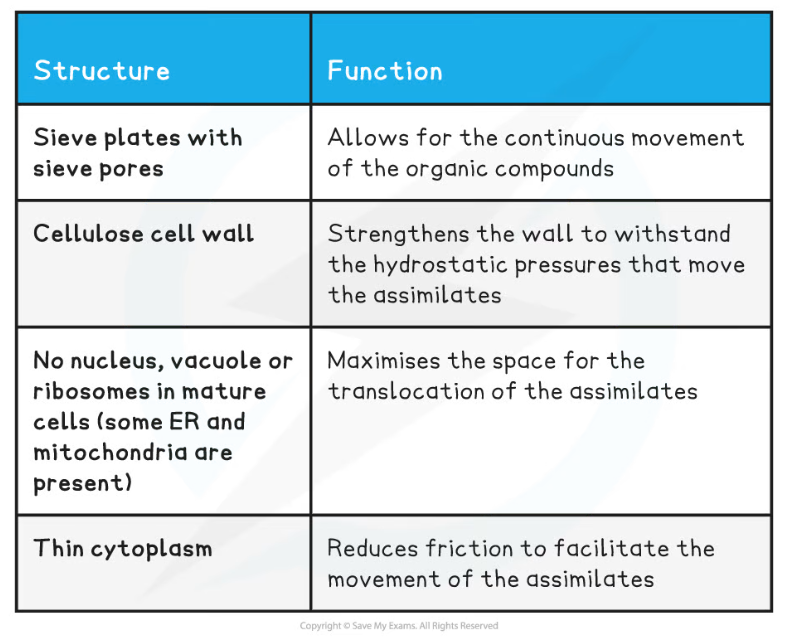
Sieve tube elements
- Sieve tube elements line up end to end to form a continuous tube
Phloem Sieve Tube Elements Structure & Function Table
Companion cells
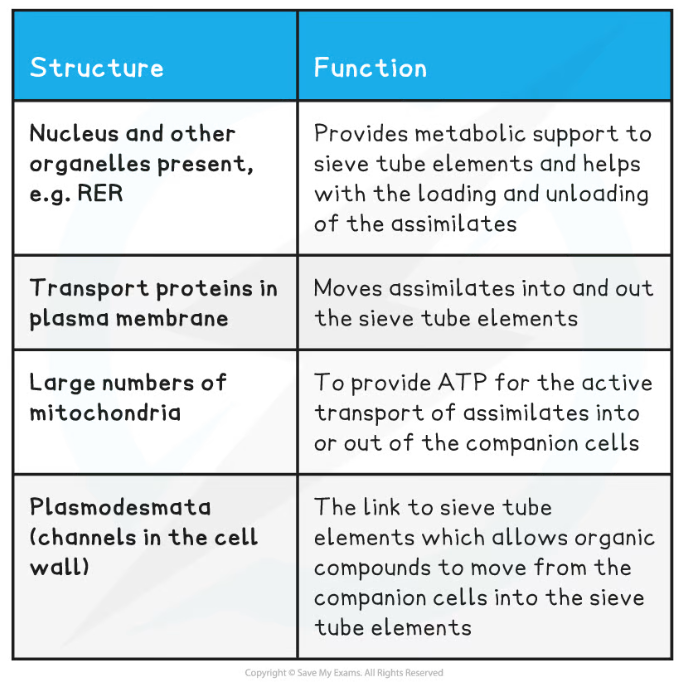
- Each sieve tube element has a companion cell associated with it as companion cells control the metabolism of their associated sieve tube member
- They also play a role in loading and unloading of sugars into the phloem sieve tube elements
Phloem Companion Cells Structure & Function Table
Vascular bundles in a stem
- Vascular bundles consist of xylem vessels which are group together with phloem tissue
- In a stem, the xylem vessels are always located towards the middle of the stem, while the phloem is located closer towards the outside of the stem
- Sclerenchyma fibres are associated with the vascular bundles and provide additional support to the stem
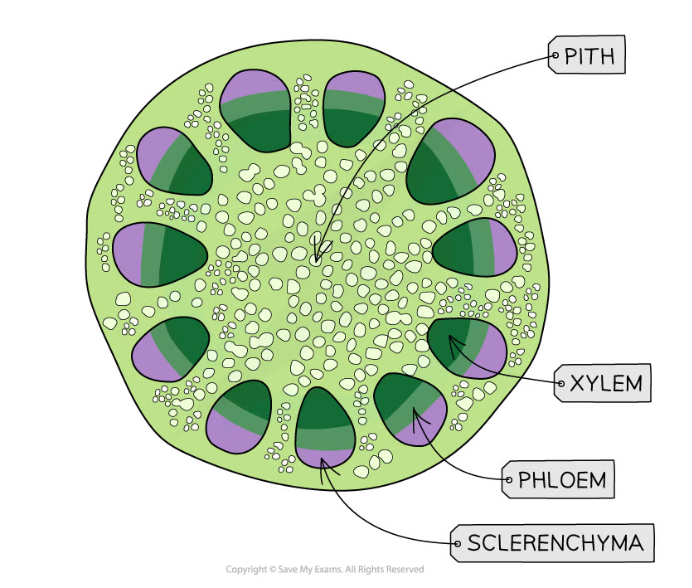
Transverse section through a stem, showing the positions of phloem, xylem and sclerenchyma fibres
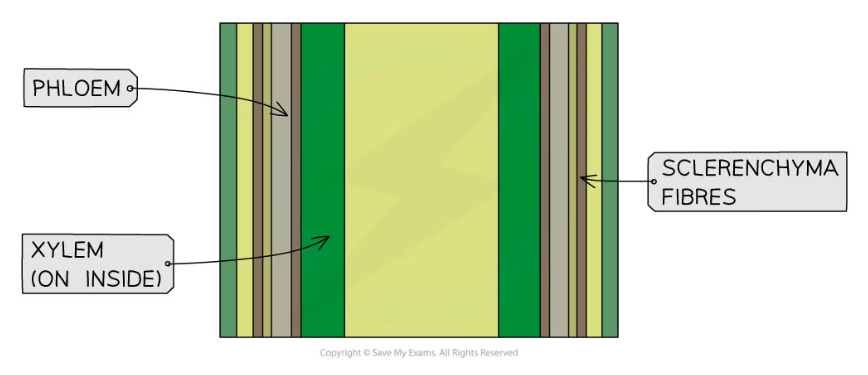
Longitudinal section through a stem, showing the positions of phloem, xylem and sclerenchyma fibres
Exam Tip
Understand the difference between sieve tube elements and companion cells, and how they are different to xylem tissue. Remember that mature xylem tissue is dead, so there is no evidence of organelles, and they have lignified cell walls, whereas sieve tube elements have no lignin, have sieve plates, and have companion cells that contain nuclei and cytoplasm.
转载自savemyexams
以上就是关于【Edexcel A (SNAB) A Level Biology:复习笔记4.2.2 Plant Stems】的解答,如需了解学校/赛事/课程动态,可至翰林教育官网获取更多信息。
往期文章阅读推荐:
翰林独家 | 经济学竞赛核心精讲,一册打通NEC/IEO/USAEBO!
2026 ALEVEL 夏考A率出炉!爱德思vs牛津AQA,哪些科目真的“好出分”?


翰林AMC8视频课重磅上线!

国际竞赛真题资源免费领取






