Edexcel A (SNAB) A Level Biology:复习笔记3.1.2 Eukaryotic Cells

Eukaryotic Cells: Structure
- Cells can be divided into two broad types; eukaryotic and prokaryotic cells
- Eukaryotic cells have a more complex ultrastructure than prokaryotic cells
- The term ultrastructure refers to the internal structure of cells
- The cytoplasm of eukaryotic cells is divided up into membrane-bound compartments called organelles
- Animal and plant cells are both types of eukaryotic cells that share key structures such as
- Membrane-bound organelles, including a nucleus
- Larger ribosomes known as 80S ribosomes
- Key differences between animal and plant cells include
- Animal cells contain centrioles and some have microvilli while plant cells do not
- Microvilli are folded regions of the cell surface membrane that increase cell surface area for absorption, e.g. in the small intestine
- Plant cells have a cellulose cell wall, large permanent vacuoles, and chloroplasts while animal cells do not
- Animal cells contain centrioles and some have microvilli while plant cells do not
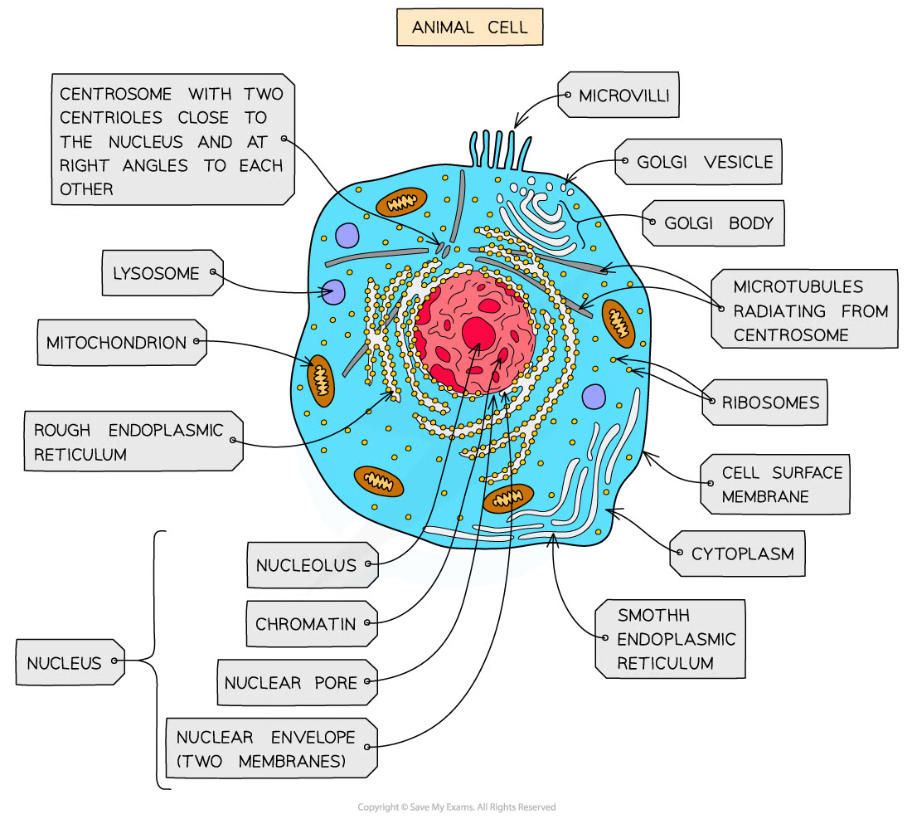
Animal cells are eukaryotic cells
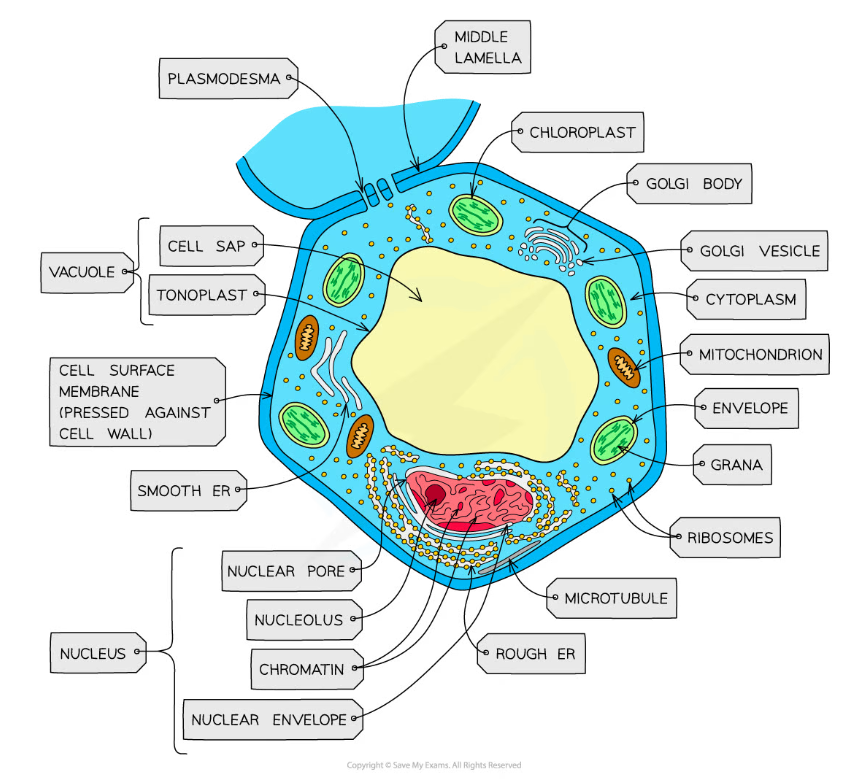
Plant cells are eukaryotic cells with a cellulose cell wall, permanent vacuole, and chloroplasts
Cell surface membrane
- All cells are surrounded by a cell surface membrane which controls the exchange of materials between the internal cell environment and the external environment
- The membrane is described as being partially permeable, meaning that some substances can pass through the membrane while others cannot
- Cell membrane is formed from a phospholipid bilayer spanning a diameter of around 10 nm
- Many organelles inside cells are surrounded by cell membrane, so when referring to the outer membrane of a cell it is always a good idea to refer to it as the cell surface membrane
- The cell surface membrane can also be referred to as the plasma membrane
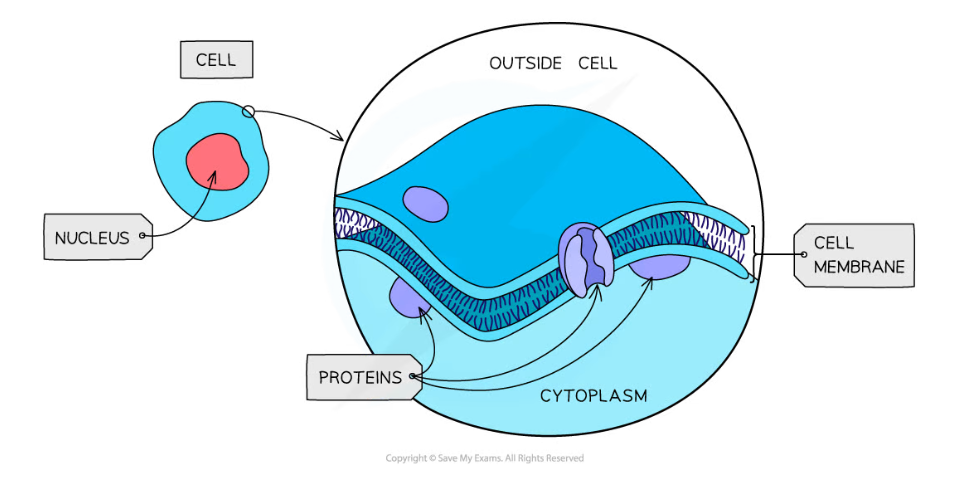
The cell surface membrane surrounds the cell, separating it from its external environment
The nucleus
- Present in all eukaryotic cells, the nucleus is relatively large and separated from the cytoplasm by a double membrane called the nuclear envelope, which has many pores
- Nuclear pores are important channels for allowing mRNA and ribosomes to travel out of the nucleus, as well as allowing enzymes, e.g. DNA polymerases, and signalling molecules to travel in
- The nucleus contains chromatin, the material from which chromosomes are made
- Chromosomes are made of sections of linear DNA tightly wound around proteins called histones
- Usually, at least one or more darkly stained regions of the nucleus can be observed under a microscope; these regions are individually termed nucleolus (plural nucleoli) and are the sites of ribosome production
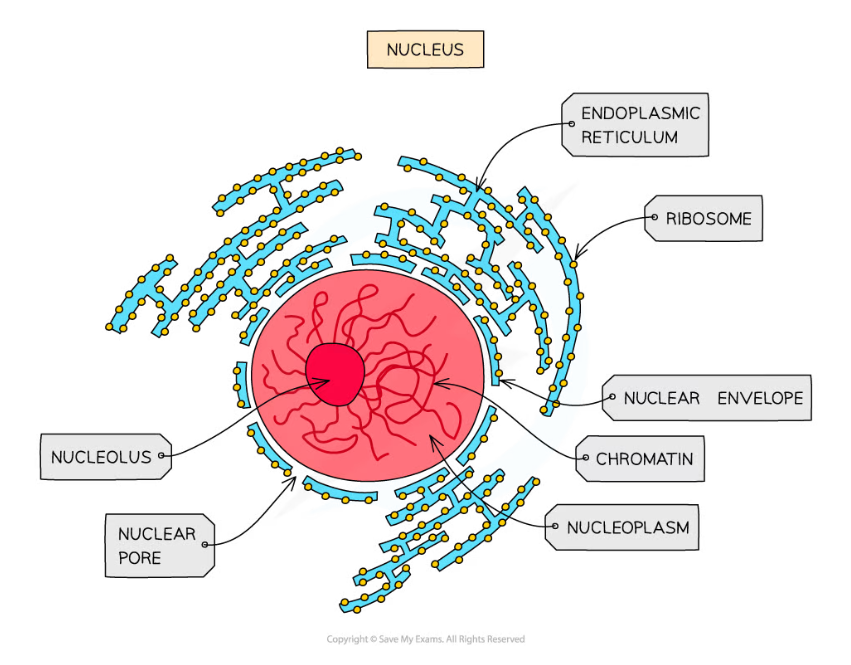
The nucleus of a eukaryotic cell is surrounded by the nuclear envelope and contains chromatin as well as a region called the nucleolus. Note that the nucleus is shown here surrounded by another organelle; the endoplasmic reticulum
Mitochondria
- The site of aerobic respiration within eukaryotic cells, mitochondria (singular mitochondrion) are just visible with a light microscope
- Mitochondria are surrounded by a double-membrane with the inner membrane folded to form structures called cristae
- The matrix of mitochondria contains enzymes needed for aerobic respiration, producing ATP
- Small circular pieces of DNA, known as mitochondrial DNA, and ribosomes are also found in the matrix
- These are needed for replication of mitochondria before cell division
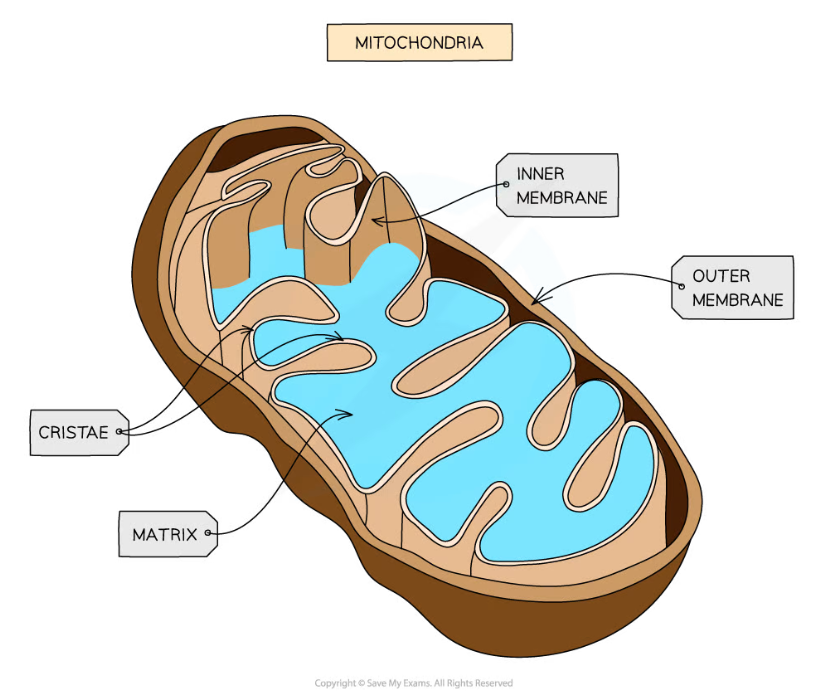
Mitochondria are the site of aerobic respiration in eukaryotic cells
Ribosomes
- Ribosomes can be found as free organelles in the cytoplasm of all cells or as part of the rough endoplasmic reticulum in eukaryotic cells
- They are not surrounded by a membrane
- Each ribosome is a complex of ribosomal RNA (rRNA) and proteins
- 80s ribosomes are found in eukaryotic cells
- 70s ribosomes are found in prokaryotes, mitochondria, and chloroplasts
- Ribosomes are the site of translation
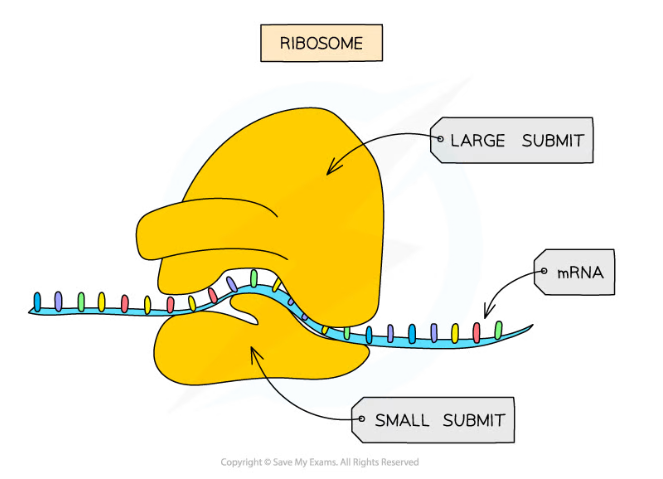
Ribosomes are formed in the nucleolus and are composed of almost equal amounts of RNA and protein
Endoplasmic reticulum
- There are two types of endoplasmic reticulum; rough and smooth
- Rough Endoplasmic Reticulum (RER)
- RER is formed from folds of membrane continuous with the nuclear envelope
- The surface of RER is covered in ribosomes
- The role of the RER is to process proteins made on the ribosomes
- Smooth Endoplasmic Reticulum (SER)
- SER is also formed from folds of membrane but its function is distinct from the RER, being involved in the production, processing and storage of lipids, carbohydrates and steroids
- SER does not have ribosomes on its surface
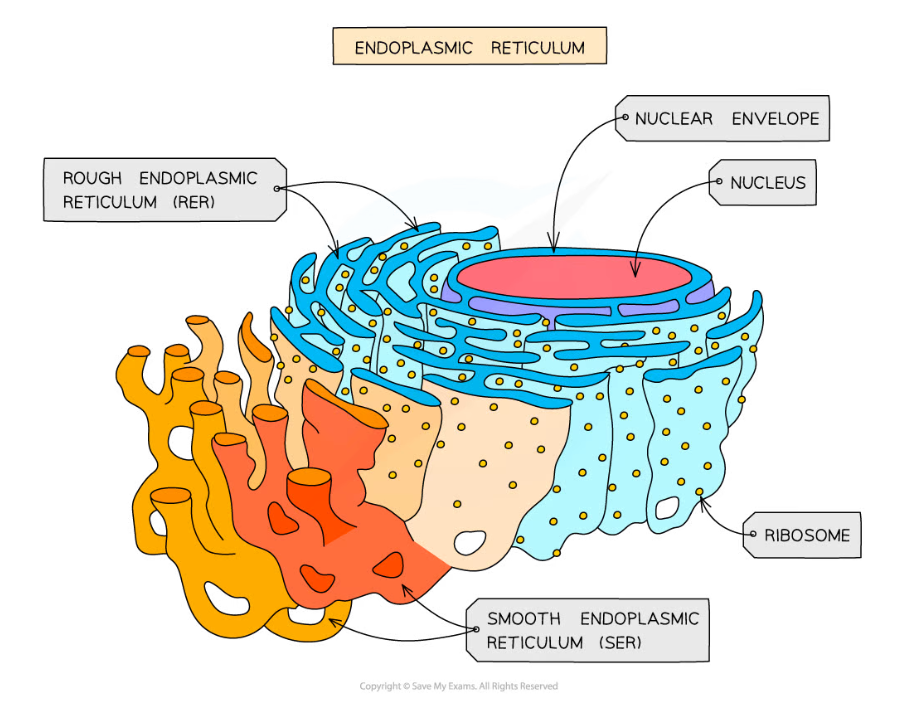
The RER and SER are visible under the electron microscope; the presence or absence of ribosomes helps to distinguish between them
The Golgi apparatus
- The Golgi apparatus consists of flattened sacs of membrane similar in appearance to the smooth endoplasmic reticulum
- The Golgi apparatus is sometimes known as the Golgi body
- The Golgi can be distinguished from the SER by its regular, stacked appearance; it can be described as looking like a wifi symbol!
- The role of the Golgi apparatus is to modify proteins and lipids before packaging them into Golgi vesicles
- The vesicles then transport the proteins and lipids to their required destination
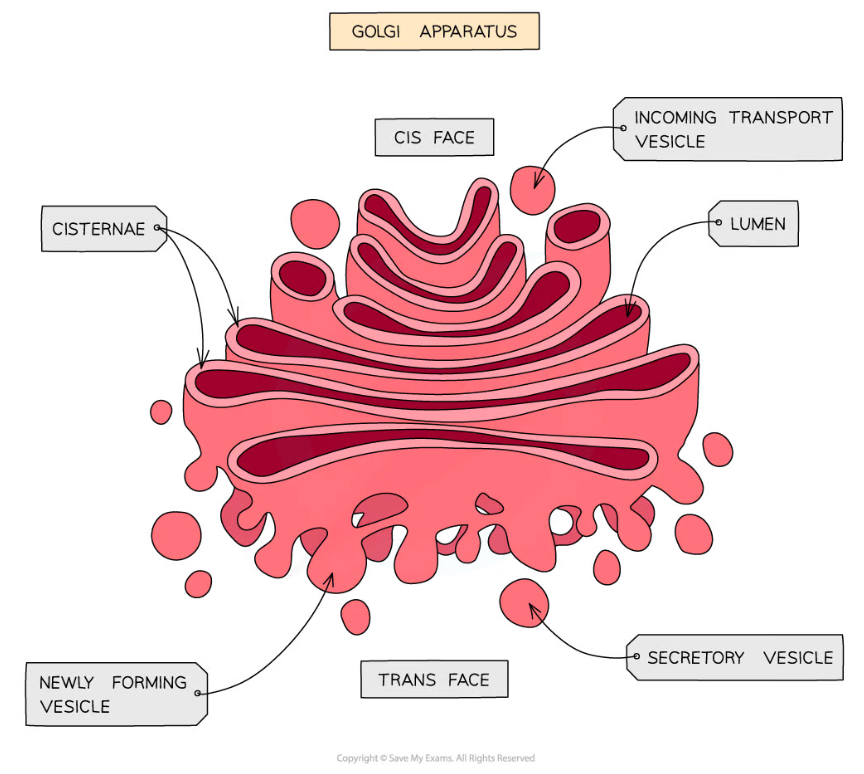
The Golgi apparatus; the cis face lies near the rough endoplasmic reticulum, while the trans face lies near the cell membrane
Lysosome
- Lysosomes are specialist forms of vesicle which contain hydrolytic enzymes
- The role of lysosomes is to break down waste materials such as worn-out organelles,
- Lysosomes are used extensively by cells of the immune system and in programmed cell death, known as apoptosis
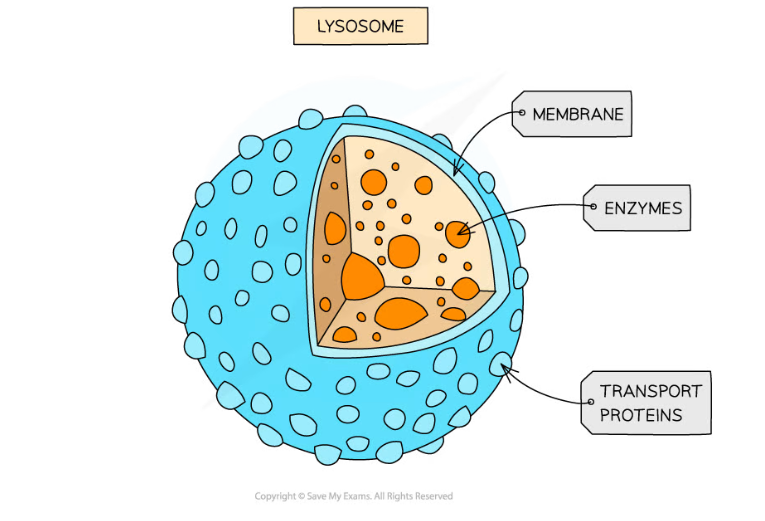
Lysosomes contain digestive enzymes
Centrioles
- Centrioles are made of hollow fibres knows as microtubules
- Microtubules are filaments of protein that can be used to move substances around inside a cell, as well as to support the shape of a cell from the inside
- Two centrioles at right angles to each other form a centrosome which organises the spindle fibres during cell division
- Centrioles are not found in plants and fungi
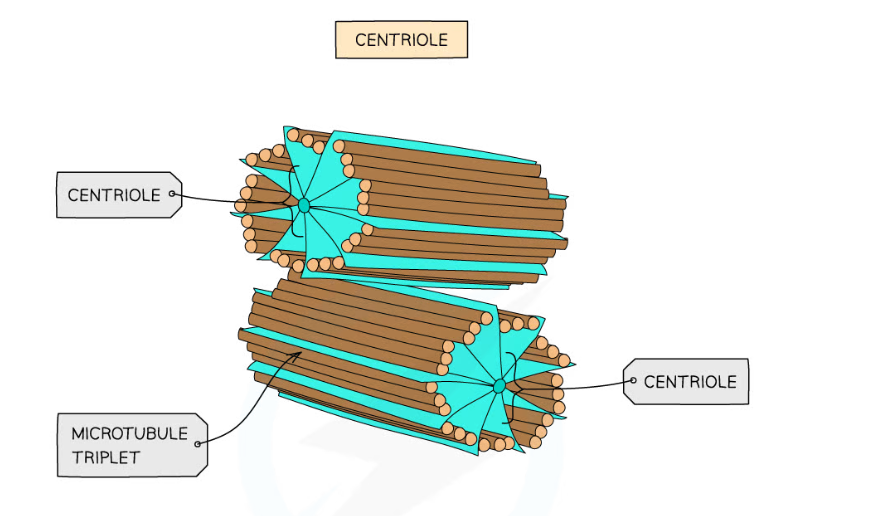
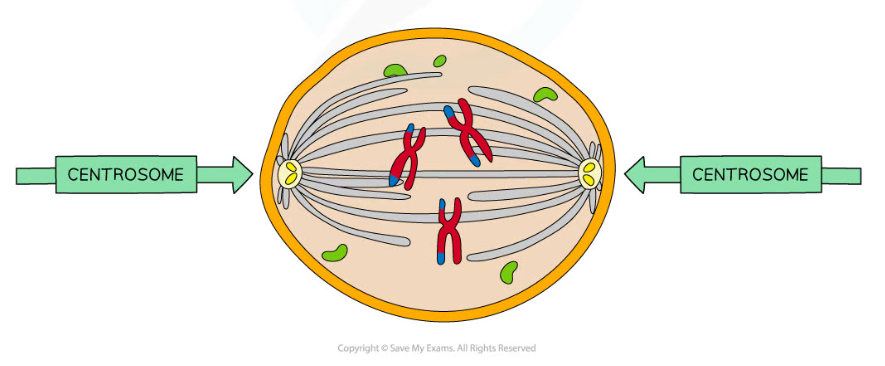
Centrioles are structures formed from microtubules; they are involved with the process of nuclear division in animal cells
Rough Endoplasmic Reticulum & Golgi Apparatus: Function
- In cells, many organelles are involved in the production and secretion of proteins
- Organelles are specialised parts of a cell that carry out a particular function
- Some organelles are membrane-bound, meaning that they are surrounded by membrane
- The organelles involved in protein synthesis include
- Nucleus
- Transcription of the DNA code occurs here
- Ribosomes
- Free ribosomes and those on the RER produce proteins in the process of translation
- Rough endoplasmic reticulum (RER)
- Golgi apparatus
- Cell surface membrane
- Proteins formed within the cell are secreted here
- Nucleus
Rough endoplasmic reticulum
- Ribosomes on the RER produce proteins that can be secreted out of the cell or become attached to the cell surface membrane
- Proteins that have been passed into the lumen of the rough endoplasmic reticulum are folded and processed here
- The term lumen refers to the inside space of the RER
- Note that free ribosomes found within the cytoplasm make proteins that stay within the cytoplasm rather than being moved to another organelle or being exported from the cell
The Golgi apparatus
- Processed proteins from the RER are transported to the Golgi apparatus in vesicles which fuse with the Golgi apparatus, releasing the proteins into the Golgi
- The Golgi apparatus modifies the proteins, preparing them for secretion
- Proteins that go through the Golgi apparatus are usually
- Exported, e.g. hormones such as insulin
- Put into lysosomes, e.g. hydrolytic enzymes
- Delivered to other membrane-bound organelles
- The modified proteins then leave the Golgi apparatus in vesicles
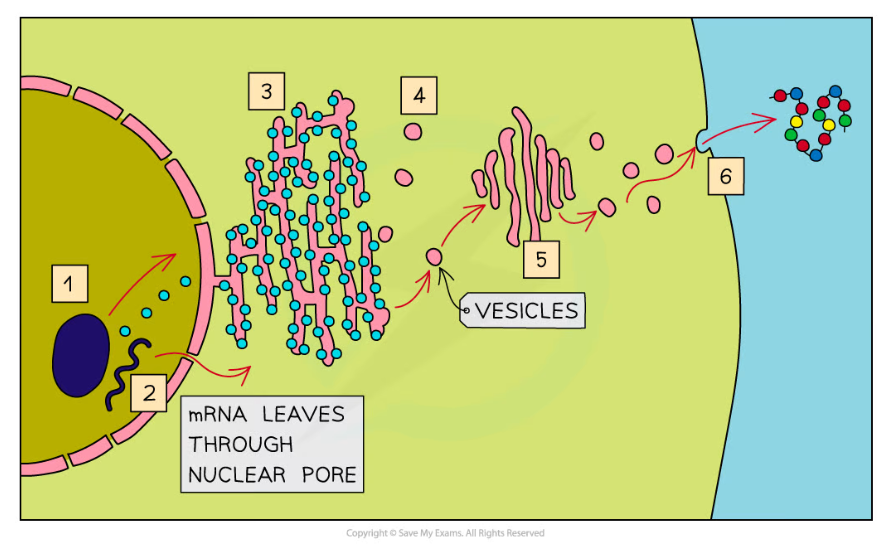
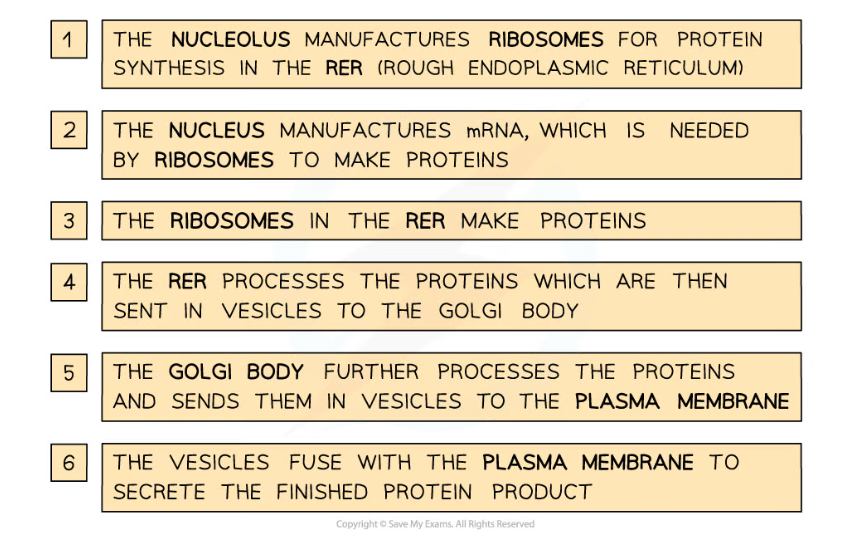
The RER and Golgi apparatus are involved with producing, packaging and transporting proteins in a cell
转载自savemyexams
以上就是关于【Edexcel A (SNAB) A Level Biology:复习笔记3.1.2 Eukaryotic Cells】的解答,如需了解学校/赛事/课程动态,可至翰林教育官网获取更多信息。
往期文章阅读推荐:
翰林独家 | 经济学竞赛核心精讲,一册打通NEC/IEO/USAEBO!
2026 ALEVEL 夏考A率出炉!爱德思vs牛津AQA,哪些科目真的“好出分”?


翰林AMC8视频课重磅上线!

国际竞赛真题资源免费领取






