Edexcel A Level Maths: Mechanics:复习笔记1.1.1 Scalars & Vectors

Scalars & Vectors
Mechanics uses a variety of different scalar and vector quantities.
What are scalars?
Scalars are quantities without direction, they only have a size (magnitude)
e.g. a speed of 7 m/s, a distance of 5 m, a time of 15 s or a mass of 12 kg
Scalars can only be positive- you can’t have a negative distance or speed!
What are vectors?
Vectors are quantities which also have a direction, this is what makes them more than just a scalar
e.g. two objects with velocities of 7 m/s and ‑7 m/s are travelling at the same speed but in opposite directions
Vector quantities can have positive or negative components
Some examples of vector quantities you may come across are displacement, velocity, acceleration, force/weight, momentum
Displacement is the distance moved in a given direction from a starting point
Velocity is a speed in a given direction (displacement over time)
Acceleration is the change in velocity over time
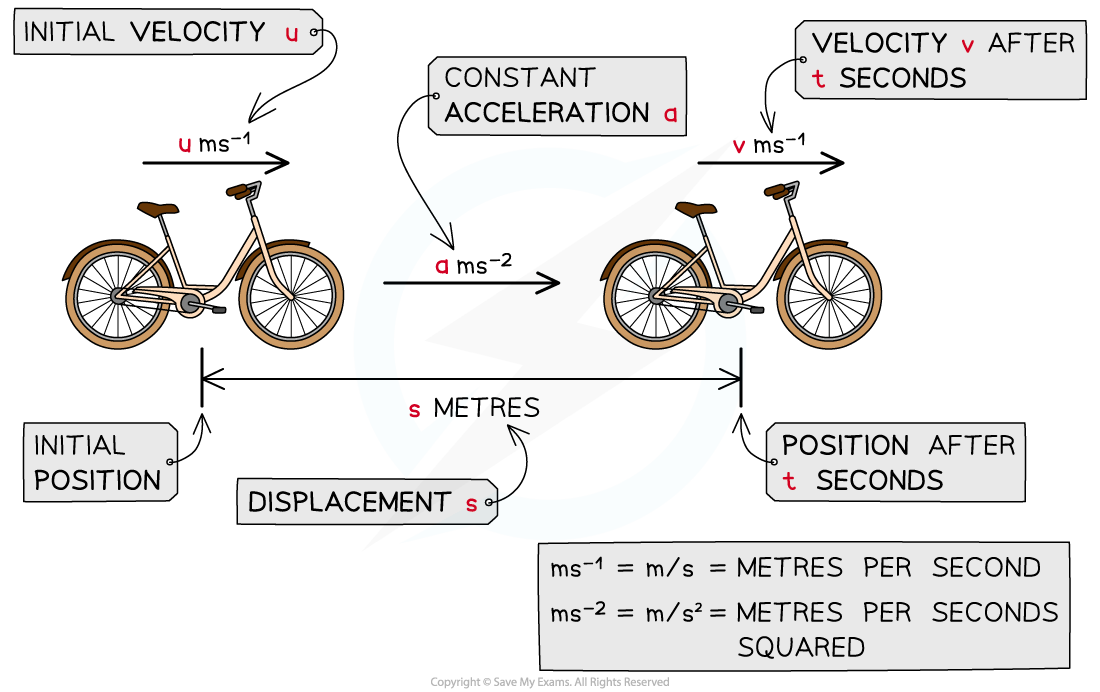
Vector quantities of displacement, velocity and acceleration
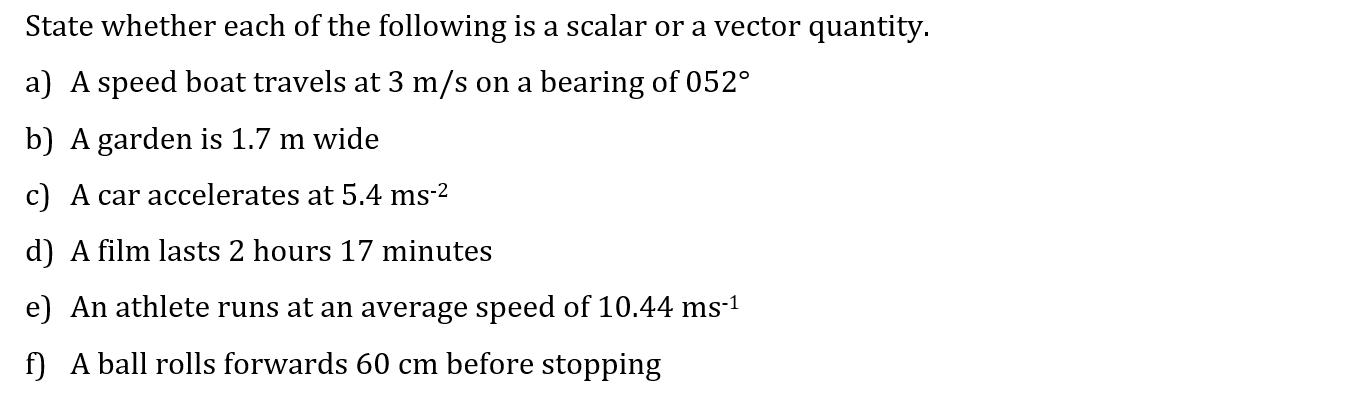
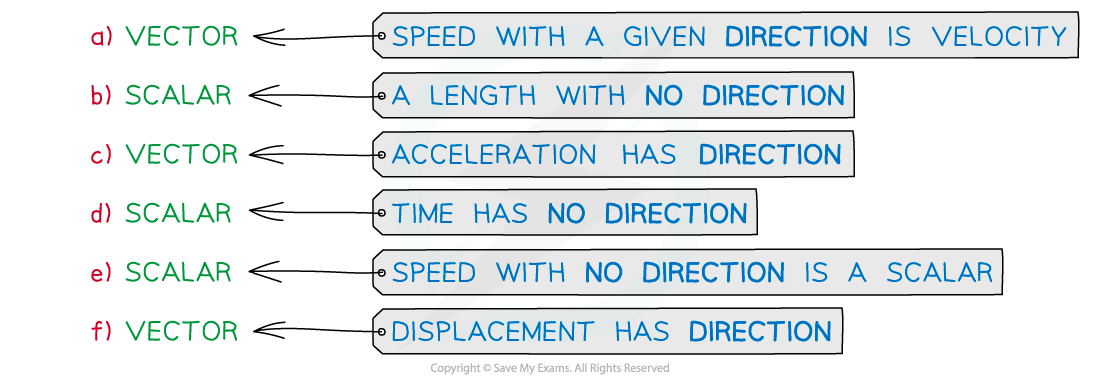
Worked Example
Exam Tip
Make sure you fully understand the definitions of all the words in this section so that you can be clear about what your exam question is asking of you
Vectors appear in bold (non-italic) font in textbooks, on exam papers, etc (i.e. F, α ) but in handwriting should be underlined (i.e. F , α )
转载自savemyexams
以上就是关于【Edexcel A Level Maths: Mechanics:复习笔记1.1.1 Scalars & Vectors】的解答,如需了解学校/赛事/课程动态,可至翰林教育官网获取更多信息。
往期文章阅读推荐:
翰林独家 | 经济学竞赛核心精讲,一册打通NEC/IEO/USAEBO!
2026 ALEVEL 夏考A率出炉!爱德思vs牛津AQA,哪些科目真的“好出分”?


翰林AMC8视频课重磅上线!

国际竞赛真题资源免费领取






