Edexcel A Level Physics:复习笔记3.3 Ohm's Law

Defining Resistance
Resistance
- Resistance is defined as the opposition to current
- It is further defined by Ohm's Law, which says that the resistance of a conductor is given by the ratio of potential difference across it to the current flowing in it
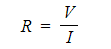
- For a given potential difference, then, the higher the resistance the lower the current
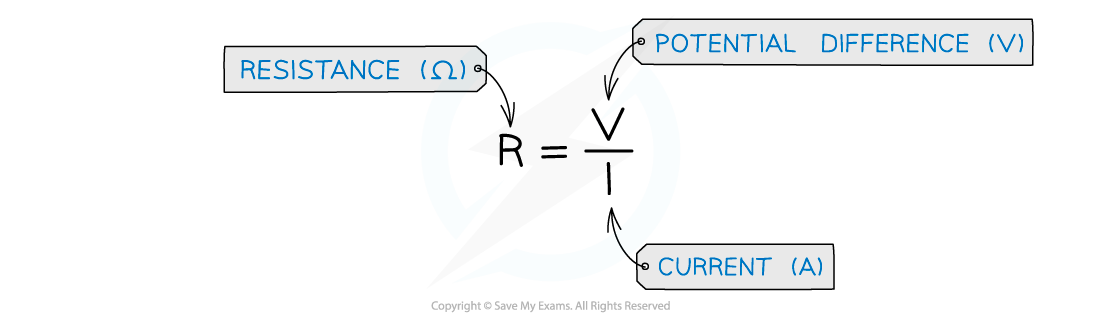
Resistance of a component is the ratio of the potential difference and current
- Resistance is measured in Ohms (Ω)
- An Ohm is defined as one volt per ampere
- The resistance controls the size of the current in a circuit
- A higher resistance means a smaller current
- A lower resistance means a larger current
- All electrical components, including wires, have some value of resistance
Measuring Resistance
- To find the resistance of a component, a simple circuit can be used, containing:
- A power supply
- A component (such as a lamp or resistor)
- An ammeter in series with the component
- A voltmeter in parallel with the compenent
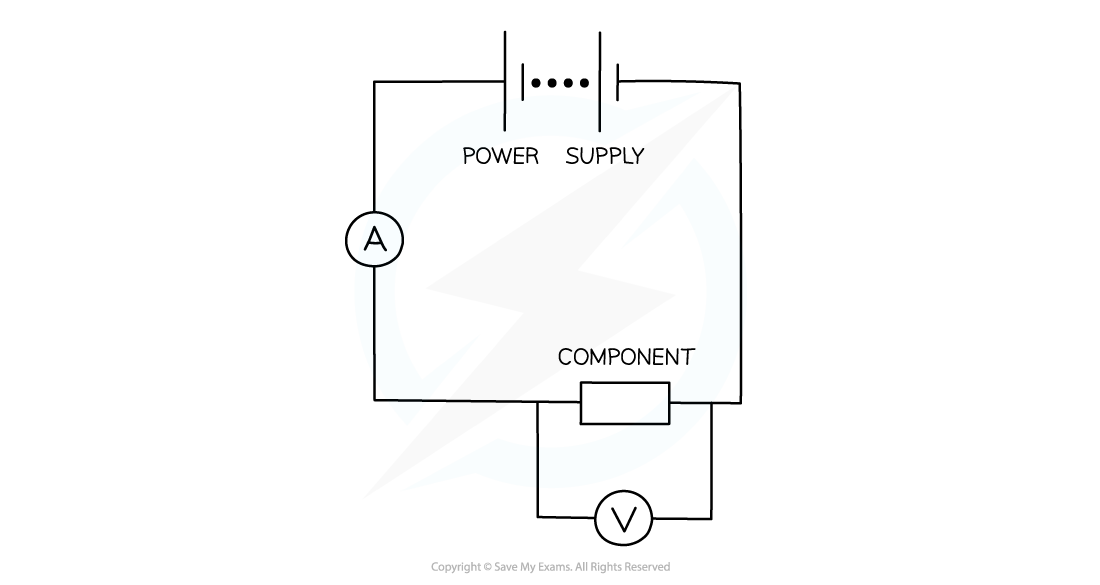
A circuit to determine the resistance of a component
- The power supply should be set to a low voltage to avoid heating the component, typically 1-2 V
- Measurements of the potential difference and current should then be taken from the voltmeter and ammeter respectively
- Finally, these readings should be substituted into the resistance equation
Worked Example
A charge of 5.0 C passes through a resistor of resistance R Ω at a constant rate in 30 s.
If the potential difference across the resistor is 2.0 V, calculate the value of R.
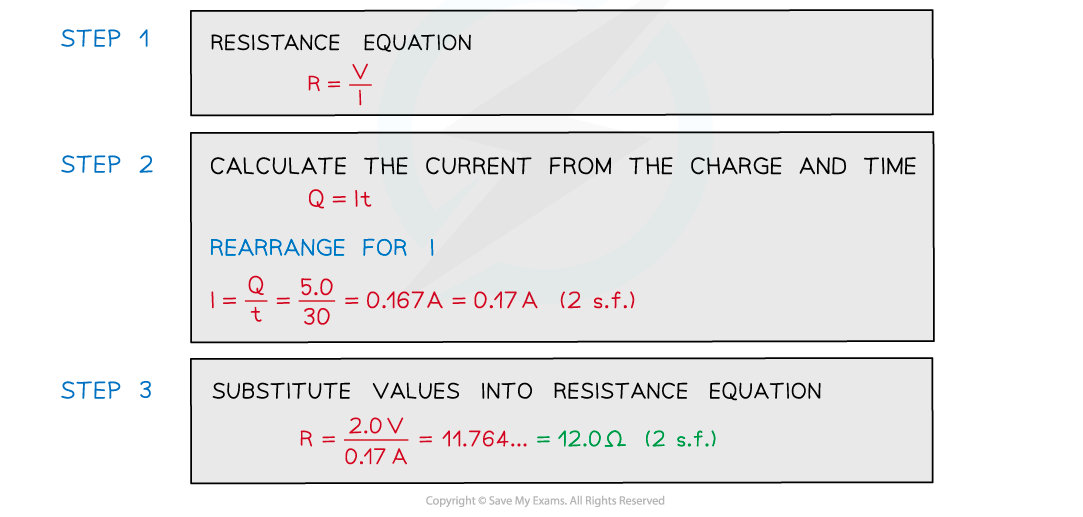
Ohm's Law
- Ohm’s law is defined as:
The current through a component is directly proportional to the potential difference across it, providing the temperature is constant
- Constant temperature implies constant resistance
- This is shown the equation below:

Ohm’s law
- By adjusting the resistance on the variable resistor, the current and potential difference will vary in the circuit.
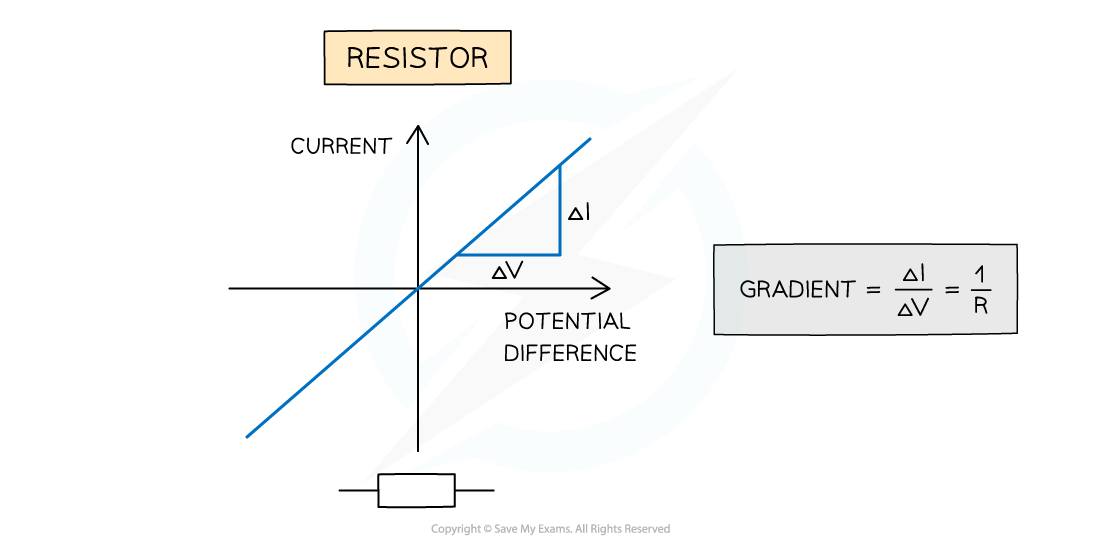
- The variation of current with potential difference through the fixed resistor can be plotted on a pair of axes
- This will produce a straight-line graph
Circuit for plotting graphs of current against voltage
- Since the gradient is constant, the resistance R of the resistor can be calculated by using 1 ÷ gradient of the graph
- An electrical component obeys Ohm’s law if its graph of current against potential difference is a straight line through the origin
- A resistor does obey Ohm’s law
- A filament lamp does not obey Ohm’s law
- Any metal wires will follow Ohm's Law, provided that the current isn’t large enough to increase their temperature
Worked Example
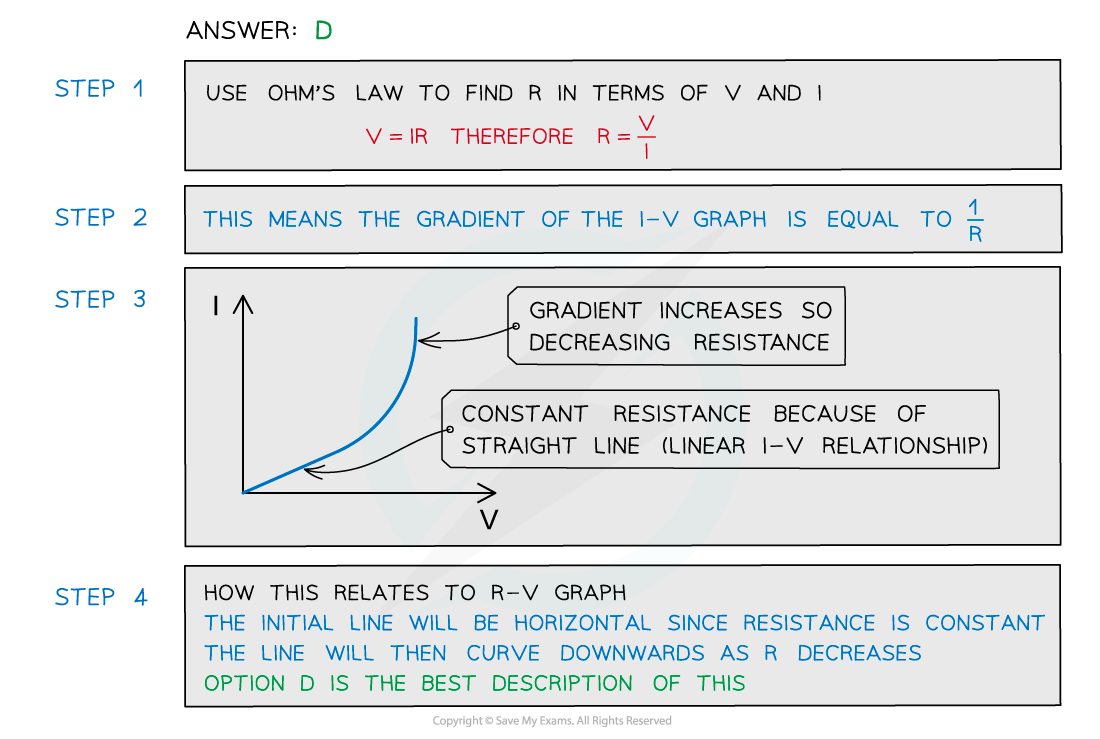
The current flowing through a component varies with the potential difference V across it as shown

Which graph best represents how the resistance R varies with V?

Exam Tip
Resistance is used to control current. Increasing the resistance in a circuit will reduce the current. Don't get the cause and effect mixed up here. Reducing current does not increase resistance - it's the other way round!
Using graphs;
- In maths, the gradient is the slope of the graph
- The graphs below show a summary of how the slope of the graph represents the gradient
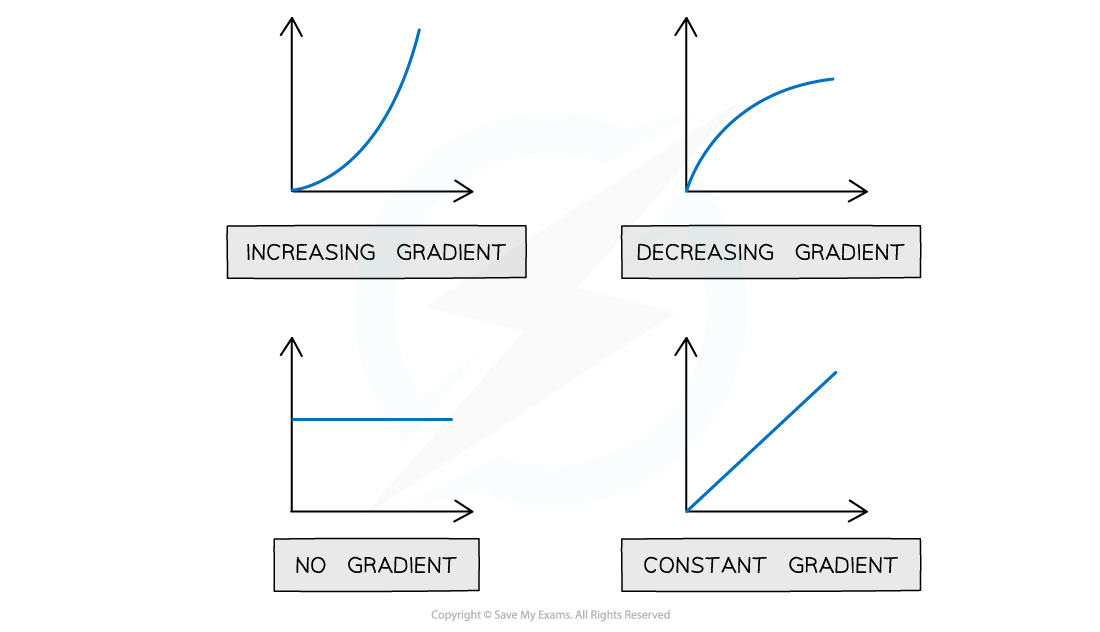
Graphs showing varying gradients
转载自savemyexams
以上就是关于【Edexcel A Level Physics:复习笔记3.3 Ohm's Law】的解答,如需了解学校/赛事/课程动态,可至翰林教育官网获取更多信息。
往期文章阅读推荐:
翰林独家 | 经济学竞赛核心精讲,一册打通NEC/IEO/USAEBO!
2026 ALEVEL 夏考A率出炉!爱德思vs牛津AQA,哪些科目真的“好出分”?


翰林AMC8视频课重磅上线!

国际竞赛真题资源免费领取






