CIE A Level Chemistry复习笔记1.3.13 Polarity & Dipole Moments

Polarity & Dipole Moments
- Electronegativity is the ability of an atom to draw a pair of electrons towards itself in a covalent bond
- Electronegativity increases across a Period and decreases going down a Group
Polarity
- When two atoms in a covalent bond have the same electronegativity the covalent bond is nonpolar

The two chlorine atoms have similar electronegativities so the bonding electrons are shared equally between the two atoms
- When two atoms in a covalent bond have different electronegativities the covalent bond is polar and the electrons will be drawn towards the more electronegative atom
- As a result of this:
- The negative charge centre and positive charge centre do not coincide with each other
- This means that the electron distribution is asymmetric
- The less electronegative atom gets a partial charge of δ+ (delta positive)
- The more electronegative atom gets a partial charge of δ- (delta negative)
- The greater the difference in electronegativity the more polar the bond becomes
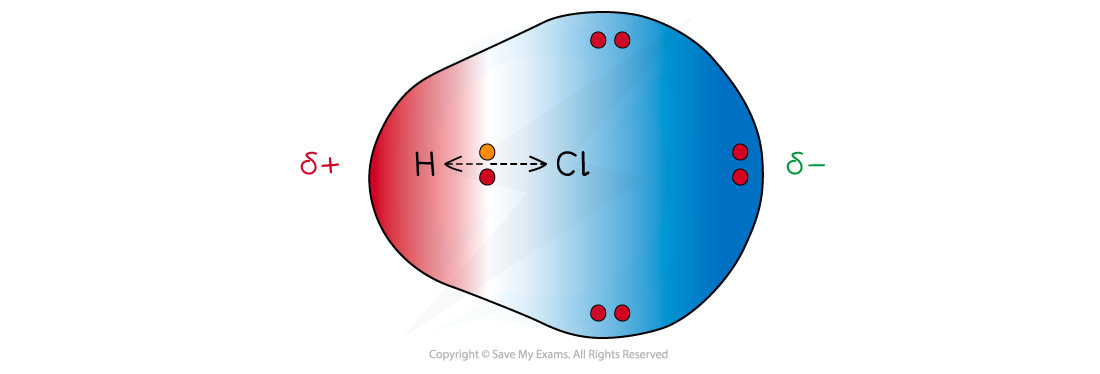
Cl has a greater electronegativity than H causing the electrons to be more attracted towards the Cl atom which becomes delta negative and the H delta positive
Dipole moment
- The dipole moment is a measure of how polar a bond is
- The direction of the dipole moment is shown by the following sign in which the arrow points to the partially negatively charged end of the dipole:

The sign shows the direction of the dipole moment and the arrow points to the delta negative end of the dipole
Assigning polarity to molecules
- To determine whether a molecule with more than two atoms is polar, the following things have to be taken into consideration:
- The polarity of each bond
- How the bonds are arranged in the molecule
- Some molecules have polar bonds but are overall not polar because the polar bonds in the molecule are arranged in such way that the individual dipole moments cancel each other out
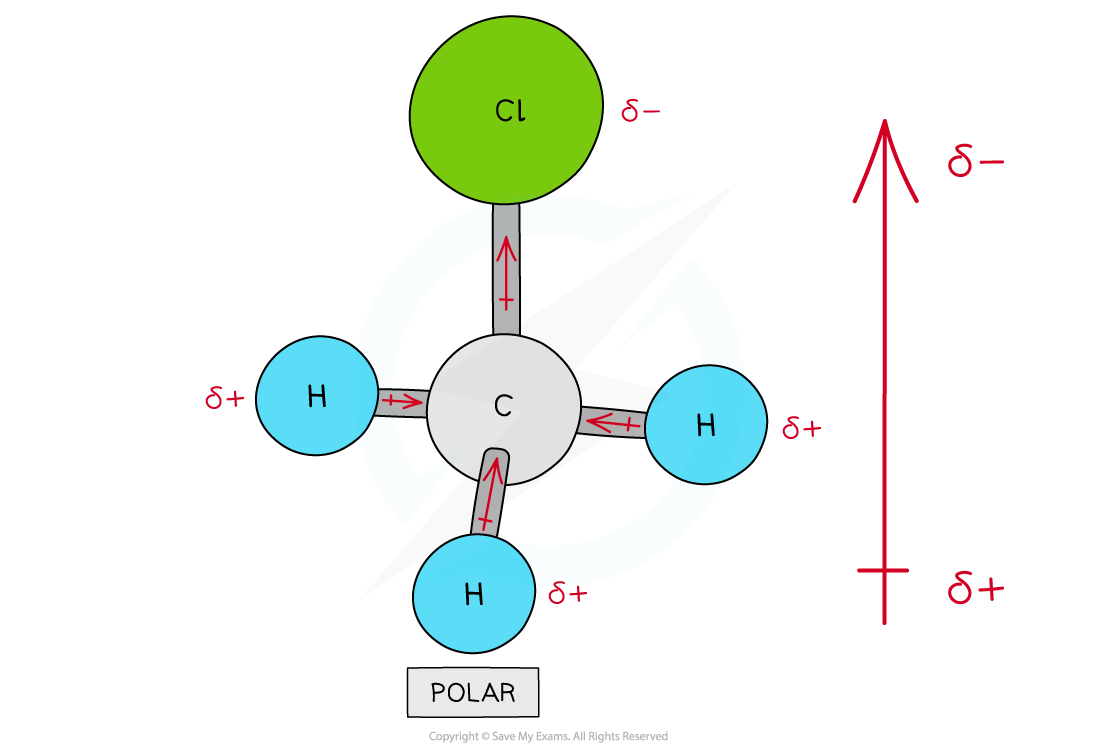
There are four polar covalent bonds in CH3Cl which do not cancel each other out causing CH3Cl to be a polar molecule; the overall dipole is towards the electronegative chlorine atom
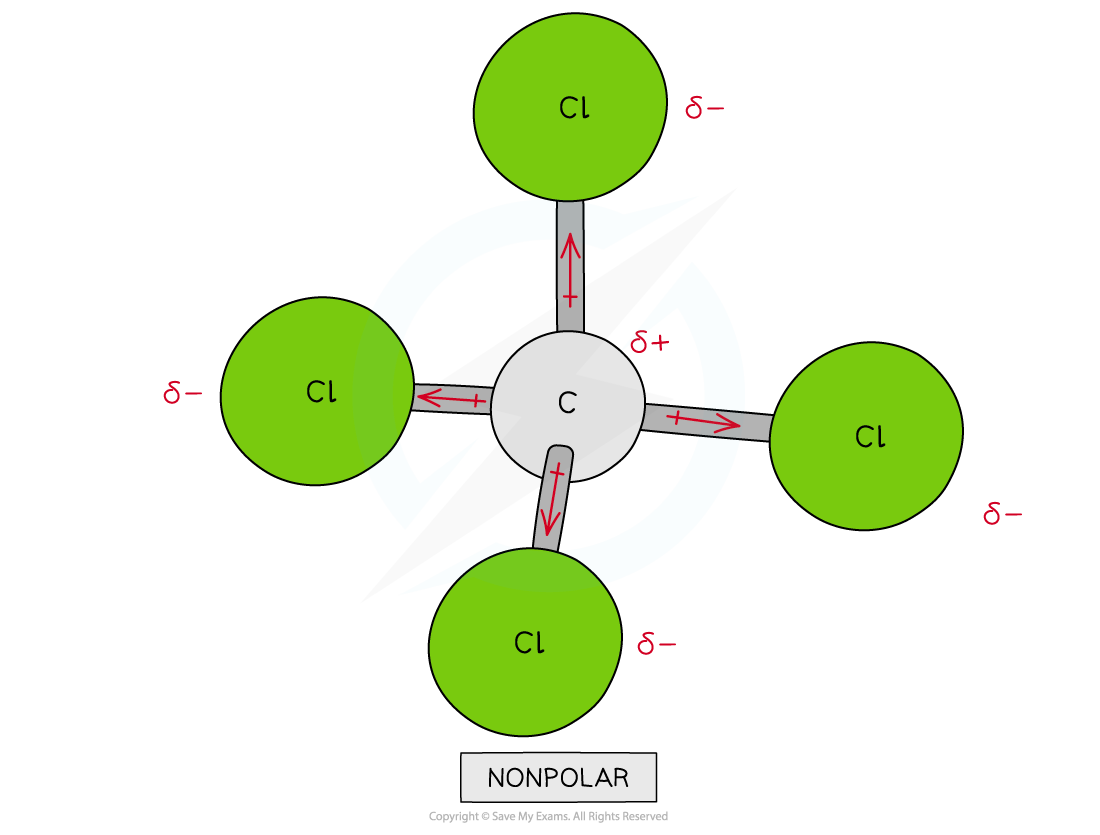
Though CCl4 has four polar covalent bonds, the individual dipole moments cancel each other out causing CCl4 to be a nonpolar molecule
转载自savemyexams
以上就是关于【CIE A Level Chemistry复习笔记1.3.13 Polarity & Dipole Moments】的解答,如需了解学校/赛事/课程动态,可至翰林教育官网获取更多信息。
往期文章阅读推荐:
翰林独家 | 经济学竞赛核心精讲,一册打通NEC/IEO/USAEBO!
2026 ALEVEL 夏考A率出炉!爱德思vs牛津AQA,哪些科目真的“好出分”?


翰林AMC8视频课重磅上线!

国际竞赛真题资源免费领取






