CIE A Level Biology复习笔记2.3.2 The Four Levels of Protein Structure

Proteins: Structures
- There are four levels of structure in proteins, three are related to a single polypeptide chain and the fourth level relates to a protein that has two or more polypeptide chains
- Polypeptide or protein molecules can have anywhere from 3 amino acids (Glutathione) to more than 34,000 amino acids (Titan) bonded together in chains
Primary
- The sequence of amino acids bonded by covalent peptide bonds is the primary structure of a protein
- DNA of a cell determines the primary structure of a protein by instructing the cell to add certain amino acids in specific quantities in a certain sequence. This affects the shape and therefore the function of the protein
- The primary structure is specific for each protein (one alteration in the sequence of amino acids can affect the function of the protein)
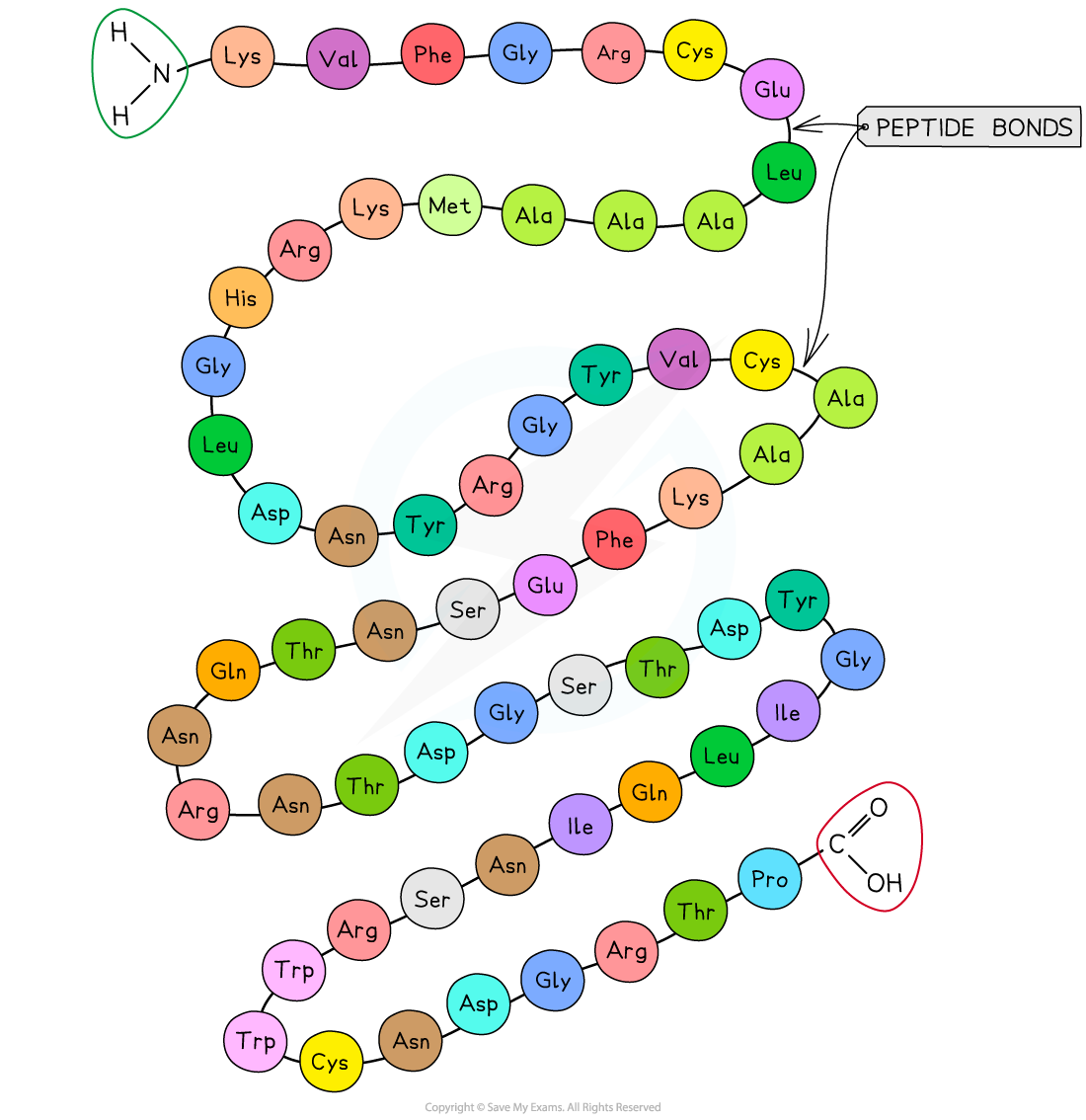
The primary structure of a protein. The three-letter abbreviations indicate the specific amino acid (there are 20 commonly found in cells of living organisms)
Secondary
- The secondary structure of a protein occurs when the weak negatively charged nitrogen and oxygen atoms interact with the weak positively charged hydrogen atoms to form hydrogen bonds
- There are two shapes that can form within proteins due to the hydrogen bonds:
- α-helix
- β-pleated sheet
- The α-helix shape occurs when the hydrogen bonds form between every fourth peptide bond (between the oxygen of the carboxyl group and the hydrogen of the amine group)
- The β-pleated sheet shape forms when the protein folds so that two parts of the polypeptide chain are parallel to each other enabling hydrogen bonds to form between parallel peptide bonds
- Most fibrous proteins have secondary structures (e.g. collagen and keratin)
- The secondary structure only relates to hydrogen bonds forming between the amino group and the carboxyl group (the ‘protein backbone’)
- The hydrogen bonds can be broken by high temperatures and pH changes
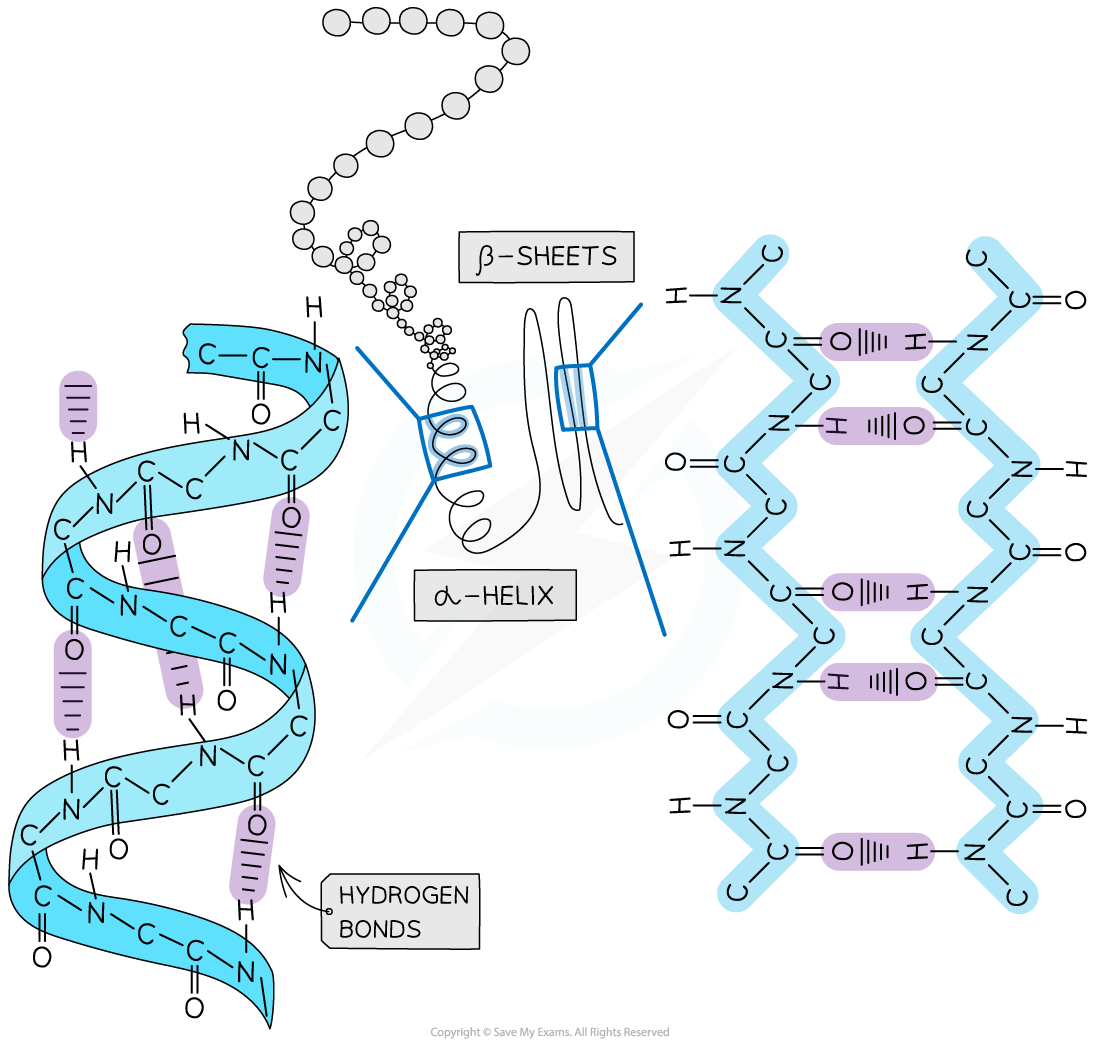
The secondary structure of a protein with the α-helix and β-pleated sheet shapes highlighted. The magnified regions illustrate how the hydrogen bonds form between the peptide bonds
Tertiary
- Further conformational change of the secondary structure leads to additional bonds forming between the R groups (side chains)
- The additional bonds are:
- Hydrogen (these are between R groups)
- Disulphide (only occurs between cysteine amino acids)
- Ionic (occurs between charged R groups)
- Weak hydrophobic interactions (between non-polar R groups)
- This structure is common in globular proteins
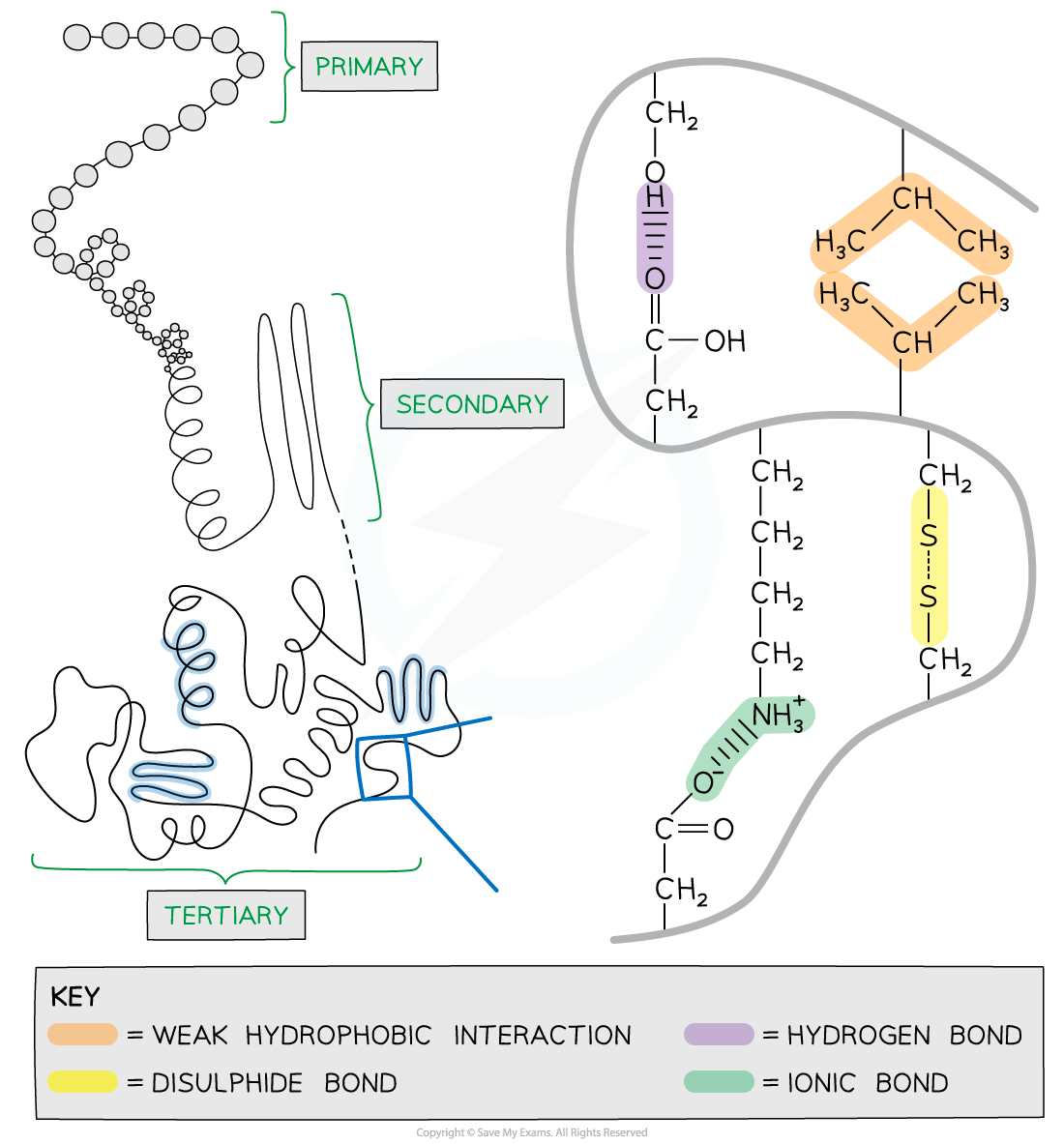
The tertiary structure of a protein with hydrogen bonds, ionic bonds, disulphide bonds and hydrophobic interactions formed between the R groups of the amino acids
Quaternary
- Occurs in proteins that have more than one polypeptide chain working together as a functional macromolecule, for example, haemoglobin
- Each polypeptide chain in the quaternary structure is referred to as a subunit of the protein
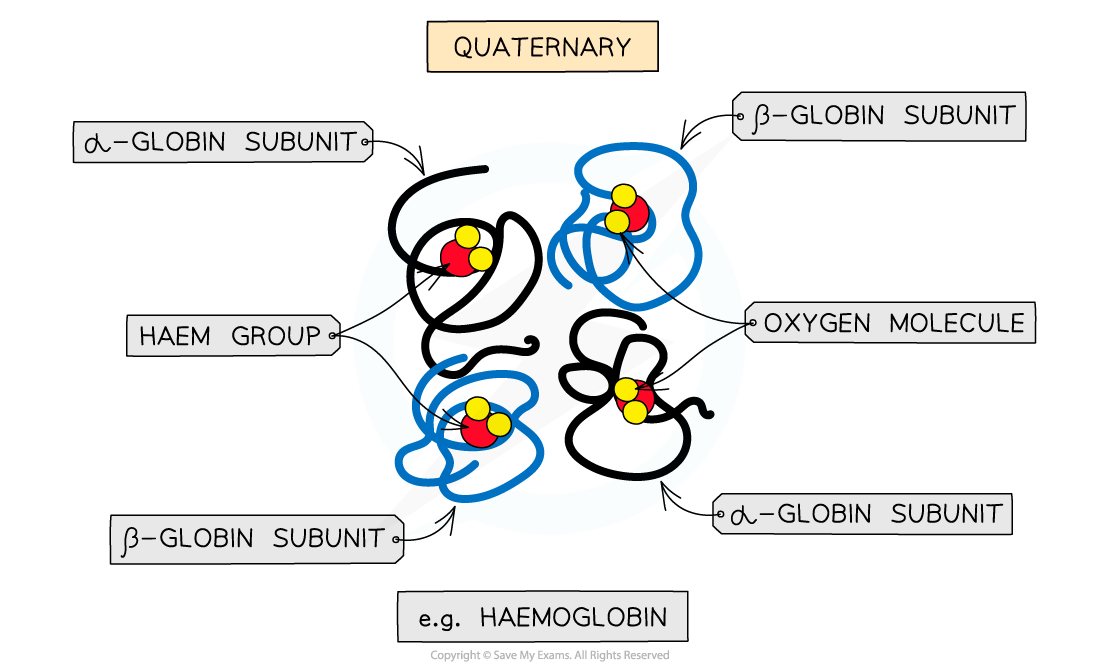
The quaternary structure of a protein. This is an example of haemoglobin which contains four subunits (polypeptide chains) working together to carry oxygen
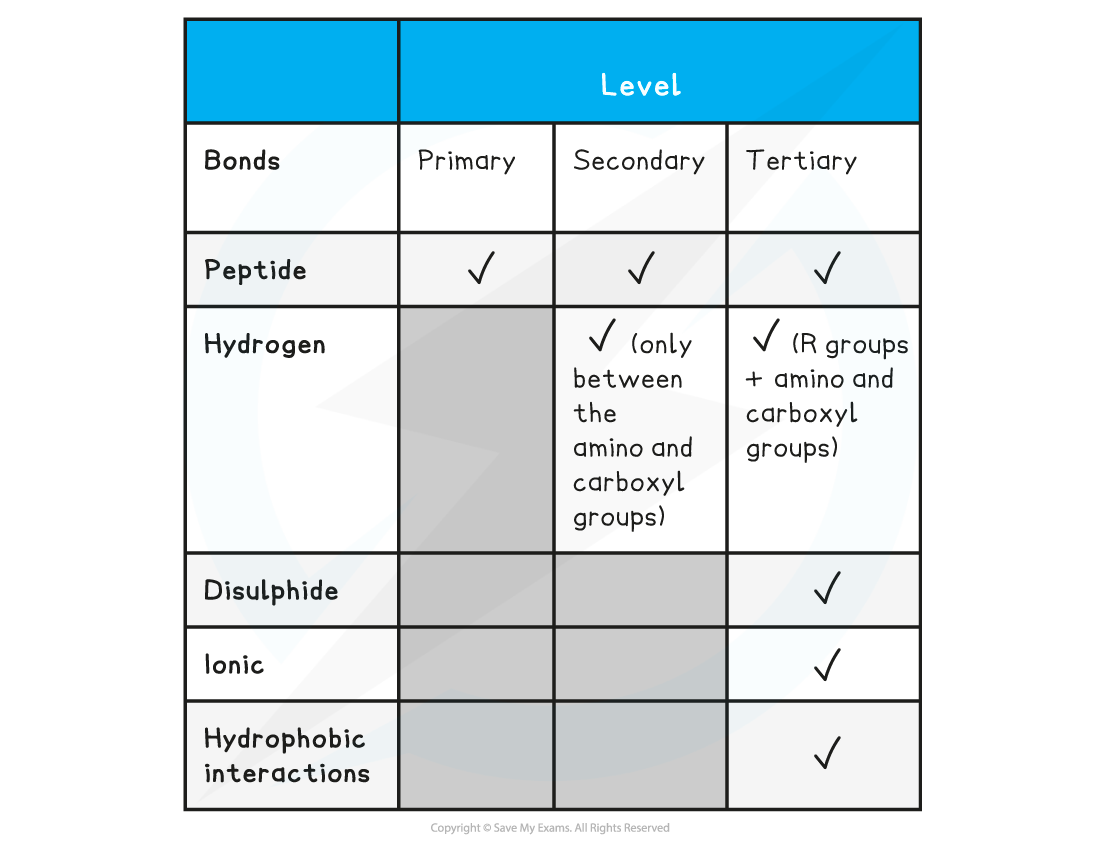
Summary of bonds in proteins table
Exam Tip
Familiarise yourself with the difference between the four structural levels found in proteins, noting which bonds are found at which level. Remember that the hydrogen bonds in tertiary structures are between the R groups whereas in secondary structures the hydrogen bonds form between the amino and carboxyl groups.
转载自savemyexams
以上就是关于【CIE A Level Biology复习笔记2.3.2 The Four Levels of Protein Structure】的解答,如需了解学校/赛事/课程动态,可至翰林教育官网获取更多信息。
往期文章阅读推荐:
翰林独家 | 经济学竞赛核心精讲,一册打通NEC/IEO/USAEBO!
2026 ALEVEL 夏考A率出炉!爱德思vs牛津AQA,哪些科目真的“好出分”?


翰林AMC8视频课重磅上线!

国际竞赛真题资源免费领取






