AQA A Level Physics复习笔记4.1.2 Resolving Vectors

Resolving Vectors
- Two vectors can be represented by a single resultant vector
- Resolving a vector is the opposite of adding vectors
- A single resultant vector can be resolved
- This means it can be represented by two vectors, which in combination have the same effect as the original one
- When a single resultant vector is broken down into its parts, those parts are called components
- For example, a force vector of magnitude F and an angle of θ to the horizontal is shown below
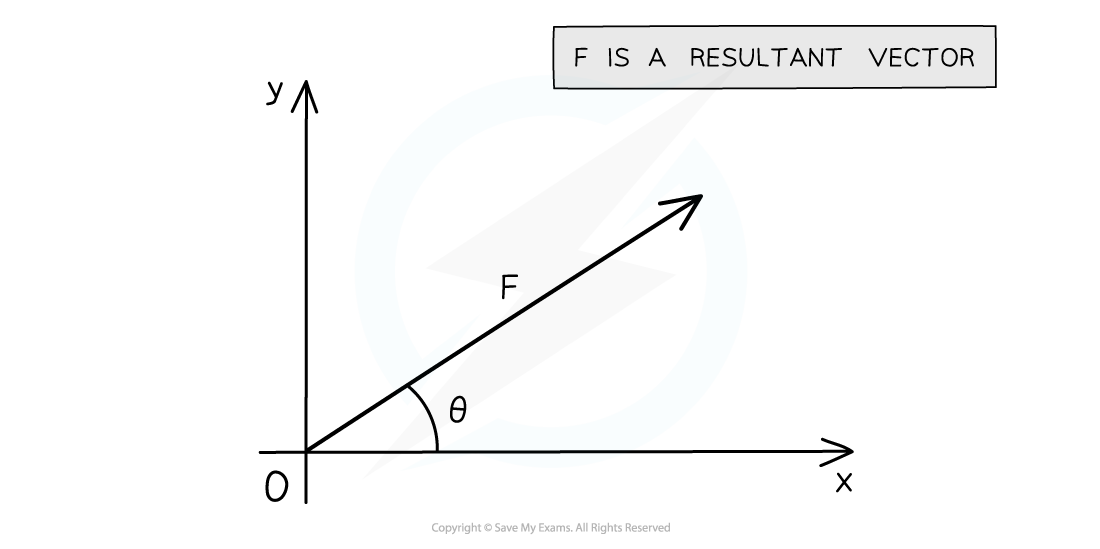
The resultant force F at an angle θ to the horizontal
- It is possible to resolve this vector into its horizontal and vertical components using trigonometry
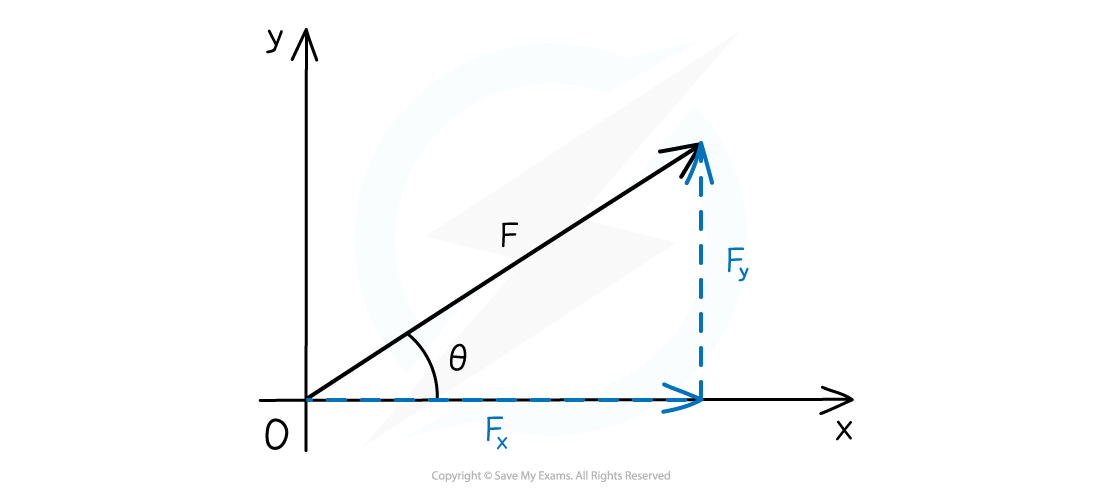
The resultant force F can be split into its horizontal and vertical components
- For the horizontal component, Fx = F cos θ
- For the vertical component, Fy = F sin θ
Forces on an Inclined Plane
- Objects on an inclined plane is a common scenario in which vectors need to be resolved
- An inclined plane, or a slope, is a flat surface tilted at an angle, θ
- Instead of thinking of the component of the forces as horizontal and vertical, it is easier to think of them as parallel or perpendicular to the slope
- The weight of the object is vertically downwards and the normal (or reaction) force, R is always vertically up from the object
- The weight W is a vector and can be split into the following components:
- W cos (θ) perpendicular to the slope
- W sin (θ) parallel to the slope
- If there is no friction, the force W sin (θ) causes the object to move down the slope
- The object is not moving perpendicular to the slope, therefore, the normal force R = W cos (θ)
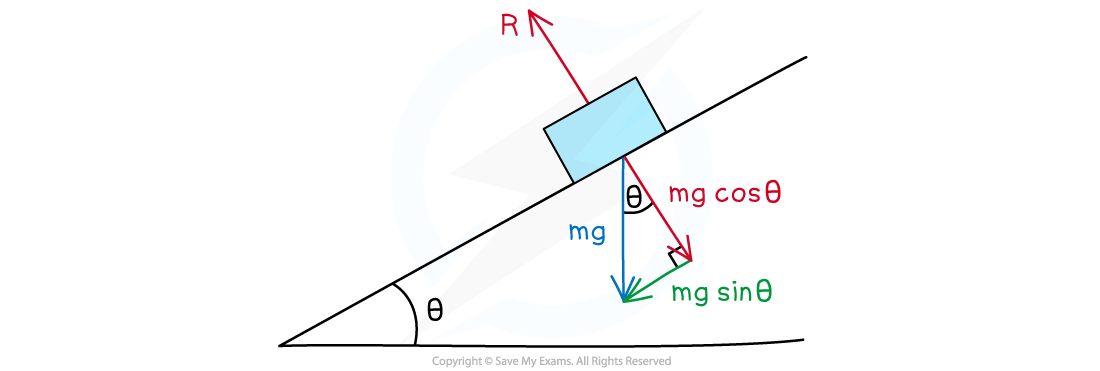
The weight vector of an object on an inclined plane can be split into its components parallel and perpendicular to the slope
Worked Example
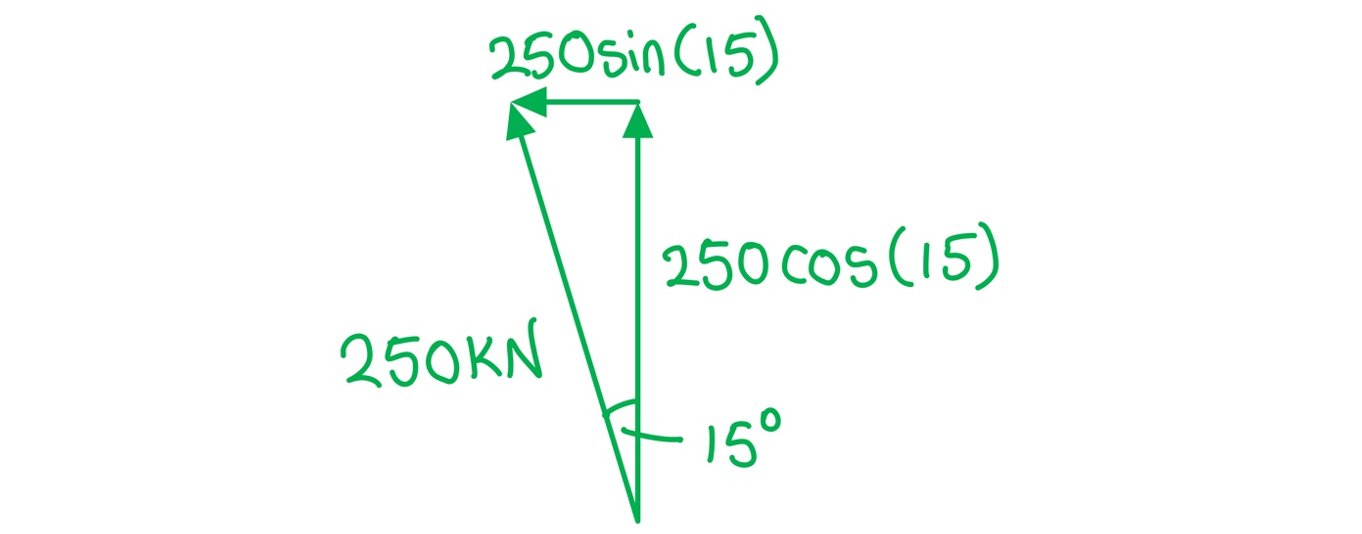
A helicopter provides a lift of 250 kN when the blades are tilted at 15º from the vertical.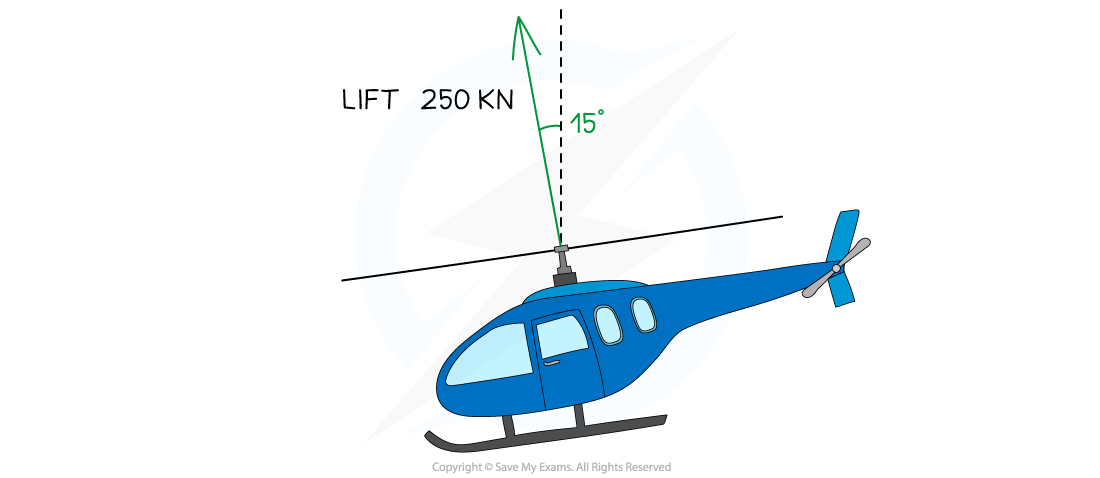 Calculate the horizontal and vertical components of the lift force.
Step 1: Draw a vector triangle of the resolved forces
Step 2: Calculate the vertical component of the lift force
Vertical = 250 × cos(15) = 242 kN
Step 3: Calculate the horizontal component of the lift force
Horizontal = 250 × sin(15) = 64.7 kN
Exam Tip
If you're unsure as to which component of the force is cos θ or sin θ, just remember that the cos θ is always the adjacent side of the right-angled triangle AKA, making a 'cos sandwich'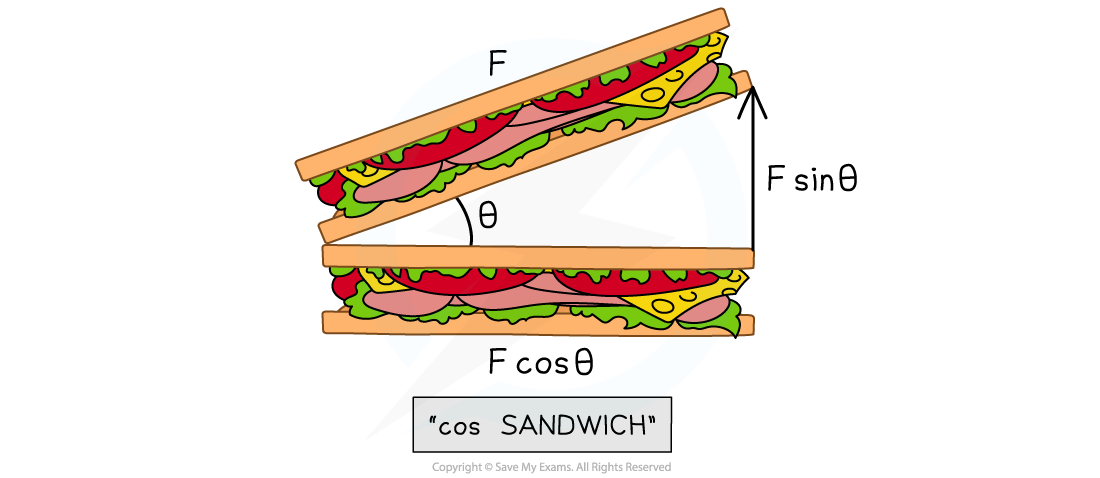
Equilibrium
- Coplanar forces can be represented by vector triangles
- Forces are in equilibrium if an object is either
- At rest
- Moving at constant velocity
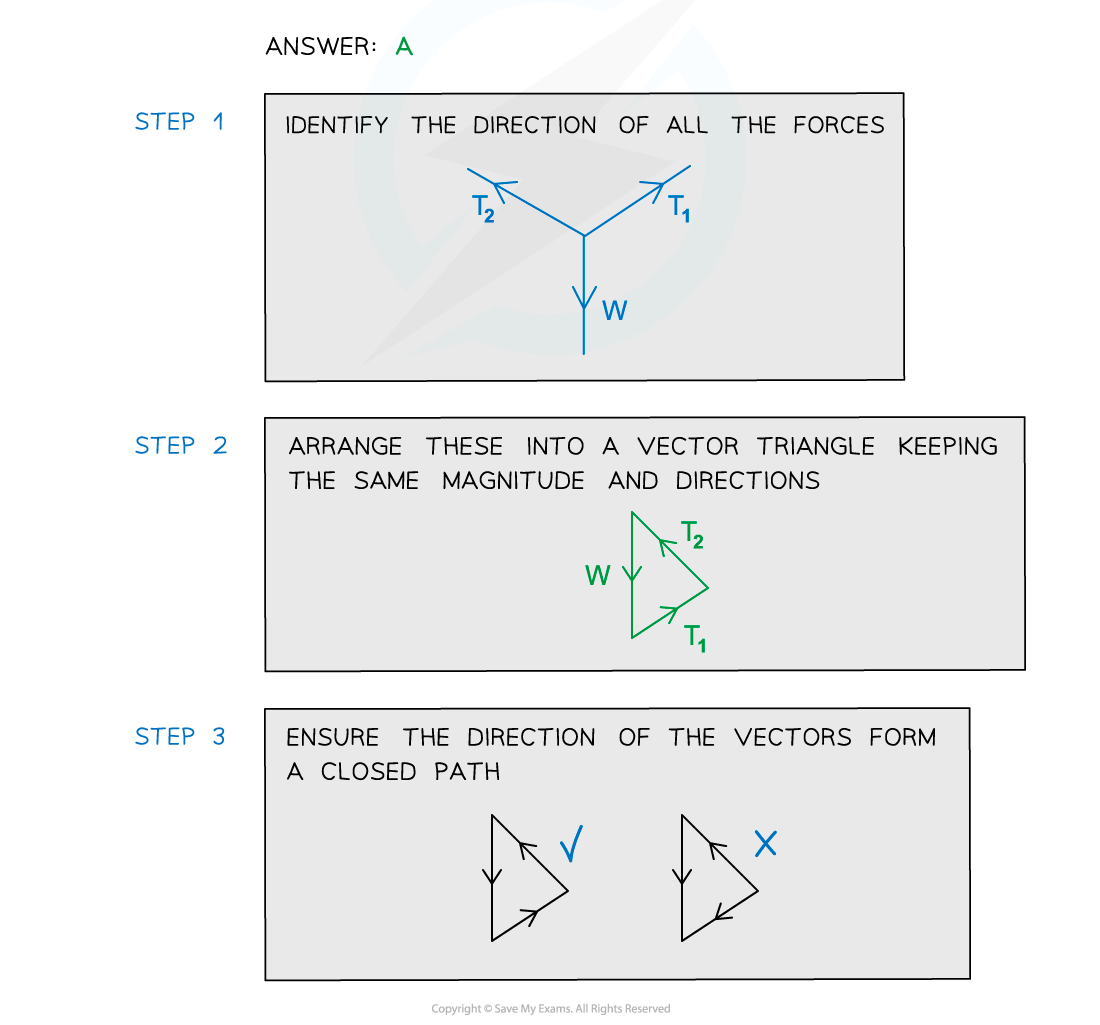
- In equilibrium, coplanar forces are represented by closed vector triangles
- The vectors, when joined together, form a closed path
- The most common forces on objects are
- Weight
- Normal reaction force
- Tension (from cords and strings)
- Friction
- The forces on a body in equilibrium are demonstrated below:
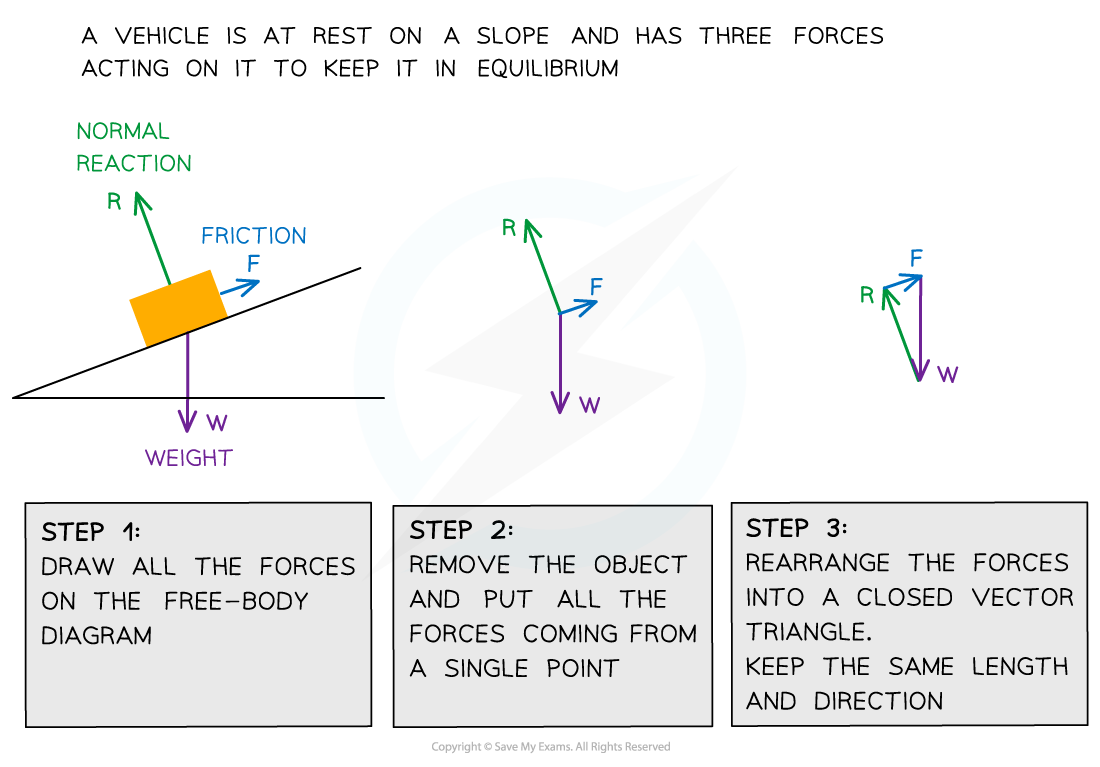
Three forces on an object in equilibrium form a closed vector triangle
Worked Example
A weight hangs in equilibrium from a cable at point X. The tensions in the cables are T1 and T2 as shown. Which diagram correctly represents the forces acting at point X?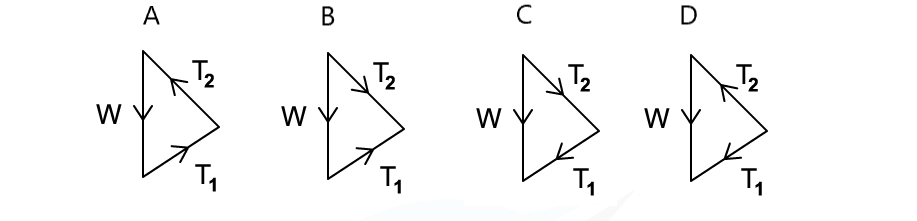
Exam Tip
The diagrams in exam questions about this topic could ask you to draw to scale, so make sure you have a ruler handy!
转载自savemyexams
以上就是关于【AQA A Level Physics复习笔记4.1.2 Resolving Vectors】的解答,如需了解学校/赛事/课程动态,可至翰林教育官网获取更多信息。
往期文章阅读推荐:
翰林独家 | 经济学竞赛核心精讲,一册打通NEC/IEO/USAEBO!
2026 ALEVEL 夏考A率出炉!爱德思vs牛津AQA,哪些科目真的“好出分”?


翰林AMC8视频课重磅上线!

国际竞赛真题资源免费领取






