AQA A Level Chemistry复习笔记5.3.2 Partial Pressure

Partial Pressure
- The partial pressure of a gas is the pressure it exerts in a mixture of gases if it occupied the container on its own
- Partial pressure is given the symbol p, so for a gas X, it is written as pX
- The total pressure is the sum of the partial pressures (this is known as Daltons' Law)
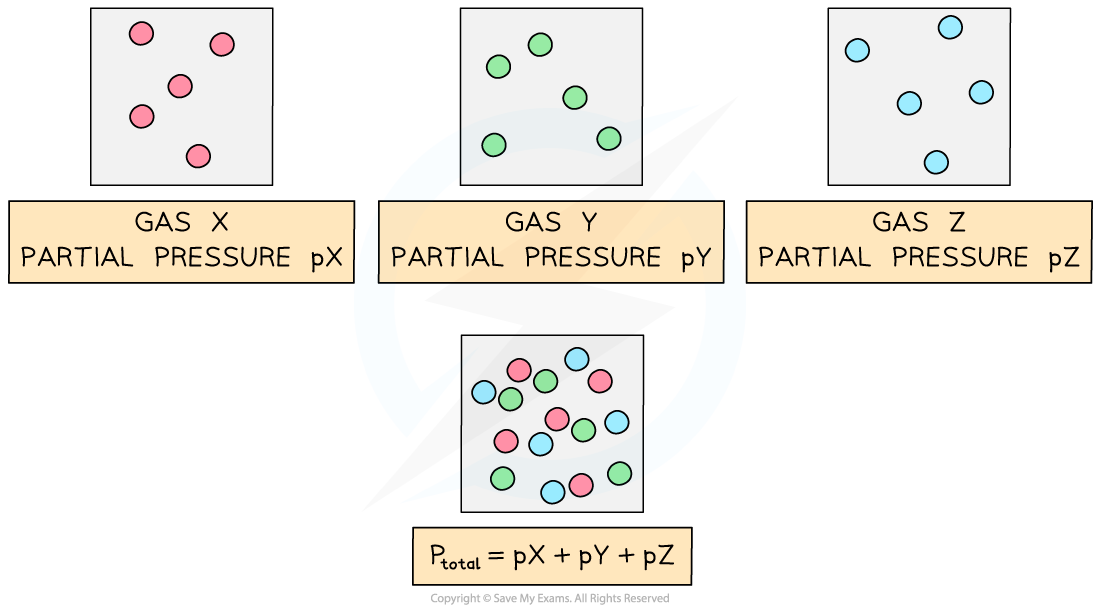
- The mathematical relationships are as follows

Partial pressure and mole fraction expressions
Worked Example
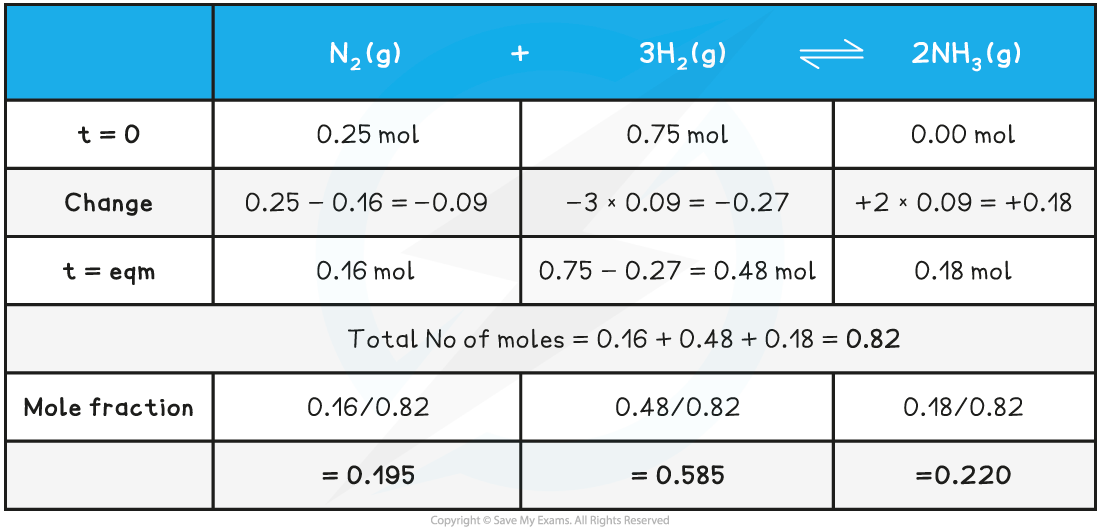
Working out mole fractionsA sample of 0.25 mole of nitrogen and 0.75 mole of hydrogen were reacted together to form ammonia. The equilibrium amount of nitrogen was 0.16 mole.
N2 (g) + 3H2 (g) ⇌ 2NH3 (g)
Calculate the mole fractions of nitrogen, hydrogen and ammonia.
Answer
Write out the equation and record the initial, the change and the equilibrium amounts:
Exam Tip
You can check you have the mole fractions correct by adding them up and making sure they come to 1:0.195 + 0.585 + 0.220 = 1
Kp Calculations
- Kp calculations are a step-by-step process in which you need to find
- the mole fractions of the gases present
- their partial pressures
- the Kp expression
- the value of Kp
- The following worked example shows how this is achieved
Worked Example
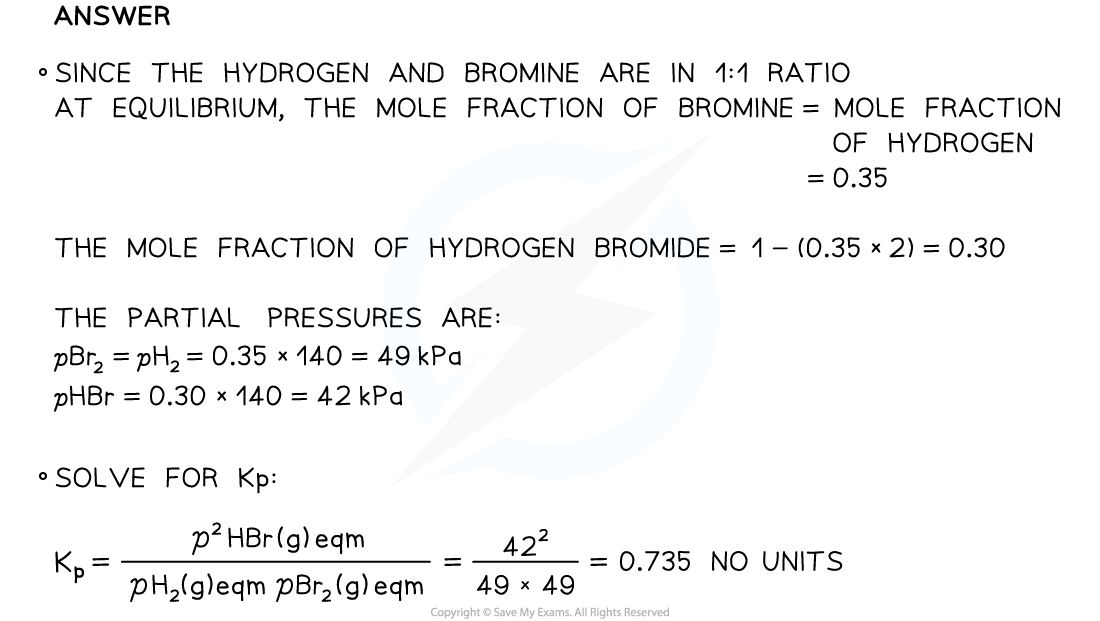
Finding KpHydrogen and bromine were mixed in a flask in a 1: 1 ratio and allowed to reach equilibrium at 450 K. When equilibrium had been achieved the total pressure in the flask was 140 kPa and the mole fraction of bromine was 0.35.The equation for the reaction is
H2 (g) + Br2 (g) ⇌ 2HBr (g)
Determine the partial pressures for each gas at equilibrium and the value of Kp
- Another style of Kp calculation involves being given the value of Kp and working backwards to deduce the partial pressure of one of the gases
Worked Example
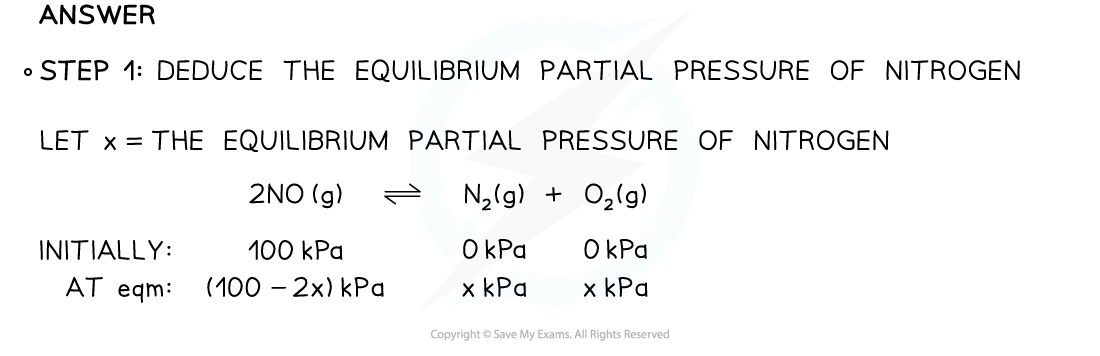
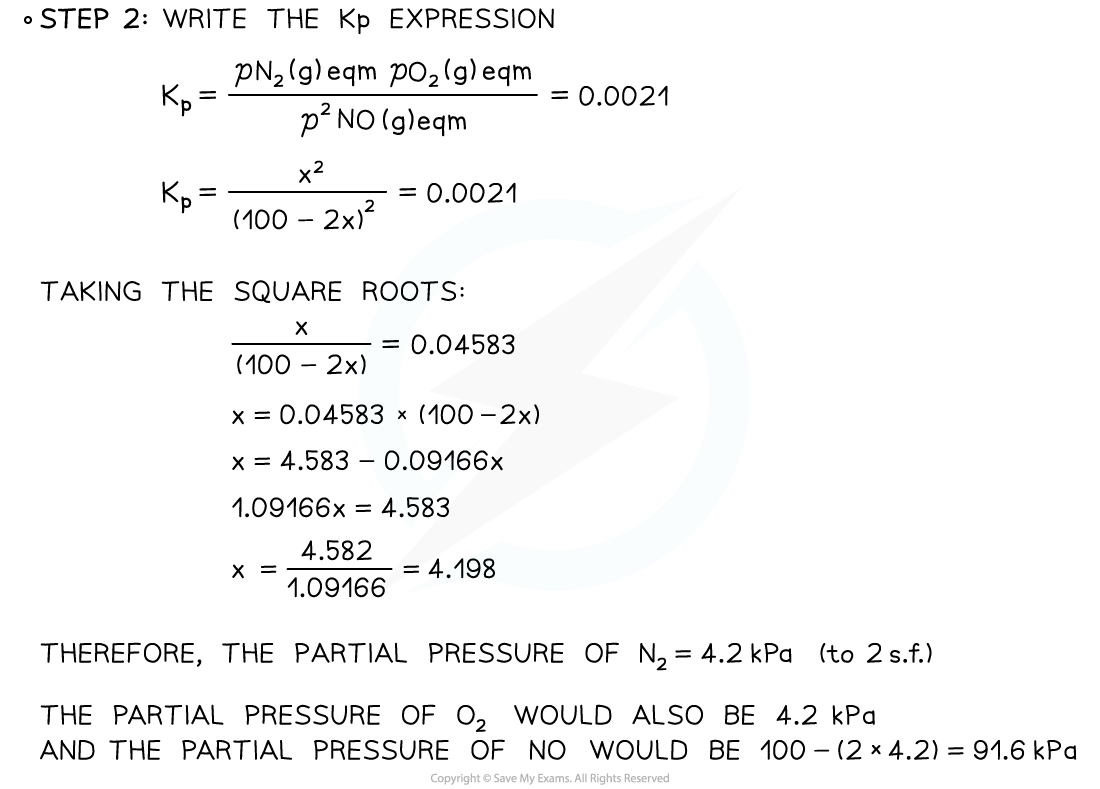
Finding Partial PressureKp for the dissociation equilibrium reaction of nitrogen monoxide is 0.0021.
2NO (g) ⇌ N2 (g) + O2 (g)
If pure NO is introduced into a reaction flask at an initial pressure of 100 kPa, what is the equilibrium partial pressure of nitrogen?
转载自savemyexams
以上就是关于【AQA A Level Chemistry复习笔记5.3.2 Partial Pressure】的解答,如需了解学校/赛事/课程动态,可至翰林教育官网获取更多信息。
往期文章阅读推荐:
翰林独家 | 经济学竞赛核心精讲,一册打通NEC/IEO/USAEBO!
2026 ALEVEL 夏考A率出炉!爱德思vs牛津AQA,哪些科目真的“好出分”?


翰林AMC8视频课重磅上线!

国际竞赛真题资源免费领取






