AQA A Level Biology复习笔记6.2.7 Cholinergic Synapses

Cholinergic Synapses
- Where two neurones meet, they do not actually come into physical contact with each other – a very small gap, known as the synaptic cleft, separates them
- The ends of the two neurones, along with the synaptic cleft, form a synapse
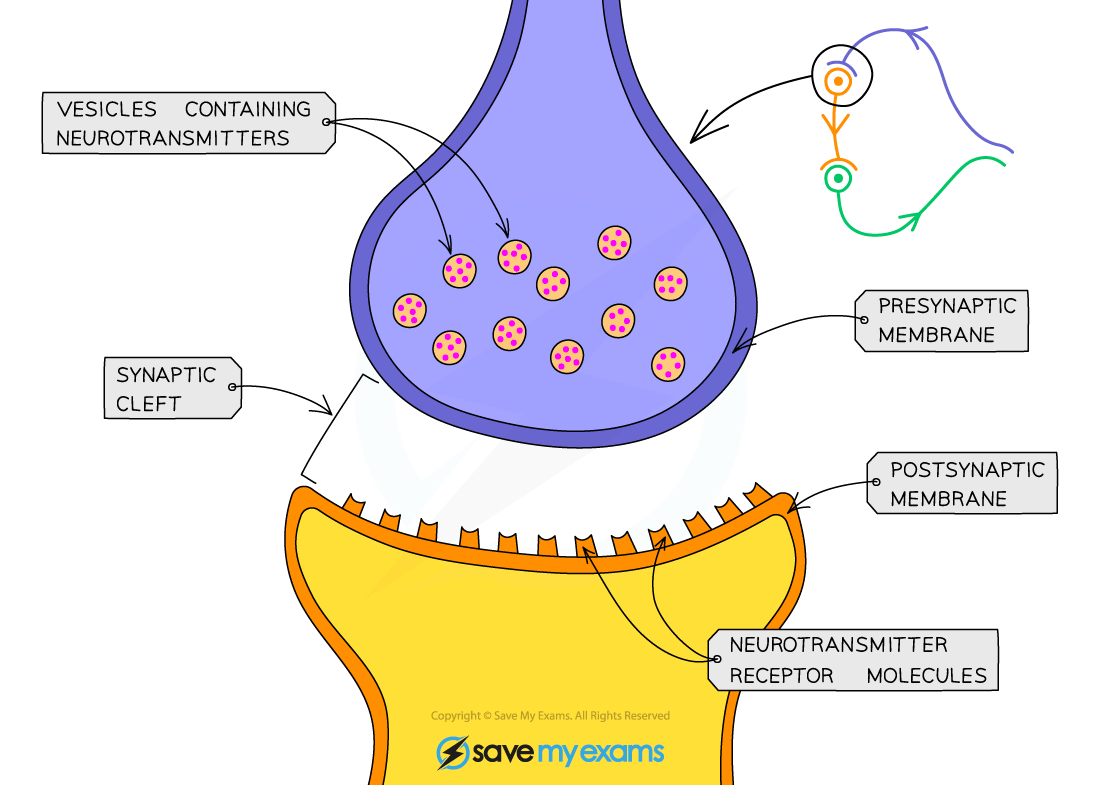
A synapse
Synaptic transmission
- Electrical impulses cannot ‘jump’ across synapses
- When an electrical impulse arrives at the end of the axon on the presynaptic neurone, chemical messengers called neurotransmitters are released from vesicles at the presynaptic membrane
- The neurotransmitters diffuse across the synaptic cleft and temporarily bind with receptor molecules on the postsynaptic membrane
- This stimulates the postsynaptic neurone to generate an electrical impulse that then travels down the axon of the postsynaptic neurone
- The neurotransmitters are then destroyed or recycled to prevent continued stimulation of the second neurone, which could cause repeated impulses to be sent
- Synapses that use acetylcholine as a neurotransmitter are described as cholinergic synapses
转载自savemyexams
以上就是关于【AQA A Level Biology复习笔记6.2.7 Cholinergic Synapses】的解答,如需了解学校/赛事/课程动态,可至翰林教育官网获取更多信息。
往期文章阅读推荐:
翰林独家 | 经济学竞赛核心精讲,一册打通NEC/IEO/USAEBO!
2026 ALEVEL 夏考A率出炉!爱德思vs牛津AQA,哪些科目真的“好出分”?


翰林AMC8视频课重磅上线!

国际竞赛真题资源免费领取






