AQA A Level Biology复习笔记5.1.2 The Light Dependent Reaction

The Light Dependent Reaction
Thylakoids
- Plant cells contain chloroplasts which is the site of photosynthesis
- Chloroplasts are filled with a fluid known as the stroma
- The system of membranes found in the stroma of the chloroplast consists of a series of flattened fluid-filled sacs known as thylakoids
- In places, these thylakoids stack up to form structures known as grana (singular – granum)
- The light-dependent stage of photosynthesis occurs in the thylakoid membranes and the thylakoid spaces (the spaces inside the thylakoids)
- The thylakoid membranes contain the pigments, enzymes and electron carriers required for the light-dependent reactions
- These proteins and pigments make up an electron transport chain used to carry electrons through the membrane
- Electron energy can be used to move H+ ions across the membrane
- Electrons are donated by water molecules and accepted by NADP molecules that form NADPH
- The membranes of the grana create a large surface area to increase the number of light-dependent reactions that can occur
- This membrane system provides a large number of pigment molecules in an arrangement that ensures as much light as necessary is absorbed
- The pigment molecules are arranged in light-harvesting clusters known as photosystems
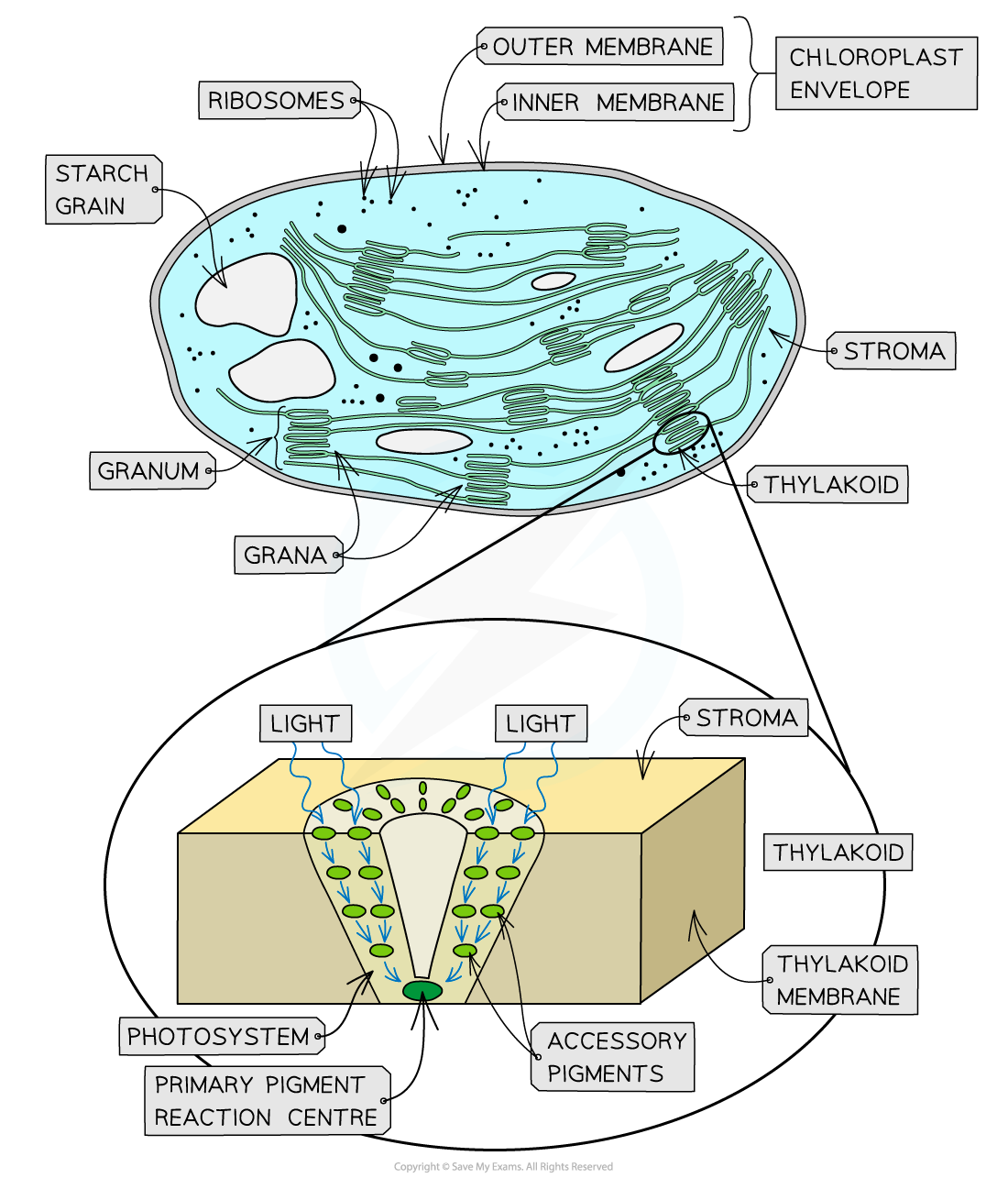
Photosystems are funnel-like structures found in the thylakoid membrane. They are made from accessory pigments that absorb light energy and transfer it to the primary pigment reaction centre.
Photosystems
- Photosystems are collections of photosynthetic pigments that absorb light energy
- In a photosystem, the different pigment molecules are arranged in funnel-like structures the thylakoid membrane
- Each pigment molecule passes energy down to the next pigment molecule in the cluster until it reaches the primary pigment reaction centre
- Photosystem II has a primary pigment that absorbs light at a wavelength of 680nm and is therefore called P680
- Photosystem II is at the beginning of the electron transport chain and is where the photolysis of water takes place
- Photosystem I has a primary pigment that absorbs light at a wavelength of 700nm and is therefore called P700
- Photosystem I is in the middle of the electron transport chain
- When the light energy absorbed by the pigments is passed to the primary pigment, chlorophyll, this causes the photoionisation of chlorophyll
- Photoionisation is when a chlorophyll pigment becomes positively charged as a result of losing two electrons when it absorbs light energy
- The two electrons are lost because they are excited by the light energy and move to a higher energy level
The Light-Dependent Reaction
- Light energy is used to breakdown water in a reaction known as photolysis; this produces hydrogen ions, electrons, and oxygen in the thylakoid lumen
- A proton gradient is formed as the photolysis of water results in a high concentration of hydrogen ions in the thylakoid lumen
- Electrons travel through an electron transport chain of proteins within the membrane
- Reduced NADP (NADPH) is produced when hydrogen ions in the stroma and electrons from the electron transport chain combine with the carrier molecule NADP
- ATP is produced during a process known as photophosphorylation (ADP + Pi → ATP) using the proton gradient between the thylakoid lumen and stroma to drive the enzyme ATP synthase
Photosystem II
- Light is absorbed by photosystem II (located in the thylakoid membrane) and passed to the photosystem II primary pigment (P680)
- Two electrons in the primary pigment molecule (ie. the chlorophyll molecule) are excited to a higher energy level and are emitted from the chlorophyll molecule in a process known as photoionisation
- Each excited electron is passed down a chain of electron carriers known as an electron transport chain, before being passed on to photosystem I
- During this process chemiosmosis occurs:
- The energy given by the electrons moving through the electron transport chain enables H+ ions (protons) to pass from a low concentration in the stroma to a high concentration in the thylakoid lumen
- The creation of this proton gradient across the membrane later drives the synthesis of ATP in photophosphorylation
- Photosystem II contains a water-splitting enzyme called the oxygen-evolving complex which catalyses the breakdown (photolysis) of water by light:
H2O → 2H+ + 2e- + ½O2
- As the excited electrons leave the primary pigment of photosystem II and are passed on to photosystem I, they are replaced by electrons from the photolysis of water
Photosystem I
- At the same time as photoactivation of electrons in photosystem II, electrons in photosystem I also undergo photoionisation
- The excited electrons from photosystem I also pass along an electron transport chain, alternatively reducing and oxidising proteins as they are accepted then passed on
- These electrons combine with hydrogen ions (produced by the photolysis of water and transported out of the thylakoid lumen by ATP synthase) and the carrier molecule NADP to give reduced NADP:
2H+ + 2e- + NADP → reduced NADP
- The reduced NADP (NADPH) then passes to the light-independent reactions to be used in the synthesis of carbohydrates
- The electrons lost by photosystem I are replaced by the de-energised electrons from photosystem II
Photophosphorylation & Chemiosmosis
- Photophosphorylation is the name for the overall process of using light energy and the electron transport chain to phosphorylate ADP to ATP
- The light-dependent reaction is sometimes called 'photophosphorylation'
- During photophosphorylation, energetic (excited) electrons are passed along a chain of electron carriers (known as the electron transport chain)
- The electron carriers are alternately reduced (as they gain an electron) and then oxidised (as they lose the electron by passing it to the next carrier)
- The excited electrons gradually release their energy as they pass through the electron transport chain
- The released energy is used to actively transport protons (H+ ions) across the thylakoid membrane, from the stroma (the fluid within chloroplasts) to the thylakoid lumen (the space within thylakoids)
- A ‘proton pump’ transports the protons across the thylakoid membrane, from the stroma to the thylakoid lumen
- The energy for this active transport comes from the excited electrons moving through the electron transport chain
- This creates a proton gradient, with a high concentration of protons in the thylakoid lumen and a low concentration in the stroma
- Protons then return to the stroma (moving down the proton concentration gradient) by facilitated diffusion through transmembrane ATP synthase enzymes in a process known as chemiosmosis
- This process provides the energy needed to synthesise ATP by adding an inorganic phosphate group (Pi) to ADP (ADP + Pi → ATP)
- The whole process is known as photophosphorylation as light provides the initial energy source for ATP synthesis
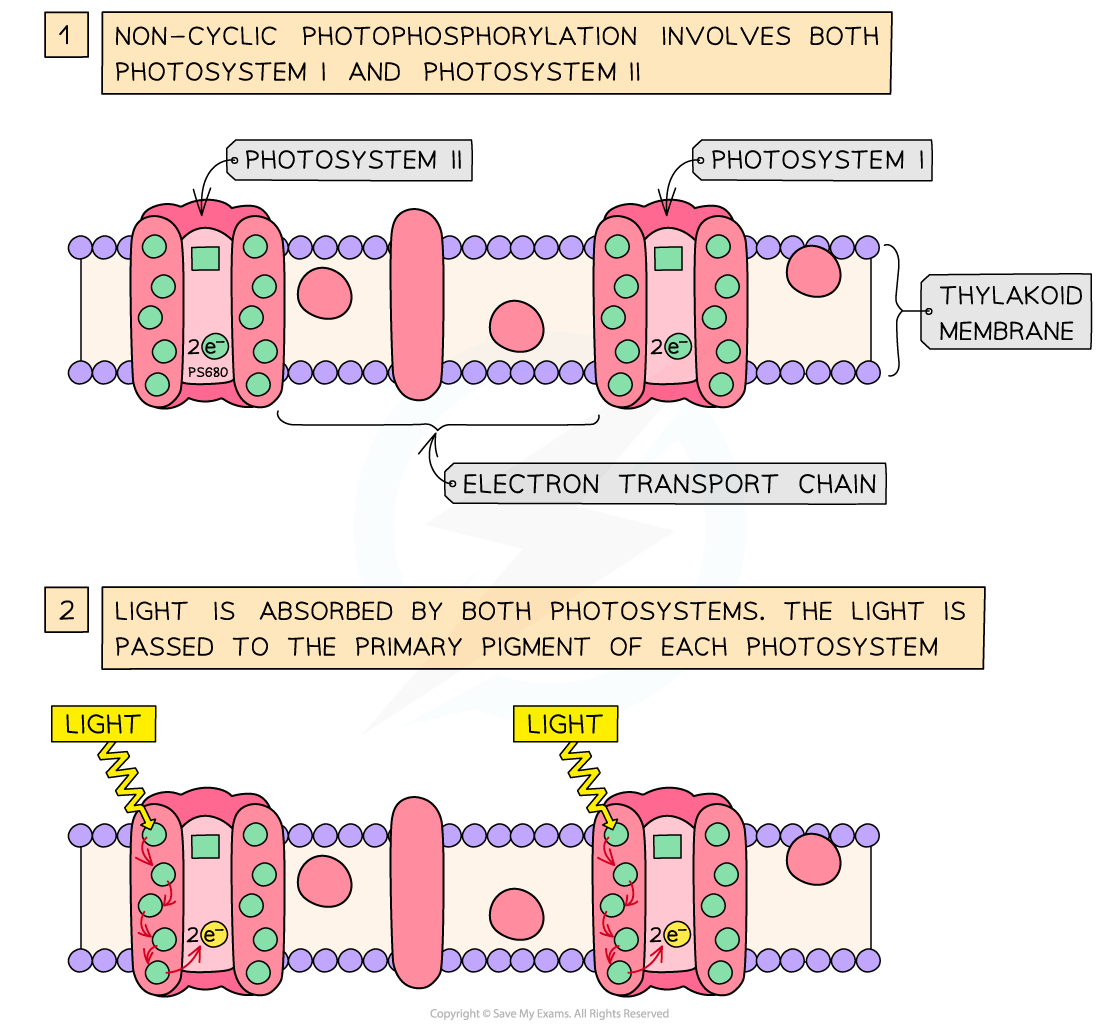
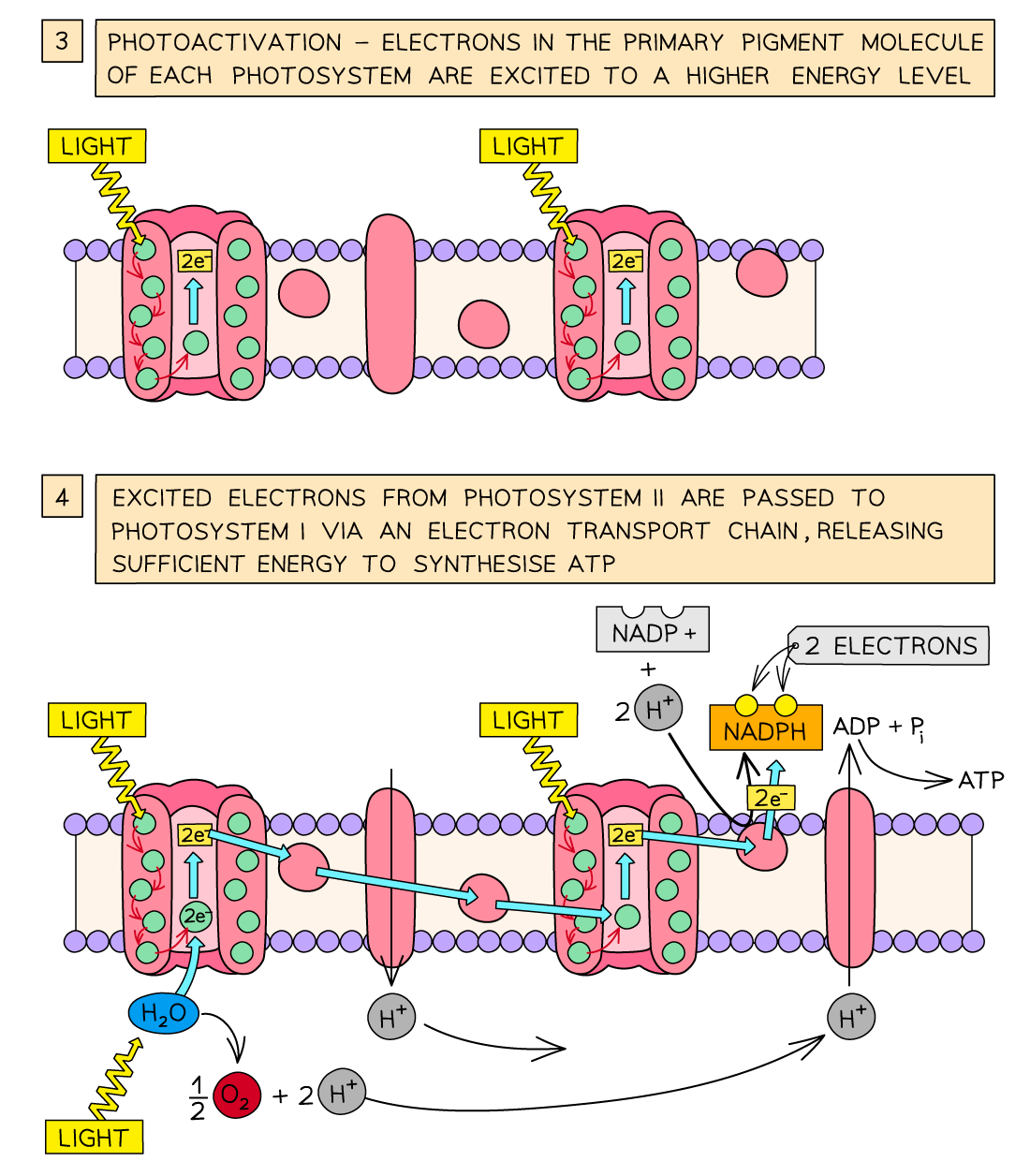
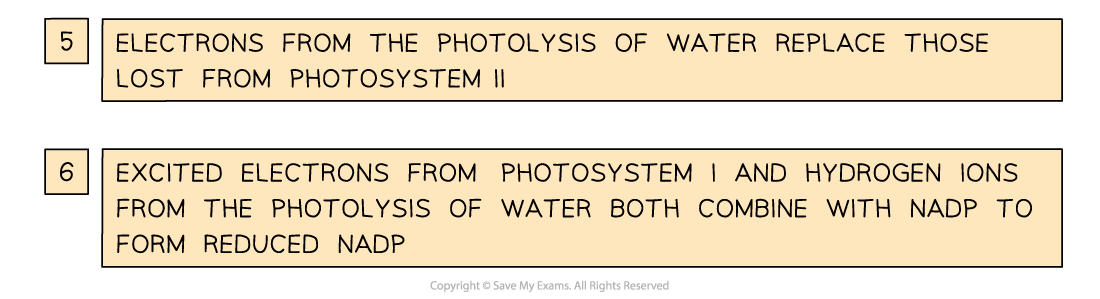
Light Dependent Photophosphorylation leads to the production of ATP and NADP
Exam Tip
Remember – the oxygen produced during the photolysis of water is a waste product of this process. The hydrogen ions and electrons produced during the photolysis of water are useful products.The electrons replace those that have been lost from the primary pigment molecule of photosystem II (as photosystem II passes its electrons on to photosystem I). The hydrogen ions combine with the electrons from photosystem I to form reduced NADP (NADPH).
转载自savemyexams
以上就是关于【AQA A Level Biology复习笔记5.1.2 The Light Dependent Reaction】的解答,如需了解学校/赛事/课程动态,可至翰林教育官网获取更多信息。
往期文章阅读推荐:
翰林独家 | 经济学竞赛核心精讲,一册打通NEC/IEO/USAEBO!
2026 ALEVEL 夏考A率出炉!爱德思vs牛津AQA,哪些科目真的“好出分”?


翰林AMC8视频课重磅上线!

国际竞赛真题资源免费领取






