AQA A Level Chemistry复习笔记7.6.1 Condensation Polymers

Condensation Polymers
- Addition polymerisation has been covered in reactions of alkenes
- They are made using monomers that have C=C double bonds joined together to form polymers such as polyethene
- Condensation polymerisation is another type of reaction whereby a polymer is produced by repeated condensation reactions between monomers
- Natural condensation polymers are all formed by elimination of water
- Although the process of condensation polymerisation involves the elimination of a small molecule
- Condensation polymers can be identified because the monomers are linked by ester or amide bonds
- Condensation polymers can be formed by:
- dicarboxylic acids and diols
- dicarboxylic acids and diamines
- amino acids
Polyester
- Is formed by the reaction between dicarboxylic acid monomers and diol monomers
- Polyester is produced by linking these monomers with ester bonds / links

This polymer structure shows an ester functional group linking monomers together
Formation of polyesters
- A diol and a dicarboxylic acid are required to form a polyester
- A diol contains 2 -OH groups
- A dicarboxylic acid contains 2 -COOH groups
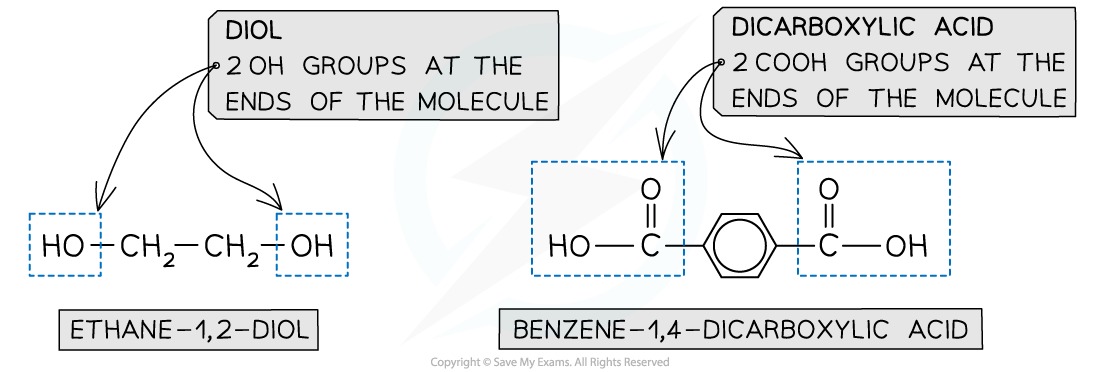
The position of the functional groups on both of these molecules allows condensation polymerisation to take place effectively
- When the polyester is formed, one of the -OH groups on the diol and the hydrogen atom of the -COOH are expelled as a water molecule (H2O)
- The resulting polymer is a polyester
- In this example, the polyester is poly(ethylene terephthalate) or PET, which is sometimes known by its brand names of Terylene or Dacron
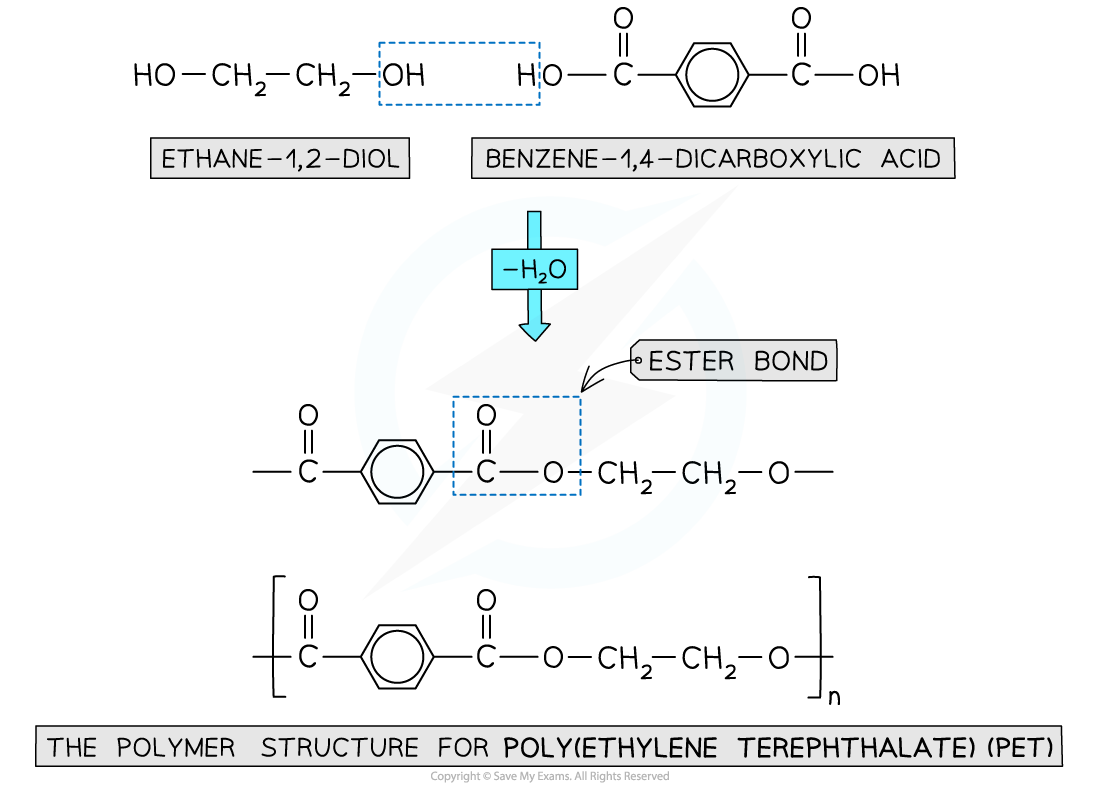
Expulsion of a water molecule in this condensation polymerisation forms the polyester called (ethylene terephthalate) (PET)
Formation of polyesters - hydroxycarboxylic acids
- So far the examples of making polyesters have focused on using 2 separate monomers for the polymerisation
- There is another route to making polyesters
- A single monomer containing both of the key functional groups can also be used
- These monomers are called hydroxycarboxylic acids
- They contain an alcohol group (-OH) at one end of the molecule while the other end is capped by a carboxylic acid group (-COOH)
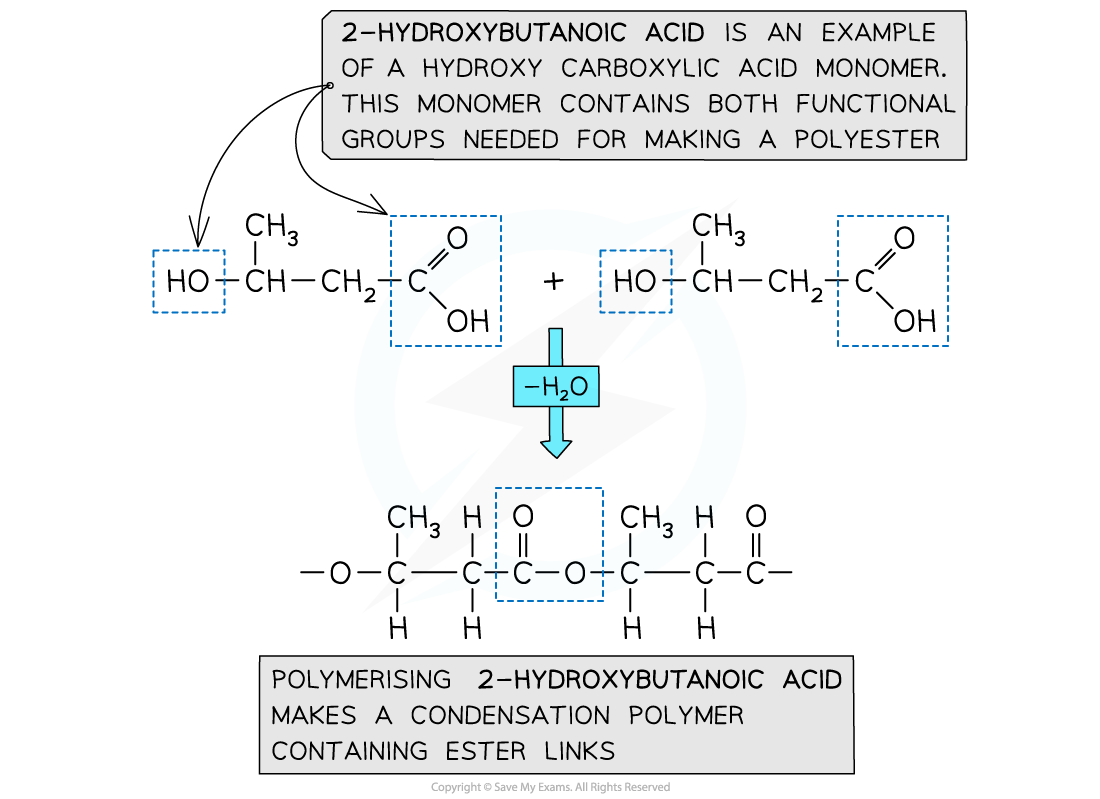
Both functional groups that are needed to make the polyester come from the same monomer
Polyamides
- Polyamides are polymers where repeating units are bonded together by amide links
- The formula of an amide group is -CONH
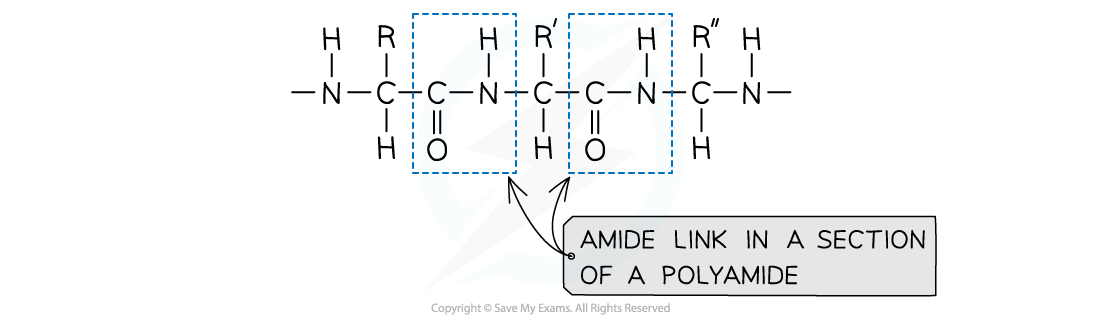
An amide link - also known as a peptide link - is the key functional group in a polyamide
Polyamide monomers
- A diamine and a dicarboxylic acid are required to form a polyamide
- A diamine contains 2 -NH2 groups
- A dicarboxylic acid contains 2 -COOH groups
- Dioyl dichlorides can also used to react with the diamine instead of the acid
- A dioyl chloride contains 2 -COCl groups
- This is a more reactive monomer but more expensive than dicarboxylic acid
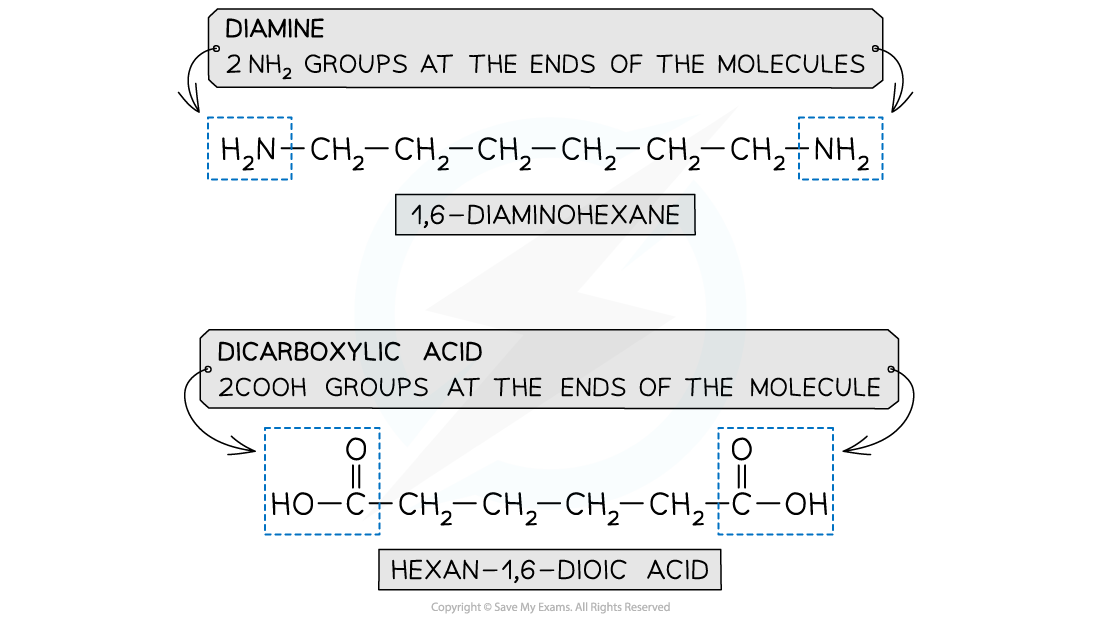
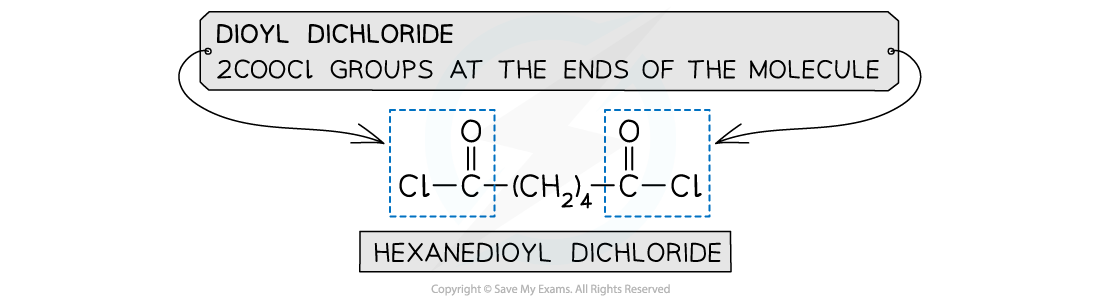
The monomers for making polyamides
Formation of polyamides
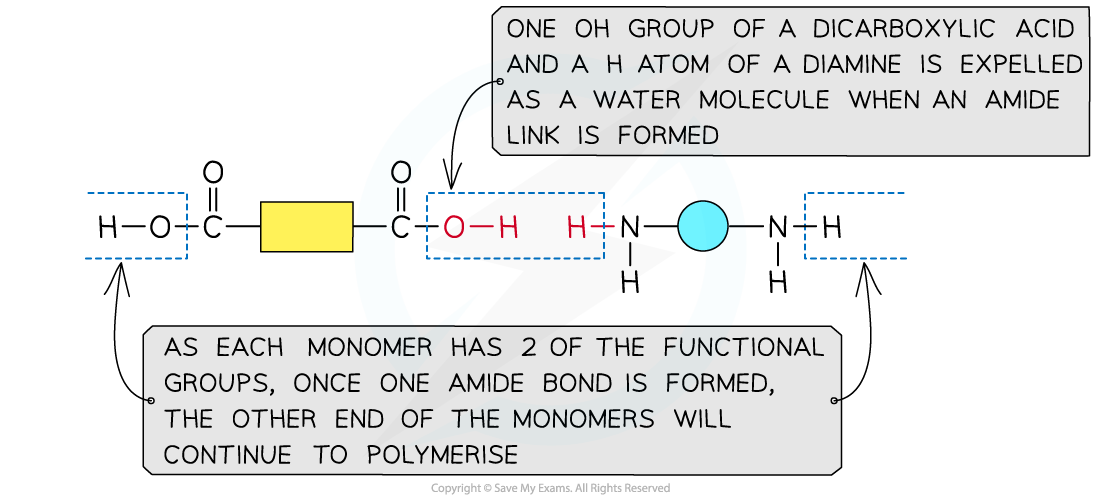
This shows the expulsion of a small molecule as the amide link forms
Amino acids - formation of proteins
- Proteins are vital biological molecules with varying functions within the body
- They are essentially polymers made up of amino acid monomers
- Amino acids have an aminocarboxylic acid structure
- Their properties are governed by a branching side group - the R group
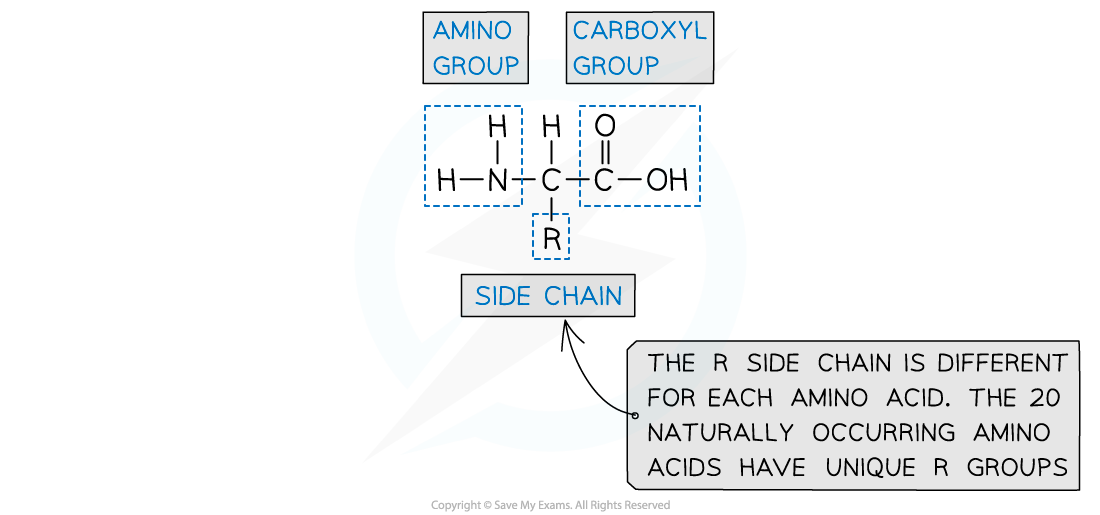
Amino acids contain an amine group, an acid group and a unique R group
- Different amino acids are identified by their unique R group
- The names of each amino acid is given using 3 letters
- For example Glutamine is known as ‘Gln’
- Dipeptides can be produced by polymerising 2 amino acids together
- The amine group (-NH2) and acid group (-COOH) of each amino acid is used to polymerise with another amino acid
- Polypeptides are made through polymerising more than 2 amino acids together
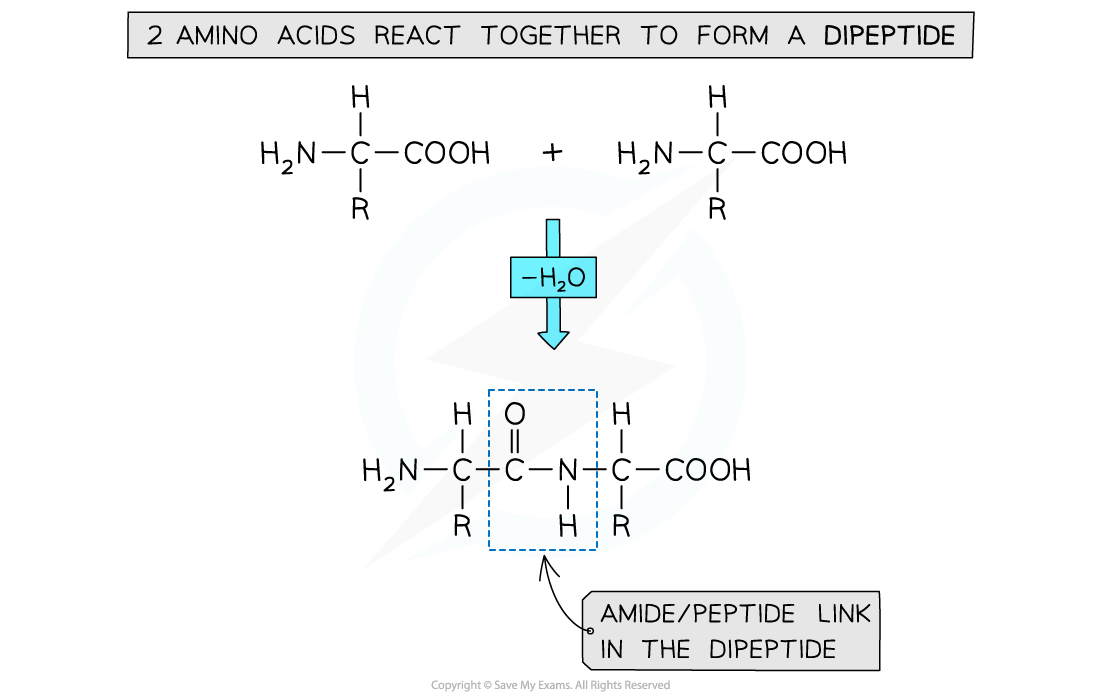
Dipeptides and polypeptides are formed by polymerising amino acid molecules together
Exam Tip
Become familiar with the structures of the different monomers that can be used to make condensation polymersAlso, remember that exam questions will require you to identify the monomers and also draw the repeating units
Worked Example
Draw the repeating unit and identify the monomers used to make the following polymers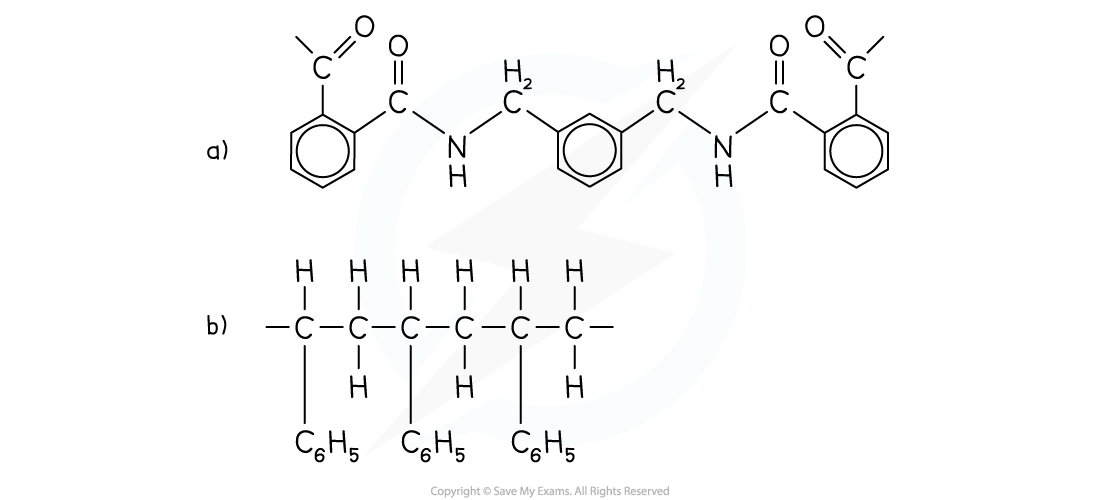
Answer:
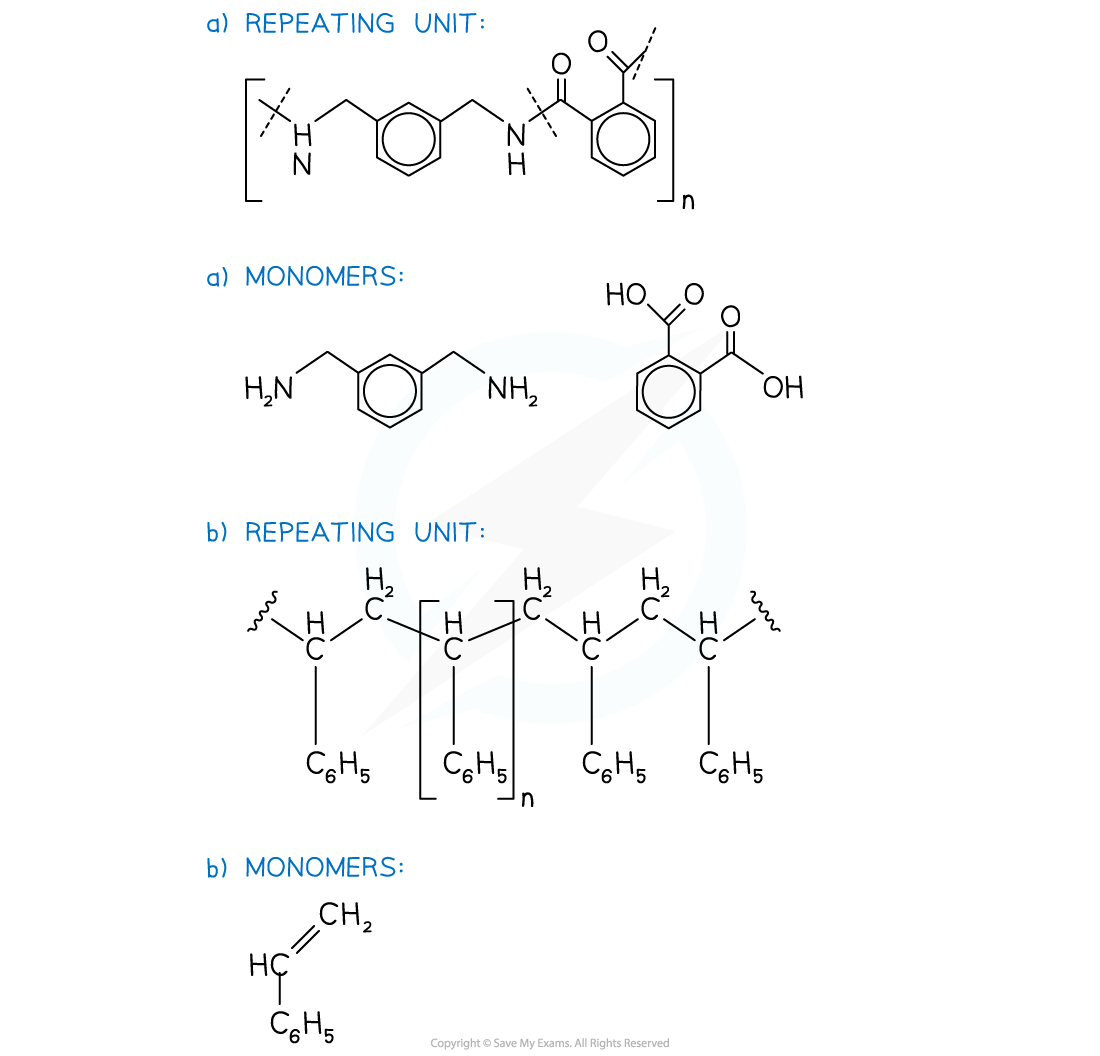
Uses of Condensation Polymers
Uses of condensation polymers
- Polyesters such as Terylene, also known as polyethylene terephthalate (or PET) is a thermoplastic which can be repeatedly heated to soften and melt it and cooled to solidify it
- Terylene can be extruded to form fine fibres for use in artificial fabrics or moulded into fizzy drinks bottles and containers
- The best known example of an artificial polyamide is nylon
- Nylon-6,6 contains a diamine and dicarboxylic acid, each of which contains six carbon atoms
- Nylon-6,6 proved to be a cheap substitute for silk which is used to make ropes, twines, Velcro® and is often added to natural fibres in clothing and carpets to make them last longer
- Aromatic polyamides are a group of polymers known as aramids and include Nomex® and Kevlar®
- The general name derives from the fact that they involve benzene rings (from arenes) linked via amide bonds
- They are very tough and lightweight and used to make bulletproof vests (Kevlar®) and fireproof suits (Nomex®)
Nylon 6,6
- Nylon 6,6 is a synthetic polyamide
- Its monomers are 1,6-diaminohexane and 1,6-hexanedioic acid
- The ‘6,6’ part of its name arises from the 6 carbon atoms in each of Nylon 6,6 monomers
- The reaction between the amine group and the carboxylic acid is slow
- Consequently, the dicarboxylic acid is usually first converted to a diacyl dichloride which reacts with the diamine much faster
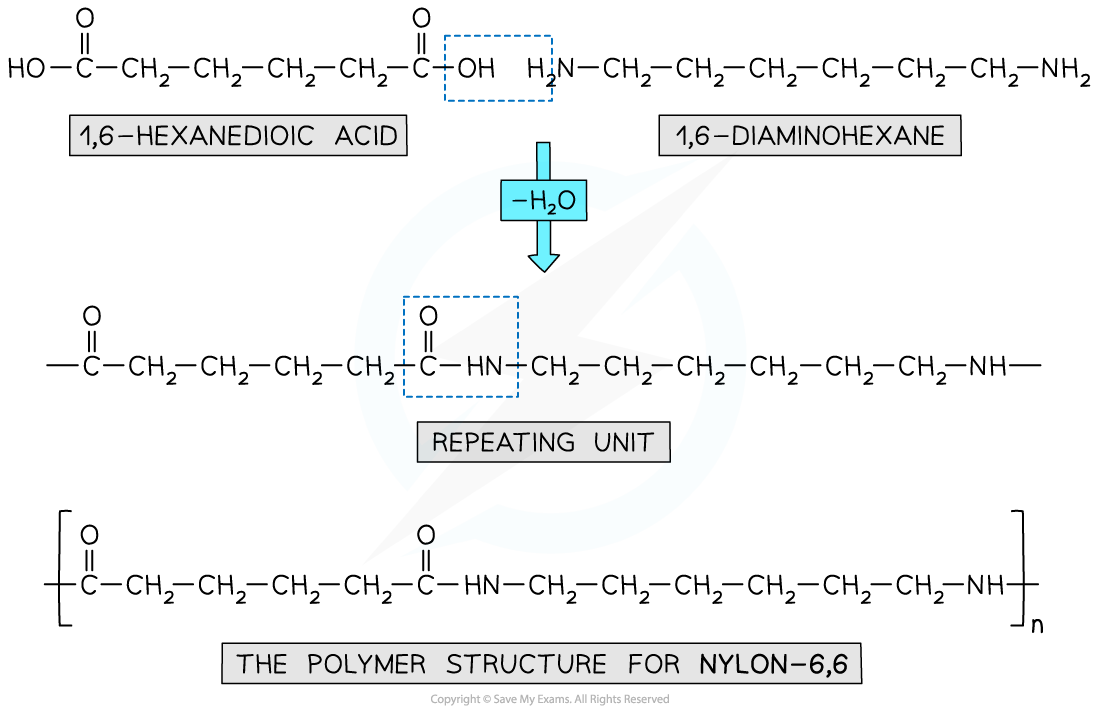
Nylon 6,6 is a synthetic polyamide made using diamine and dicarboxylic acid monomers
Kevlar®
- Kevlar® is another example of a polymer formed through condensation polymerisation
- The polymer chains are neatly arranged with many hydrogen bonds between them
- This results in a strong and flexible polymer material with fire resistance properties
- These properties also lend Kevlar® to a vital application in bullet-proof vests
- The monomers used to make Kevlar®
- 1,4-benzenediamine
- 1,4-benzenedicarboxylic acid
- As seen with Nylon, a diacyl dichloride can be used instead of the acid
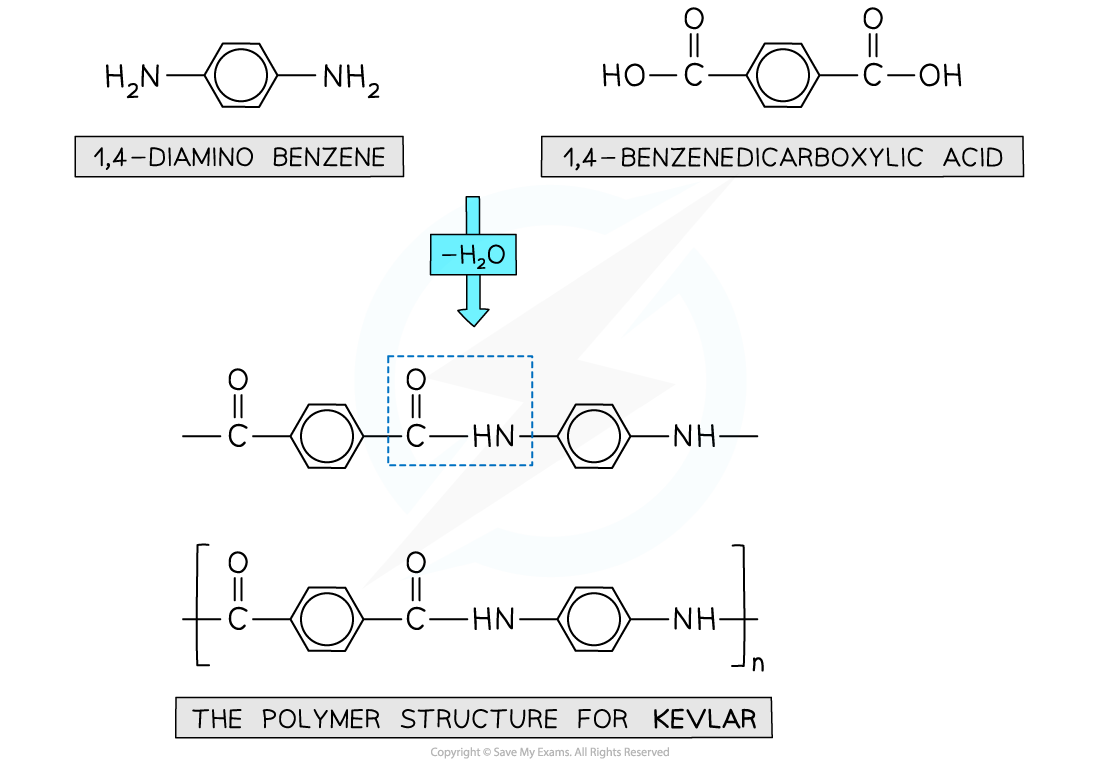
Kevlar is made using a diamine and dicarboxylic acid monomers
Intermolecular Forces
- Condensation polymers such as Nylon-6,6, Kevlar® and Nomex® are long chain molecules which can be drawn out to form fibres
- During this process the linear molecules align and become increasingly linked by hydrogen bonds between adjacent chains
- The causes the strength of the fibre to increase during the drawing process
- Between Kevlar® and Nomex® two aramid polymers, Kevlar® has a higher melting point as the chains are straighter and lie closer together, meaning more effective hydrogen bonds are formed
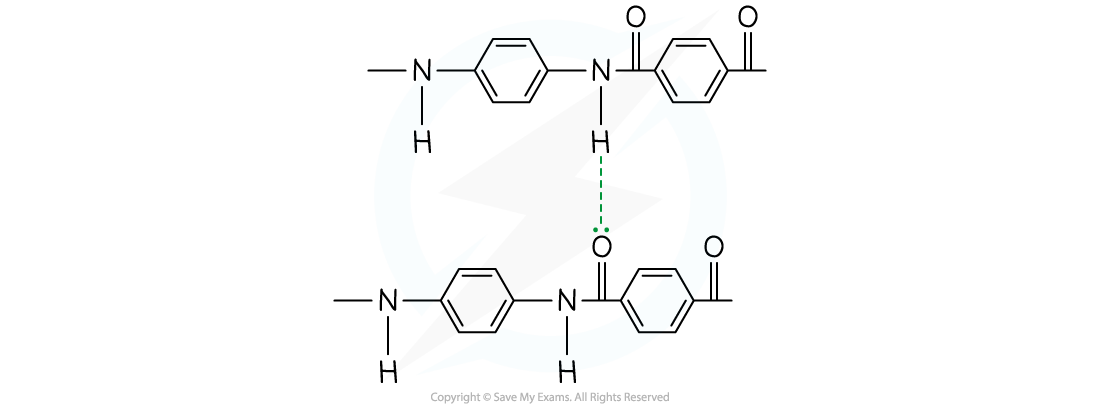
Hydrogen bonding present between Kevlar® polymer chains
转载自savemyexams
以上就是关于【AQA A Level Chemistry复习笔记7.6.1 Condensation Polymers】的解答,如需了解学校/赛事/课程动态,可至翰林教育官网获取更多信息。
往期文章阅读推荐:
翰林独家 | 经济学竞赛核心精讲,一册打通NEC/IEO/USAEBO!
2026 ALEVEL 夏考A率出炉!爱德思vs牛津AQA,哪些科目真的“好出分”?


翰林AMC8视频课重磅上线!

国际竞赛真题资源免费领取






