Edexcel A Level Maths: Pure:复习笔记11.2.1 Vectors in 3 Dimensions

Vectors in 3 Dimensions
What is a 3-D vector?
- Vectors represent a movement of a certain magnitude (size) in a given directionYou should have already come across (2D) vectors at AS (see Basic Vectors)
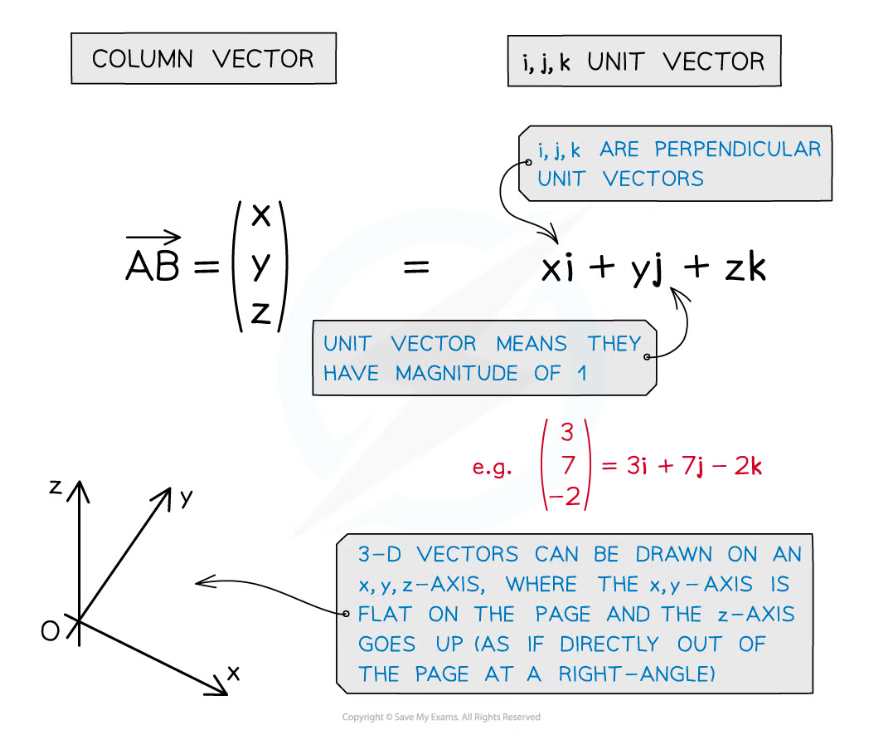
- 3-D vectors describe the position of a point in a 3-D space in relation to the origin
- They can be represented in different ways such as a column vector or in i, j, k unit vector form
Magnitude of a 3-D vector
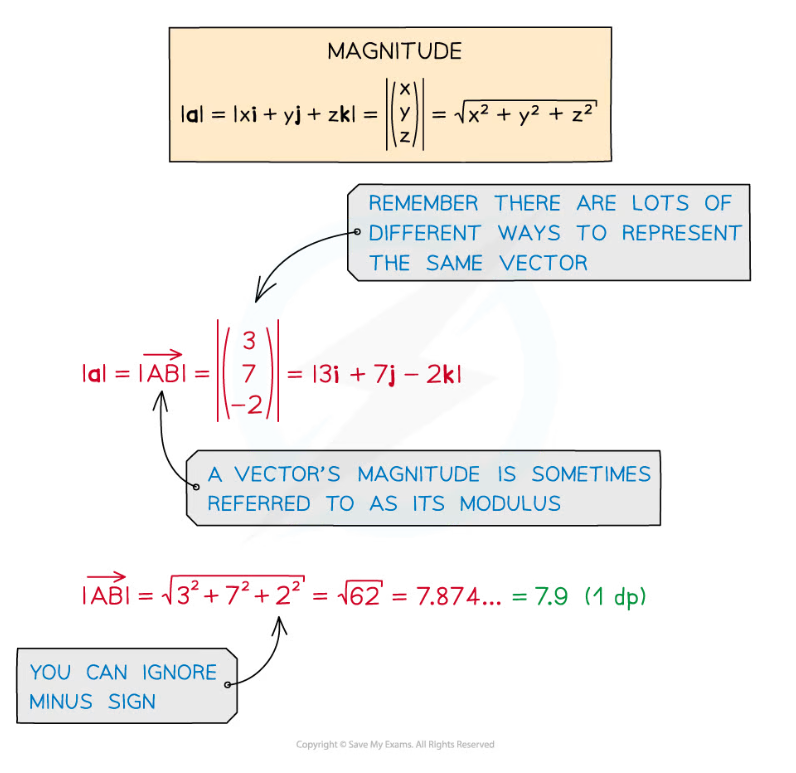
- The magnitude of a 3-D vector is simply its size
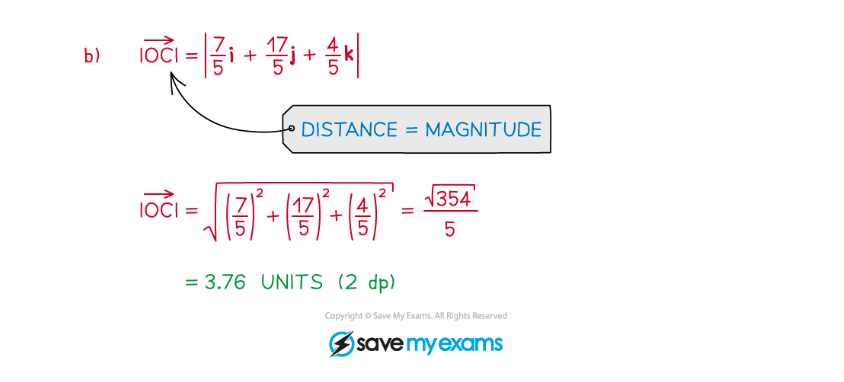
- Like 2-D vectors we can find the magnitude using Pythagoras’ theorem (see Magnitude Direction)
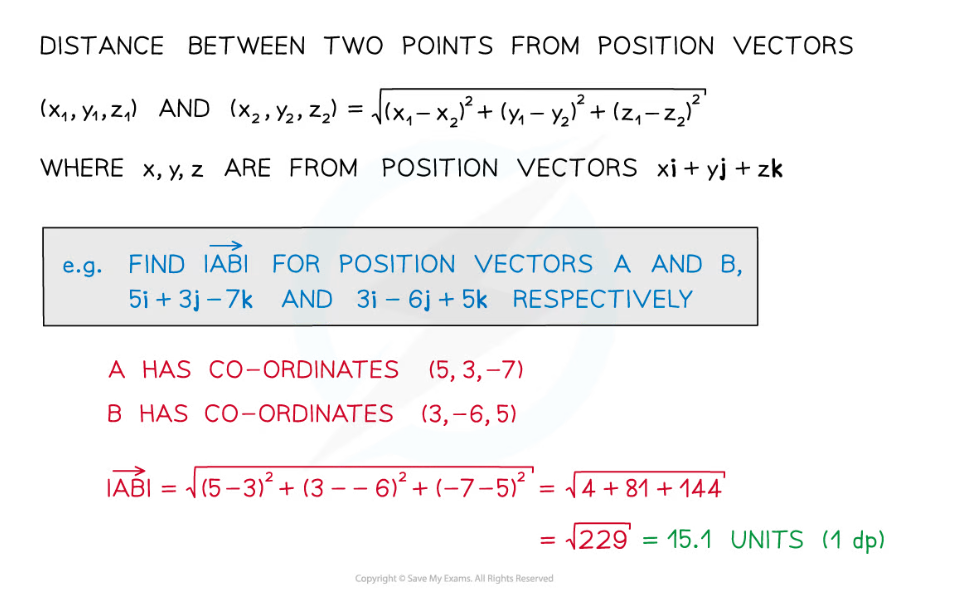
- For 3-D position vectors we can find the distance between two points
- By using the respective co-ordinates we can calculate the magnitude of the vector between them:
3-D vector addition, scalars, parallel vectors and unit vectors
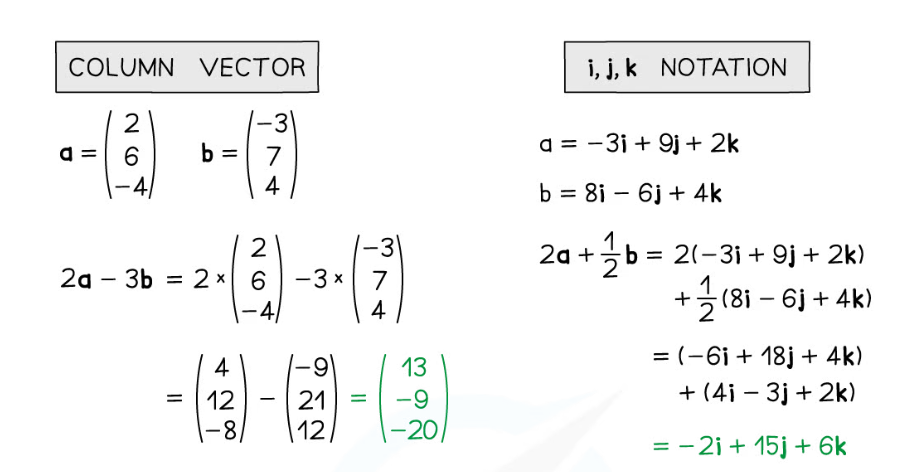
- 3-D vectors work in the same way as 2-D vectors, just in three dimensions rather than two
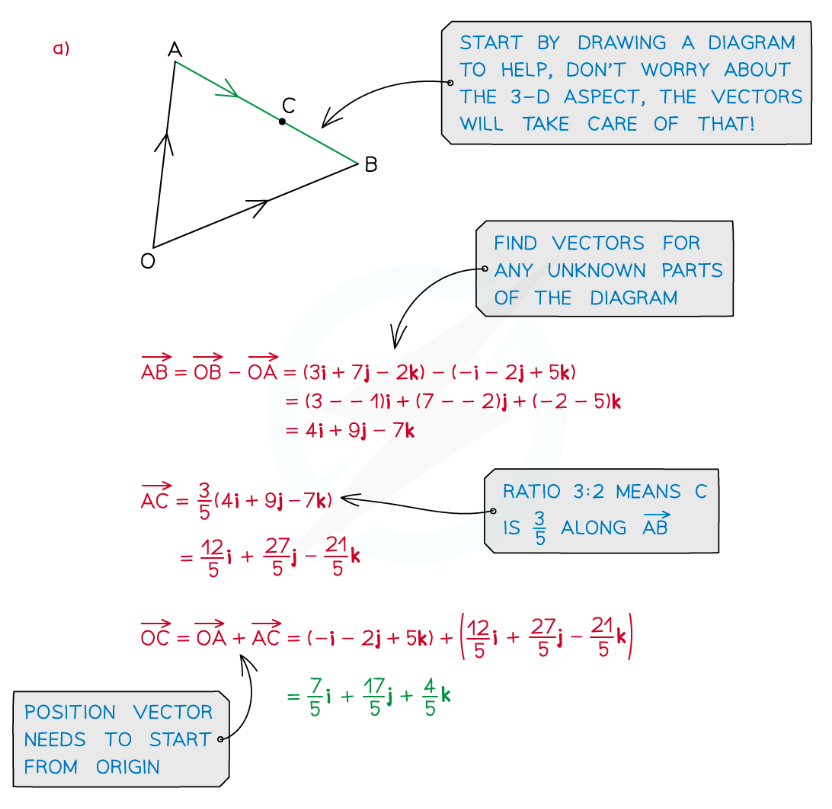
- Vector addition and subtraction and scalar multiplication can be carried out in exactly the same way, this time involving i, j and k or x, y and z
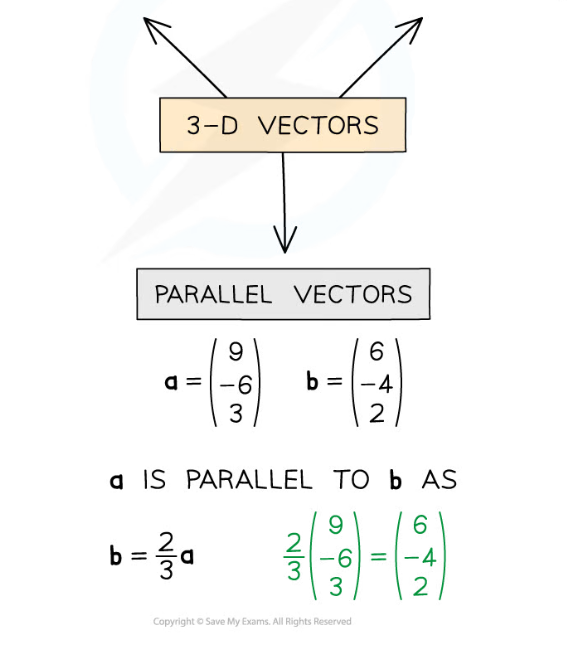
- 3-D vectors are also parallel if one is a multiple of the other
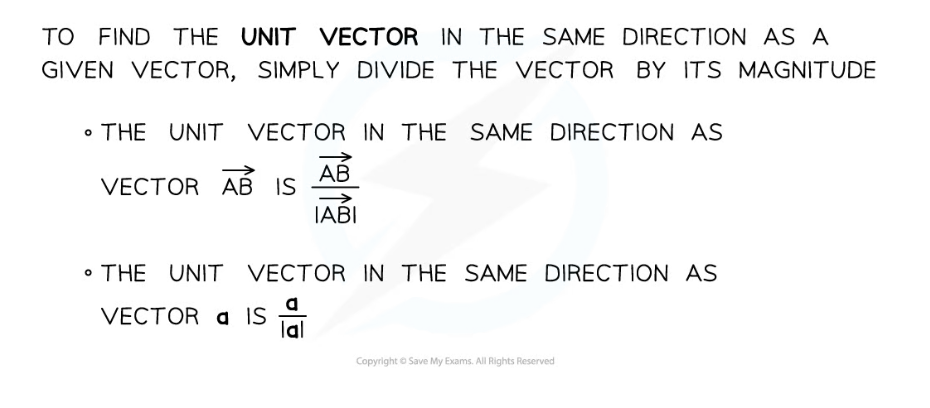
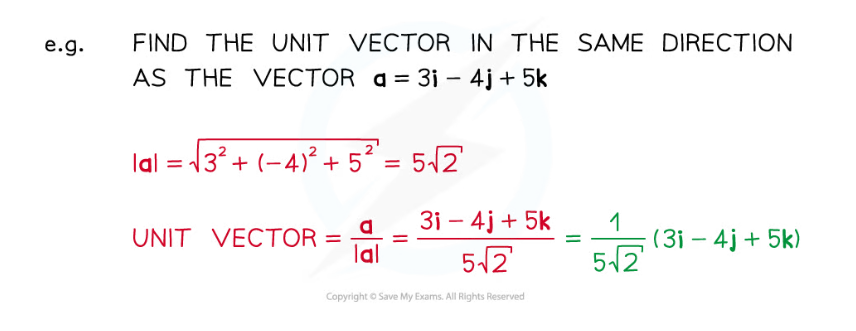
- Unit vectors in 3-D are found in exactly the same way as in 2-D
Worked Example
转载自savemyexams
以上就是关于【Edexcel A Level Maths: Pure:复习笔记11.2.1 Vectors in 3 Dimensions】的解答,如需了解学校/赛事/课程动态,可至翰林教育官网获取更多信息。
往期文章阅读推荐:
翰林独家 | 经济学竞赛核心精讲,一册打通NEC/IEO/USAEBO!
2026 ALEVEL 夏考A率出炉!爱德思vs牛津AQA,哪些科目真的“好出分”?


翰林AMC8视频课重磅上线!

国际竞赛真题资源免费领取






