CIE A Level Chemistry复习笔记1.8.2 Rate of Reaction

Rate of Reaction: Concentration & Pressure
Concentration
- The more concentrated a solution is, the greater the number of particles in a given volume of solvent
- An increase in concentration causes in an increased collision frequency and therefore an increased rate of reaction
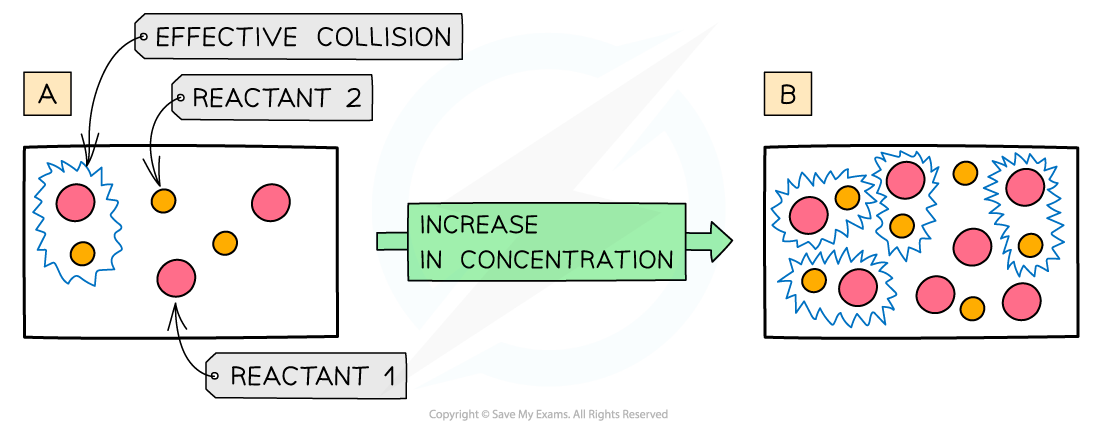
The diagram shows a higher concentration of particles in (b) which means that there are more particles present in the same volume than (a) so the chances and frequency of collisions between reacting particles is increased causing an increased rate of reaction
Pressure
- An increase in pressure in reactions that involve gases has the same effect as an increased concentration of solutions
- When the pressure is increased, the molecules have less space in which they can move
- This means that the number of effective collisions increases due to an increased collision frequency
- An increase in pressure therefore increases the rate of reaction
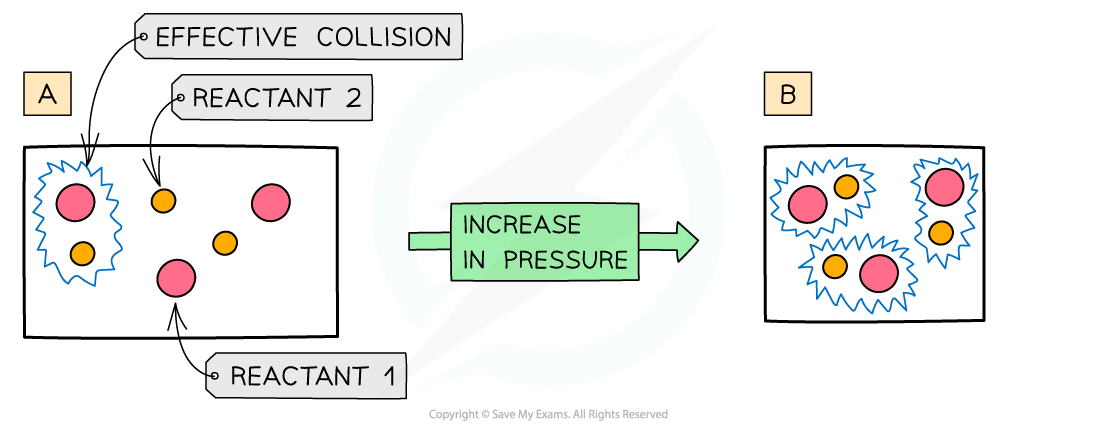
The diagram shows a higher pressure in (b) which means that the same number of particles occupy a smaller volume, resulting in an increased collision frequency and therefore increased rate of reaction
Rate of Reaction: Experimental Calculations
- During a reaction, the reactants are used up and changed into the products
- This means that as the reaction proceeds, the concentration of the reactants is decreasing and the concentration of the products is increasing
- Because of this, the rate of the reaction is not the same throughout the reaction but changes
- The rate of reaction during the reaction can be calculated from a concentration-time graph.
- The isomerisation of cyclopropane to propene will be taken as an example:
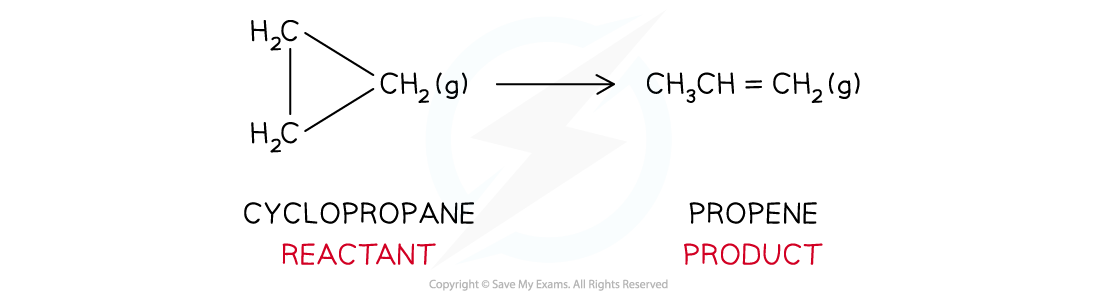
Isomerisation of cyclopropane
- The concentrations of reactant (cyclopropane) and product (propene) over time can be experimentally obtained
Concentrations of cyclopropane & propene table
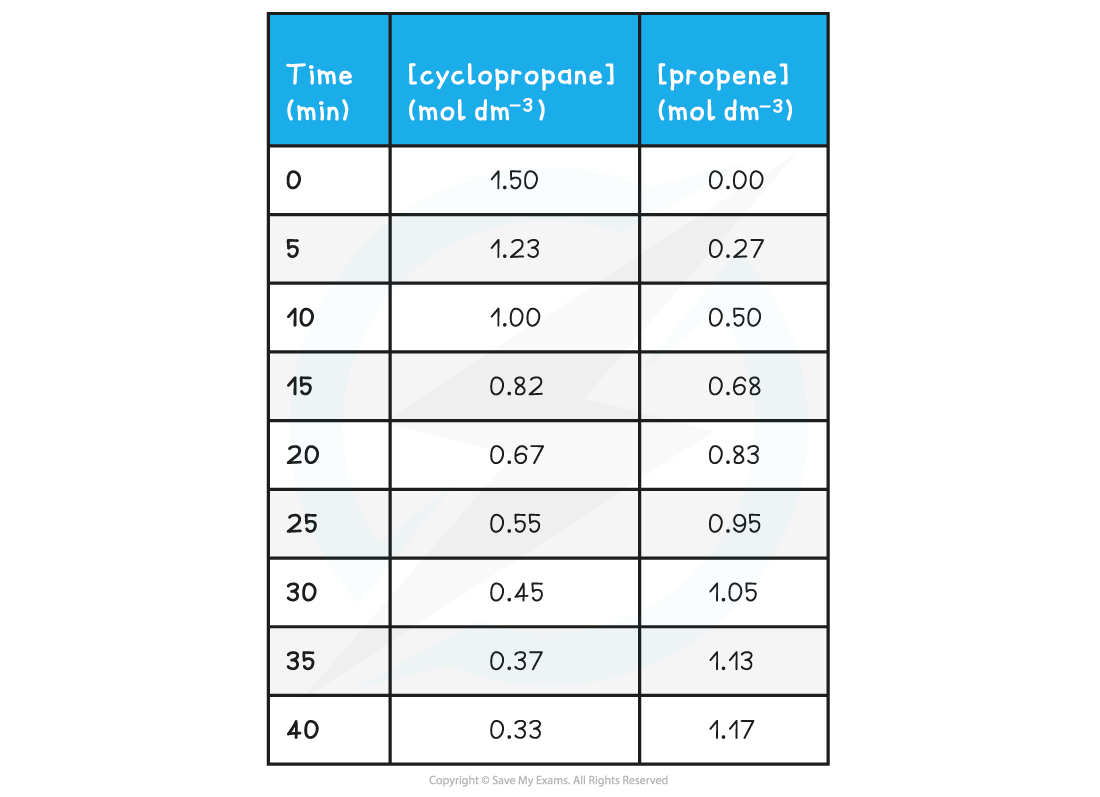
- When taking the measurements, the temperature should be kept the same at all times as a change in temperature will change the rate of reaction
- A concentration-time graph for the concentration of propene as well as cyclopropane can be obtained from the above results
- As an example, the concentration-time graph for propene is shown below:
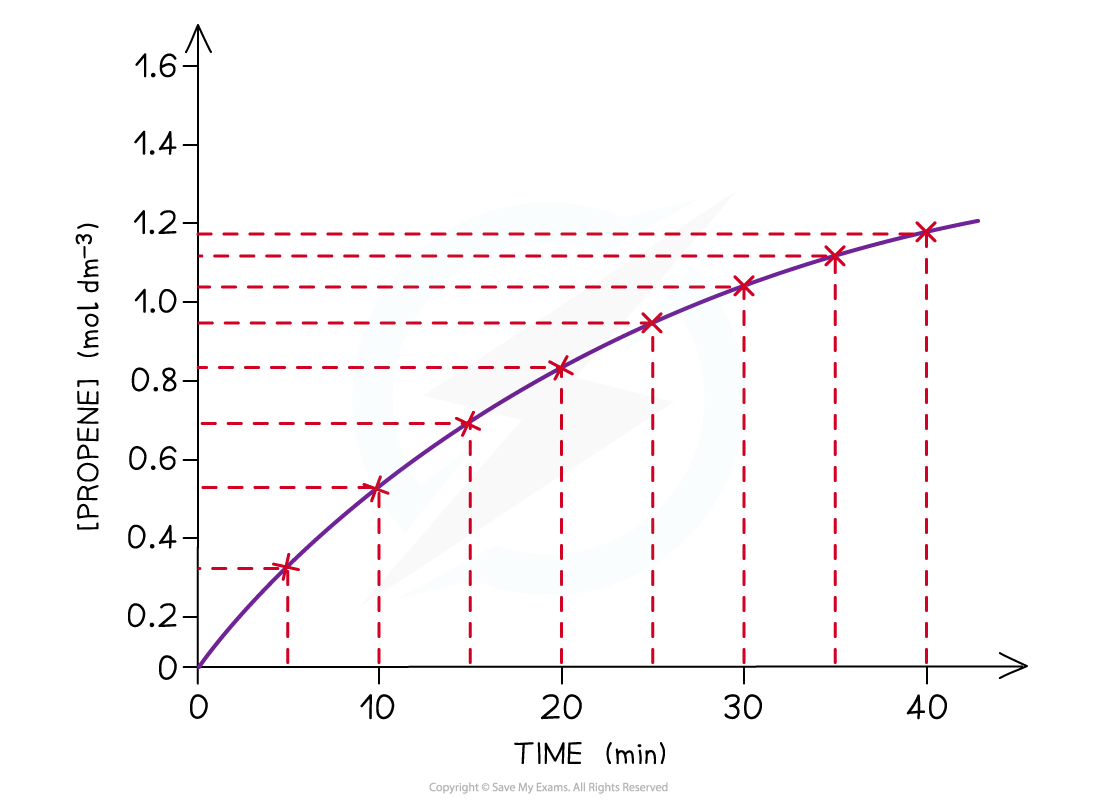 The graph shows that the concentration of propene increases with time
Calculating the rate at the start of a reaction
- At the start of the reaction, the concentration-time curve looks almost linear
- The rate at this point can therefore be found by treating the curve as a linear line and by using:

- Using the graph, the average rate of the reaction over the first 5 minutes for propene is:

Line a shows the average rate over the first five minutes whereas line b shows the actual initial rate found by drawing a tangent at the start of the curve. The calculated rates are very similar for both methods

= 0.0009 mol dm-3 s-1
Calculating the rate as the reaction proceeds
- The curve becomes shallower with time which means that the rate decreases with time
- The rate of reaction can be calculated by taking short time intervals
- Eg. you can calculate the rate of reaction from 15 to 20 mins during which the concentration of propene increases from 0.68 to 0.83 mol dm-3:


= 0.0005 mol dm-3 s-1
- The smaller the time intervals, the more accurate the reaction rate value is
- Even more accurate is to find the rate of reaction at different concentrations of reactant or product at particular time points
- This can be done by drawing tangents at several points on the graph
- As an example, the rates of reaction at different concentrations of cyclopropane are calculated by drawing the appropriate tangents:
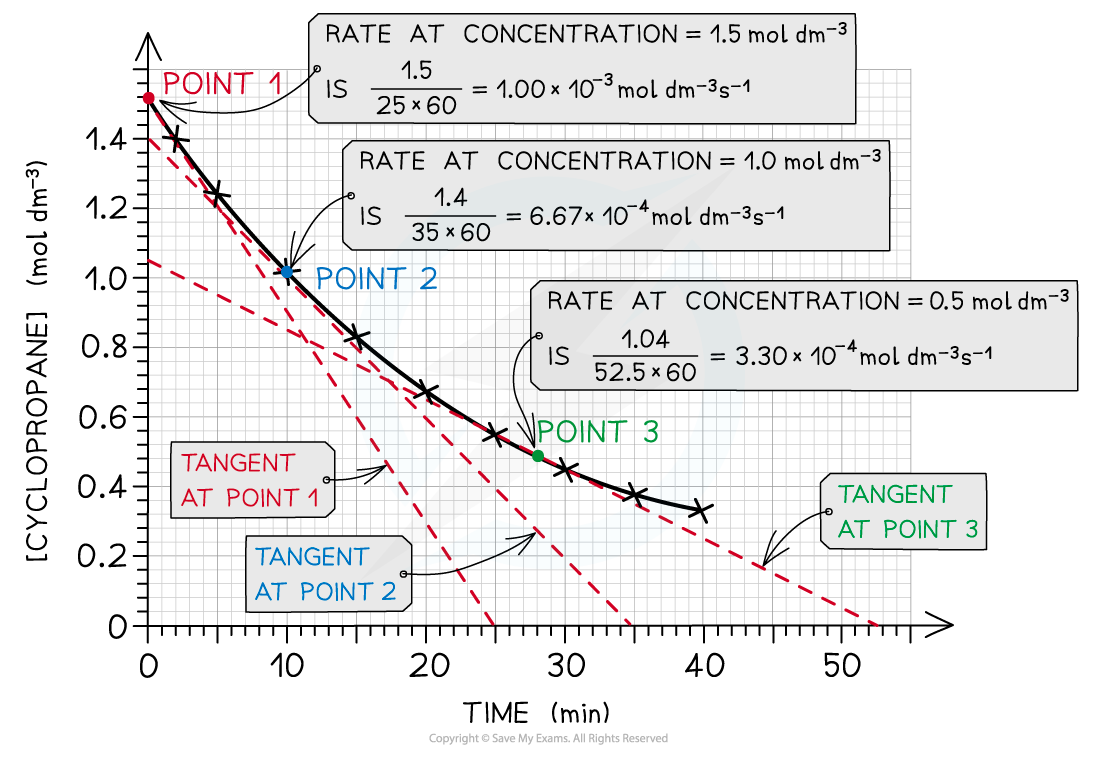
The rate of reaction at 3 different concentrations of cyclopropane is calculated by drawing tangents at those points in the graph
Rate-concentration graph
- The calculated rates can then be summarised in a table to show how the rate of reaction changes with changing concentration of the reactants or products
Change in rate with decreasing concentration of cyclopropane table
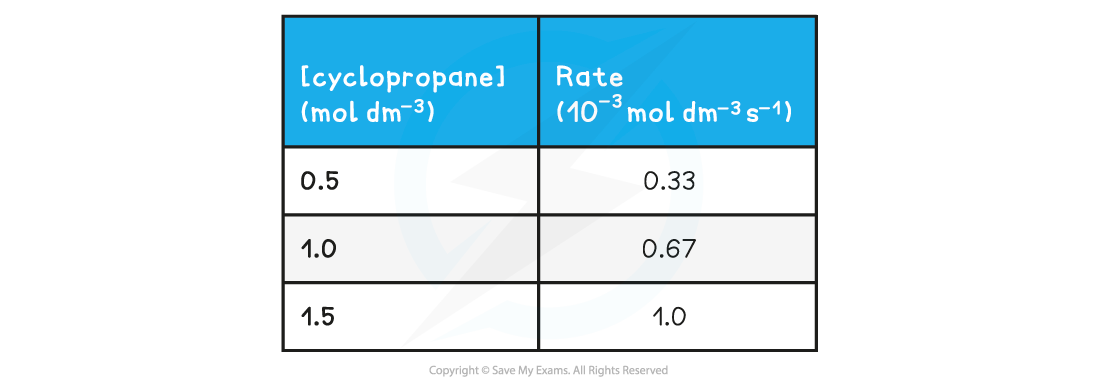
- This data can then be used to plot a rate-concentration graph
- The graph shows that the rate is directly proportional to the concentration of cyclopropane
- If you double the concentration of cyclopropane the rate of reaction will double too
 The graph shows a directly proportional correlation between the concentration of cyclopropane and the rate of reaction
Exam Tip
To calculate the rate of reaction you can either use the increase in concentration of products (like in the example above) or the decrease in concentration of reactants.
转载自savemyexams
以上就是关于【CIE A Level Chemistry复习笔记1.8.2 Rate of Reaction】的解答,如需了解学校/赛事/课程动态,可至翰林教育官网获取更多信息。
往期文章阅读推荐:
翰林独家 | 经济学竞赛核心精讲,一册打通NEC/IEO/USAEBO!
2026 ALEVEL 夏考A率出炉!爱德思vs牛津AQA,哪些科目真的“好出分”?


翰林AMC8视频课重磅上线!

国际竞赛真题资源免费领取






