CIE A Level Biology复习笔记17.1.4 Variation: t-test Worked Example

Variation: t-test Worked Example
Worked Example
The ear length of two populations of rabbits was measured.Ear lengths of population A (mm):
62, 60, 59, 61, 60, 58, 59, 60, 57, 56, 59, 58, 60, 59, 57
Ear lengths of population B (mm):58, 59, 57, 59, 59, 57, 55, 60, 57, 58, 59, 58, 57, 58, 59
Use the t-test to determine whether there is a significant difference in ear length between the two populations.
Solution
-
- Null hypothesis: There is no significant difference between the ear lengths of the rabbits in populations A and B
- Sample sizes:
- Population A: n1 = 15
- Population B: n2 = 15
Step 1: Calculate the mean for each data set:
Mean for population A x̅1 = 885 / 15 = 59 mm
Mean for population B x̅2 = 870 / 15 = 58 mm
Step 2: Calculate the standard deviation (s) for each set of data
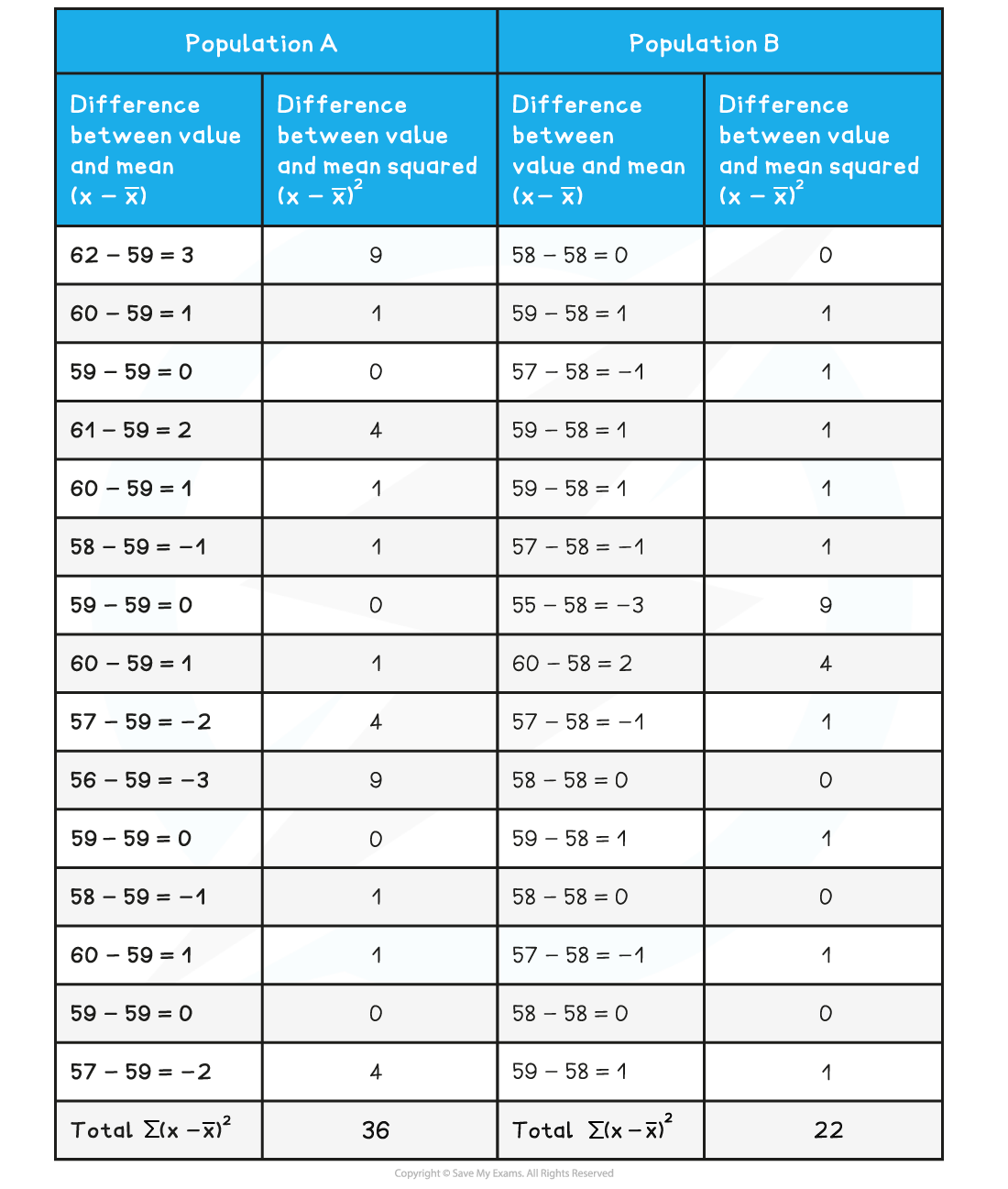
To find the standard deviations divide the sum of each square by n - 1 for each data set, and take the square root of each value
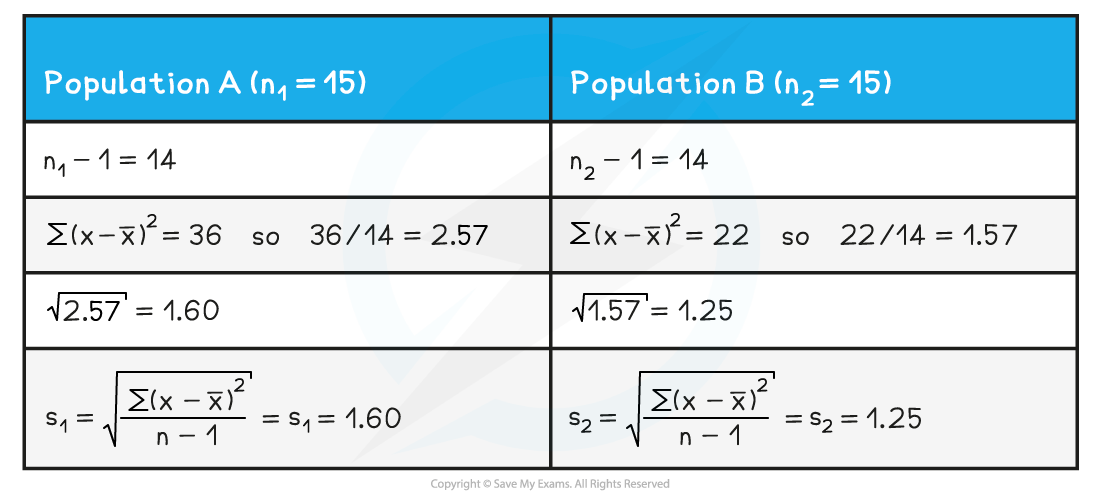
Step 3: Square the standard deviation and divide by n (the number of observations) in each sample, for both samples:
Step 4: Add the values from step 3 together and find the square root
Step 5: Divide the difference between the two means by the value from step 4
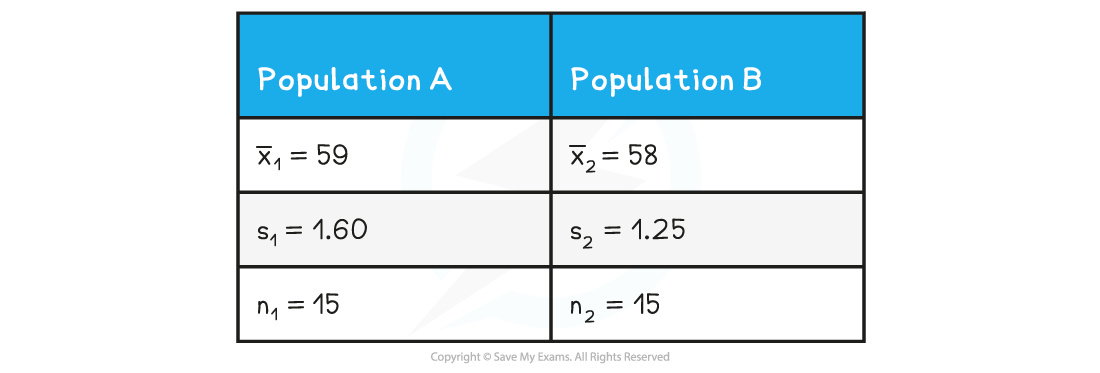
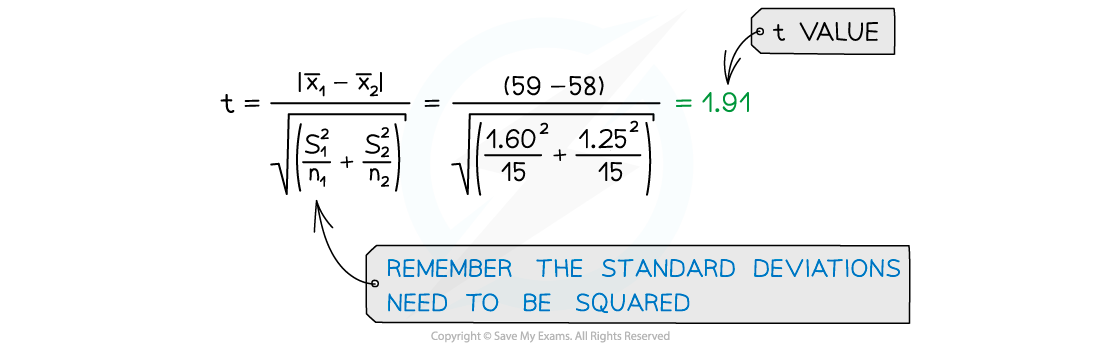
Step 6: Calculate the degrees of freedom (v) for all the data:
v = (n1 - 1) + (n2 - 1) = 14 + 14 = 28
Step 7: Look at a table that relates t values to the probability that the differences between data sets is due to chance to find where the t value of 1.91 for 28 degrees of freedom (v) calculated lies
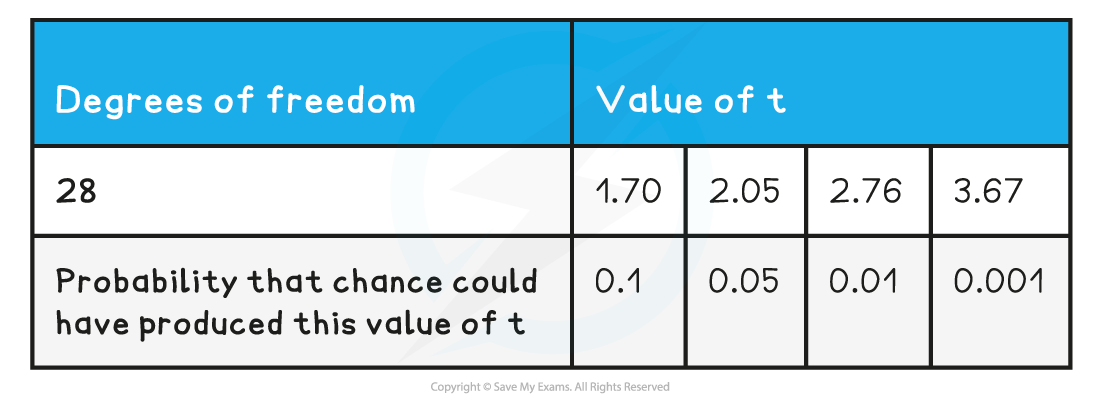
Step 8: Draw a conclusion about the statistical relevance of the data
A t value of 1.91 represents a probability between 0.05 and 0.1 which is greater than the critical value of 0.05.
This means the null hypothesis should be accepted, as there are no significant differences between the two sets of results (any differences between the means of the ear length of rabbits in the two populations are due to chance)
转载自savemyexams
以上就是关于【CIE A Level Biology复习笔记17.1.4 Variation: t-test Worked Example】的解答,如需了解学校/赛事/课程动态,可至翰林教育官网获取更多信息。
往期文章阅读推荐:
翰林独家 | 经济学竞赛核心精讲,一册打通NEC/IEO/USAEBO!
2026 ALEVEL 夏考A率出炉!爱德思vs牛津AQA,哪些科目真的“好出分”?


翰林AMC8视频课重磅上线!

国际竞赛真题资源免费领取






