Edexcel A Level Physics:复习笔记2.7 Projectiles

Components of Velocity
- The trajectory of an object undergoing projectile motion consists of a vertical component and a horizontal component
- These need to be evaluated separately
- Some key terms to know, and how to calculate them, are:
- Time of flight: how long the projectile is in the air
- Maximum height attained: the height at which the projectile is momentarily at rest
- Range: the horizontal distance traveled by the projectile
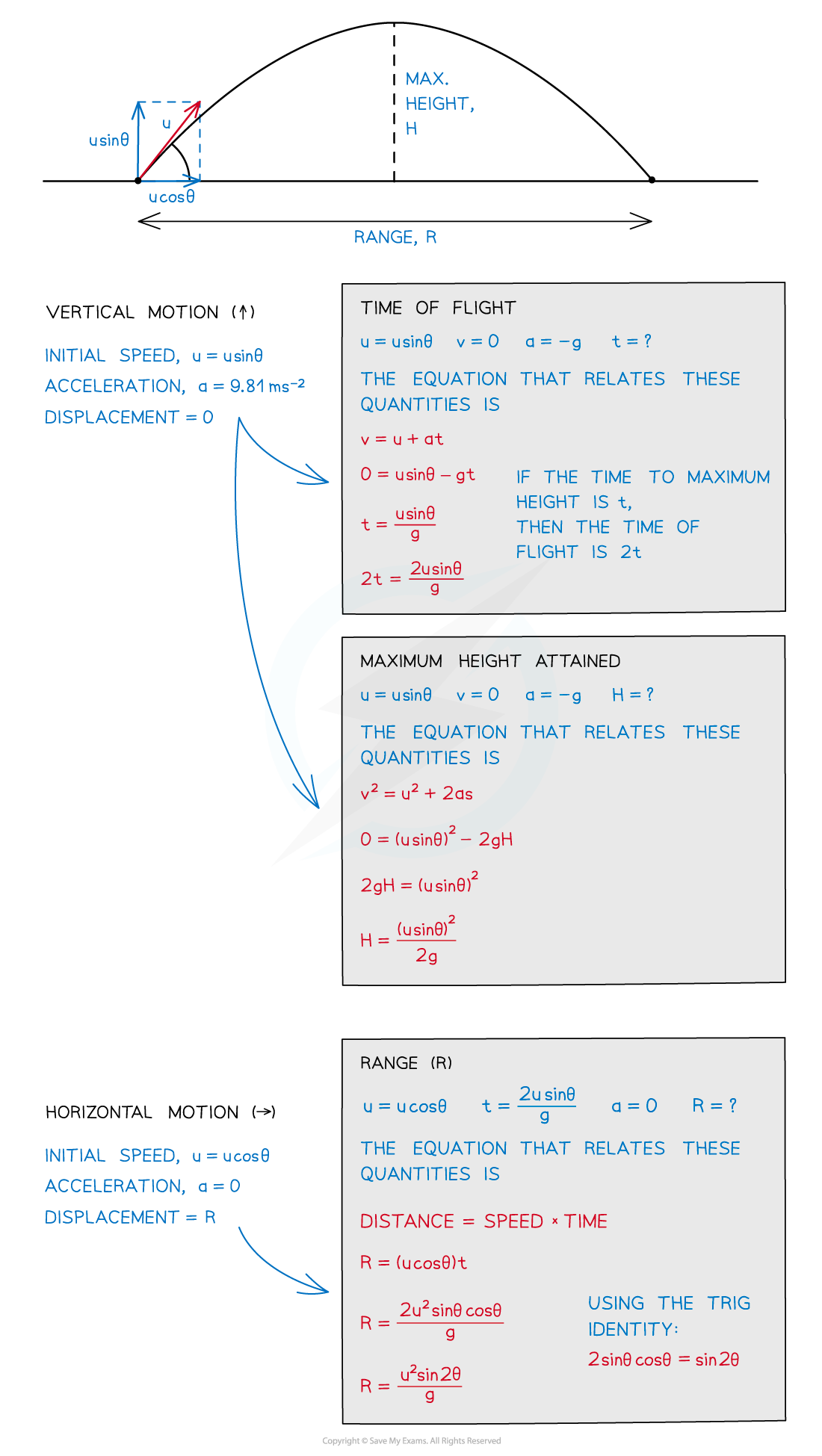
How to find the time of flight, maximum height and range
Problems Involving Projectile Motion
- There are two main considerations for solving problems involving two-dimensional motion of a projectile
- Constant velocity in the horizontal direction
- Constant acceleration in a perpendicular direction
- The only force acting on the projectile, after it has been released, is gravity
- There are three possible scenarios for projectile motion:
- Vertical projection
- Horizontal projection
- Projection at an angle
Worked Example
To Calculate Vertical Projection (Free Fall)
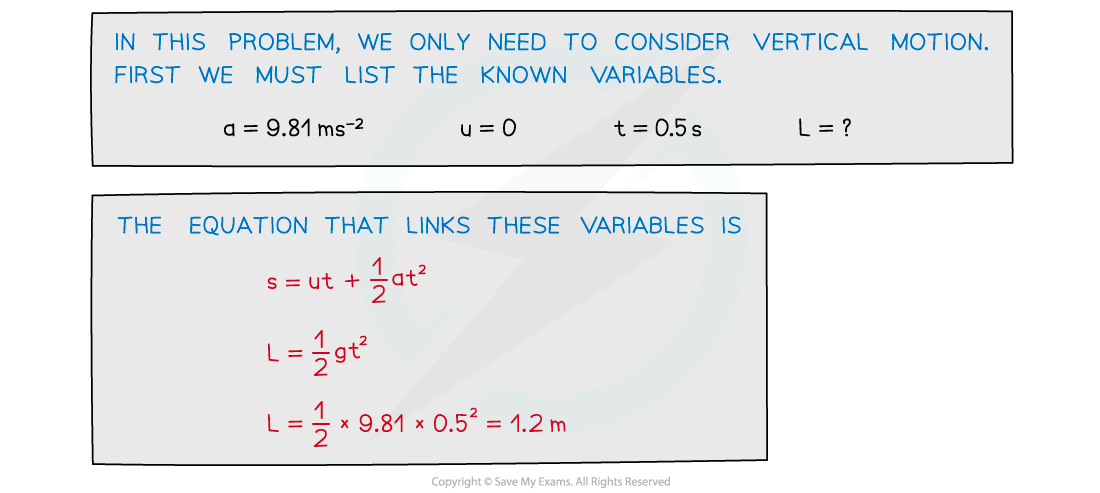
A science museum designed an experiment to show the fall of a feather in a vertical glass vacuum tube.
The time of fall from rest is 0.5 s.

What is the length of the tube, L?
Worked Example
To Calculate Horizontal Projection
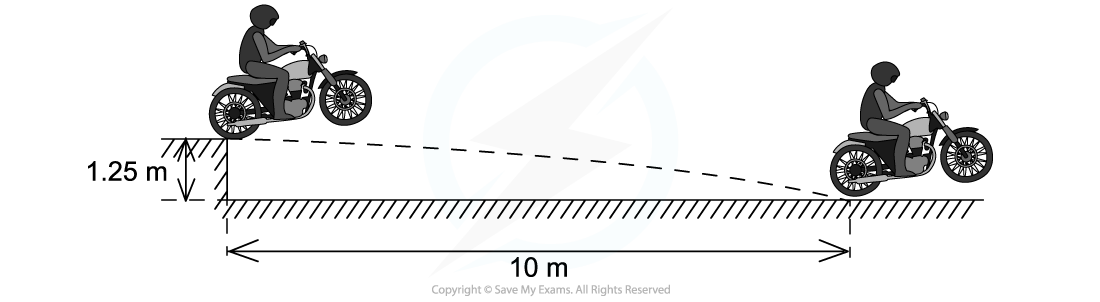
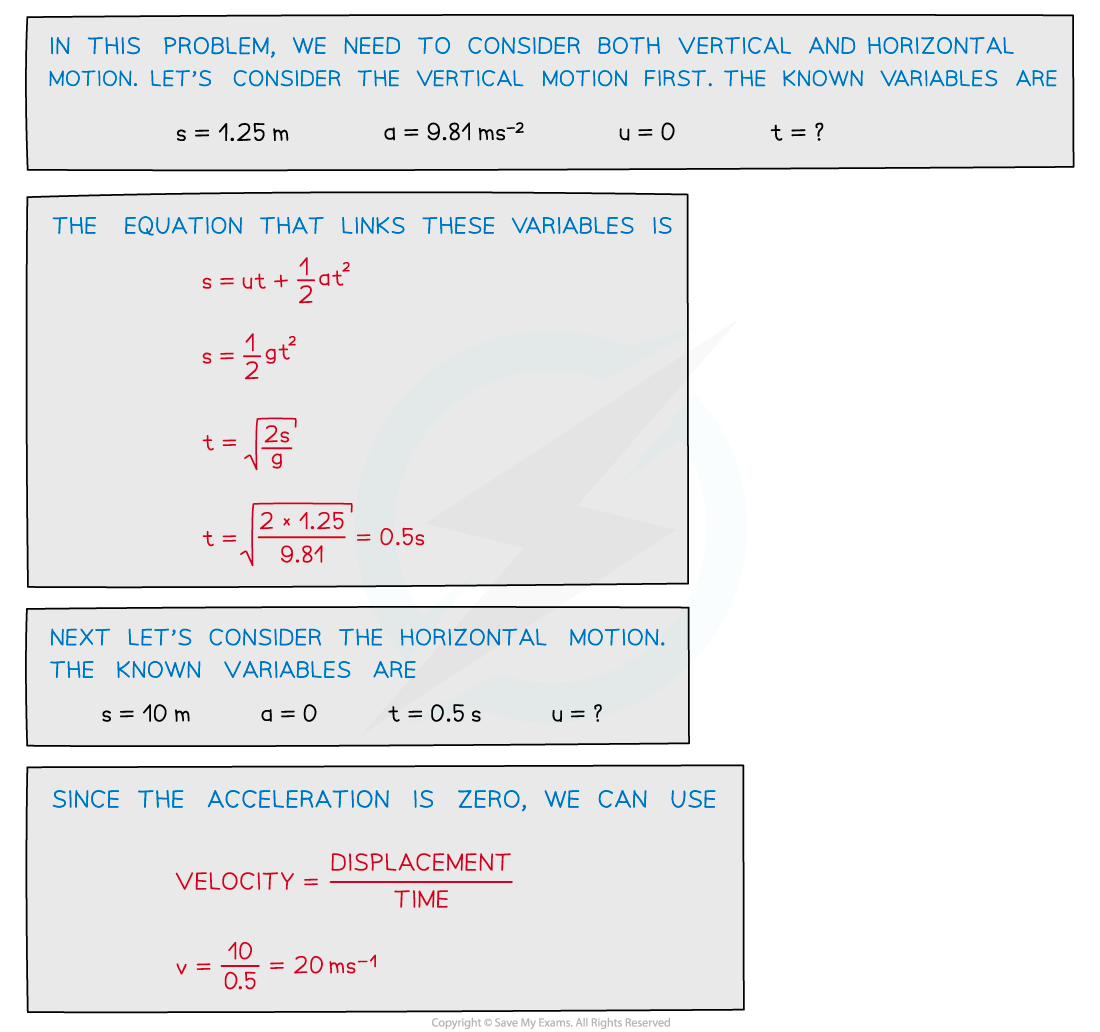
A motorcycle stunt-rider moving horizontally takes off from a point 1.25 m above the ground, landing 10 m away as shown.
What was the speed at take-off? (ignoring air resistance)
Worked Example
To calculate projection at an angle
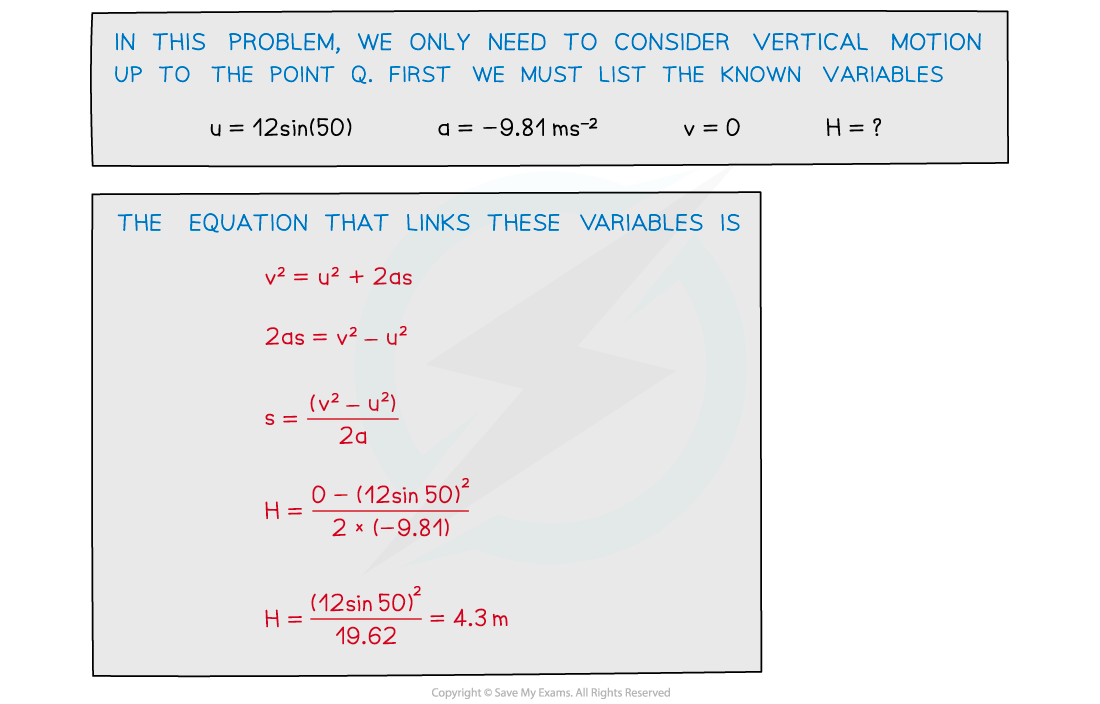
A ball is thrown from a point P with an initial velocity u of 12 m s-1 at 50° to the horizontal.
What is the value of the maximum height at Q? (ignoring air resistance)

Exam Tip
In almost every question using the SUVAT equations one component of velocity will have constant acceleration (for example, the vertical component of projectile motion) and the other will have no acceleration (for example the horizontal component of projectile motion when we ignore air resistance).
The trick which you nearly always have to remember is find the common value - time - first, then substitute it into the second part of your calculation.
As long as your working is clear, even if you forget, you are likely to still achieve half marks. But writing good clear Maths and remembering this tip should get you to the end of your calculation - and full marks!
And finally.... don't forget that deceleration is negative as the object rises.
转载自savemyexams
以上就是关于【Edexcel A Level Physics:复习笔记2.7 Projectiles】的解答,如需了解学校/赛事/课程动态,可至翰林教育官网获取更多信息。
往期文章阅读推荐:
哈佛商学院2026假期书单曝光!十余位教授私藏书单,本本是“商科天花板”!


翰林AMC8视频课重磅上线!

国际竞赛真题资源免费领取






