IB DP Biology: HL复习笔记2.8.4 Skills: Separating Photosynthetic Pigments

Practical 4: Separation of Photosynthetic Pigments
Separation of photosynthetic pigments by chromatography
- Plants contain several different photosynthetic pigments, which absorb different wavelengths of light
- There are two groups of pigments: chlorophylls and carotenoids
- Carotenoids surround the chlorophyll and absorb both similar and different wavelengths of light to chlorophyll
- This expands the range of wavelengths that can be absorbed from light for use in photosynthesis
Chloroplast Pigments Table
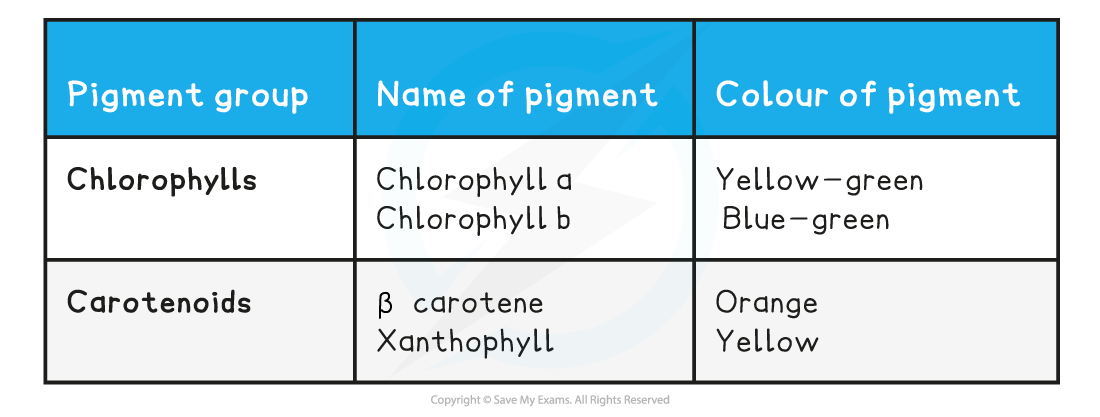
- Chlorophylls absorb wavelengths in the blue-violet and red regions of the light spectrum
- They reflect green light, causing plants to appear green
Carotenoids absorb wavelengths of light mainly in the blue-violet region of the spectrum
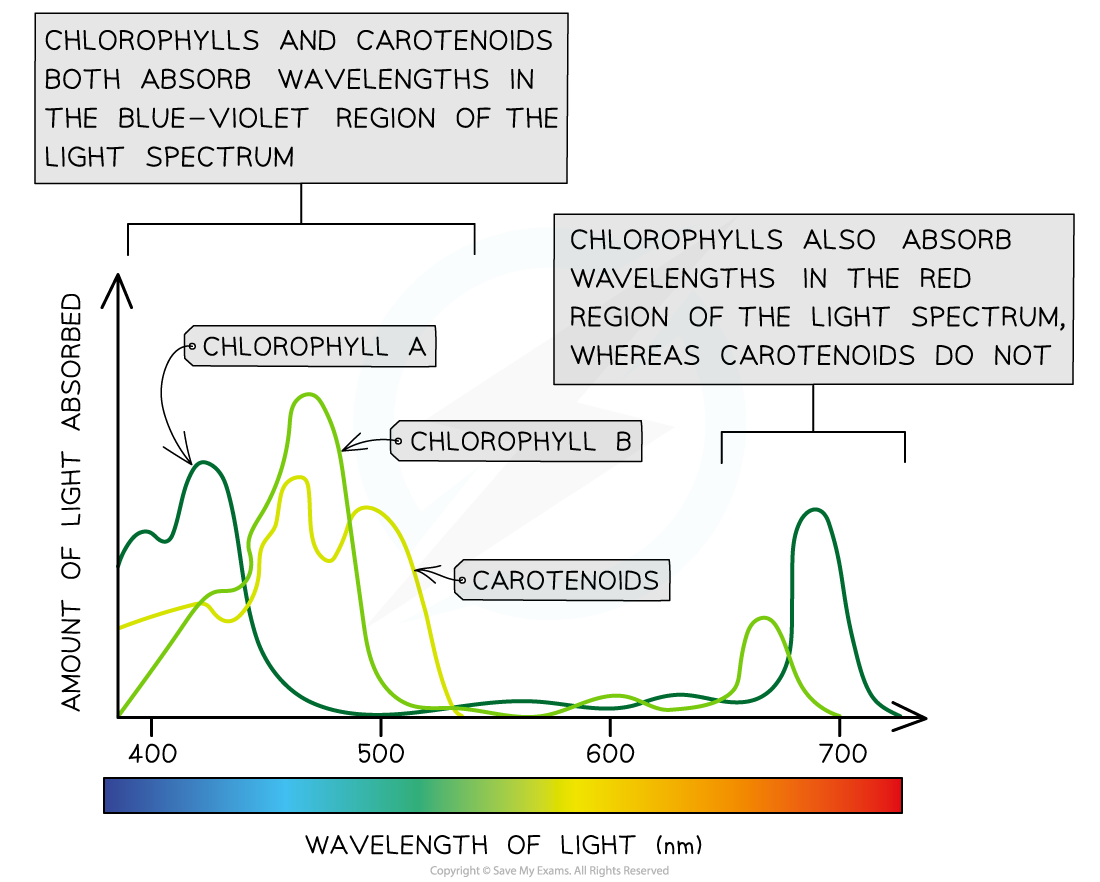
Chlorophyll and carotenoids absorb light across the visible light spectrum to use in the light-dependent reaction of photosynthesis
Chromatography
- Chromatography is an experimental technique that is used to separate mixtures
- Different components within the mixture travel through the material at different speeds
- This causes the different components to separate
- A retardation factor (Rf value) can be calculated for each component of the mixture
Two of the most common techniques for separating these photosynthetic pigments are:
- Paper chromatography – the mixture of pigments is passed through paper (cellulose)
- Thin-layer chromatography (TLC)– the mixture of pigments is passed through a thin layer of adsorbent (eg. silica gel), through which the mixture travels faster and separates more distinctly
Paper chromatography can be used to separate photosynthetic pigments although TLC gives better results
Apparatus
- Leaf sample
- Distilled water
- Pestle and mortar
- Filter paper
- Capillary tube
- Chromatography solvent
- Propanone
- Pencil
- Ruler
Method
- Draw a straight line in pencil approximately 1cm above the bottom of the filter paper being used
- Do not use a pen as the ink will separate into pigments within the experiment and obscure the results
Cut a section of leaf and place it in a mortar
- It is important to choose a healthy leaf that has been in direct sunlight so you can be sure it contains many active photosynthetic cells
Add 20 drops of propanone and use the pestle to grind up the leaf sample and release the pigments
- Propanone is an organic solvent and therefore fats, such as the lipid membrane, dissolve in it
- The combination of propanone and mechanical pressure breaks down the cell and chloroplasts to release the pigments
Extract some of the pigment using a capillary tube and spot it onto the centre of the pencil line you have drawn
- Suspend the paper in the chromatography solvent so that the level of the solvent is below the pencil line and leave the paper until the solvent has reached the top of the paper
- The mixture is dissolved in the solvent (called the mobile phase) and the dissolved mixture then passes through a static material (called the stationary phase)
Remove the paper from the solvent and draw a pencil line marking where the solvent moved up to
- The pigment should have separated out and there should be different spots on the paper at different heights above the pencil line, these are the separate pigments
Calculate the Rf value for each spot

-
- Always measure to the centre of each spot
Results
- Chromatography can be used to separate and identify chloroplast pigments that have been extracted from a leaf as each pigment will have a unique Rf value
- The Rf value demonstrates how far a dissolved pigment travels through the stationary phase
- Molecules with a higher affinity to the stationary phase, such as large molecules, will travel slower and therefore have a smaller Rf value
- Molecules that are more soluble in the mobile phase will travel faster and therefore have a larger Rf value
Although specific Rf values depend on the solvent that is being used, in general:
- Carotenoids have the highest Rf values (usually close to 1)
- Chlorophyll b has a much lower Rf value
- Chlorophyll a has an Rf value somewhere between those of carotenoids and chlorophyll b
- Small Rf values indicate the pigment is less soluble and/or larger in size
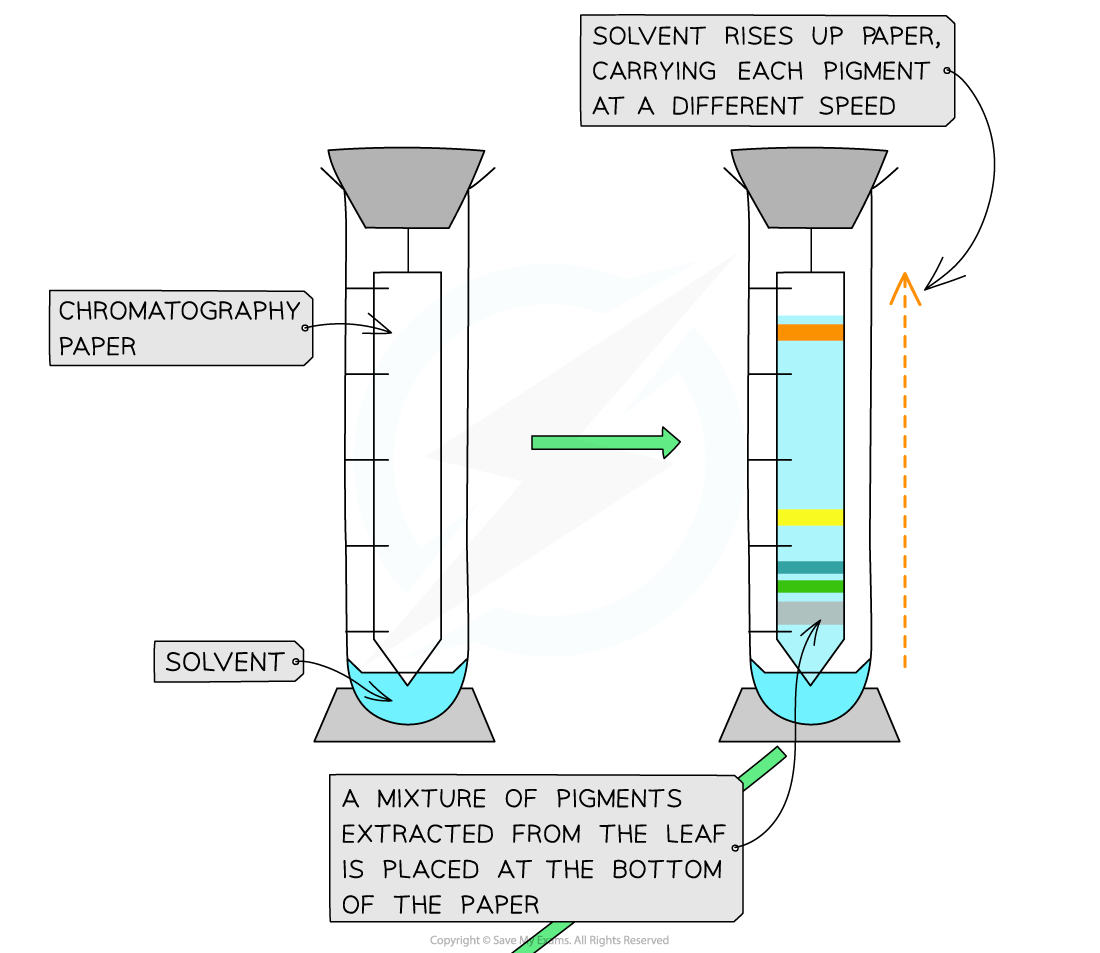
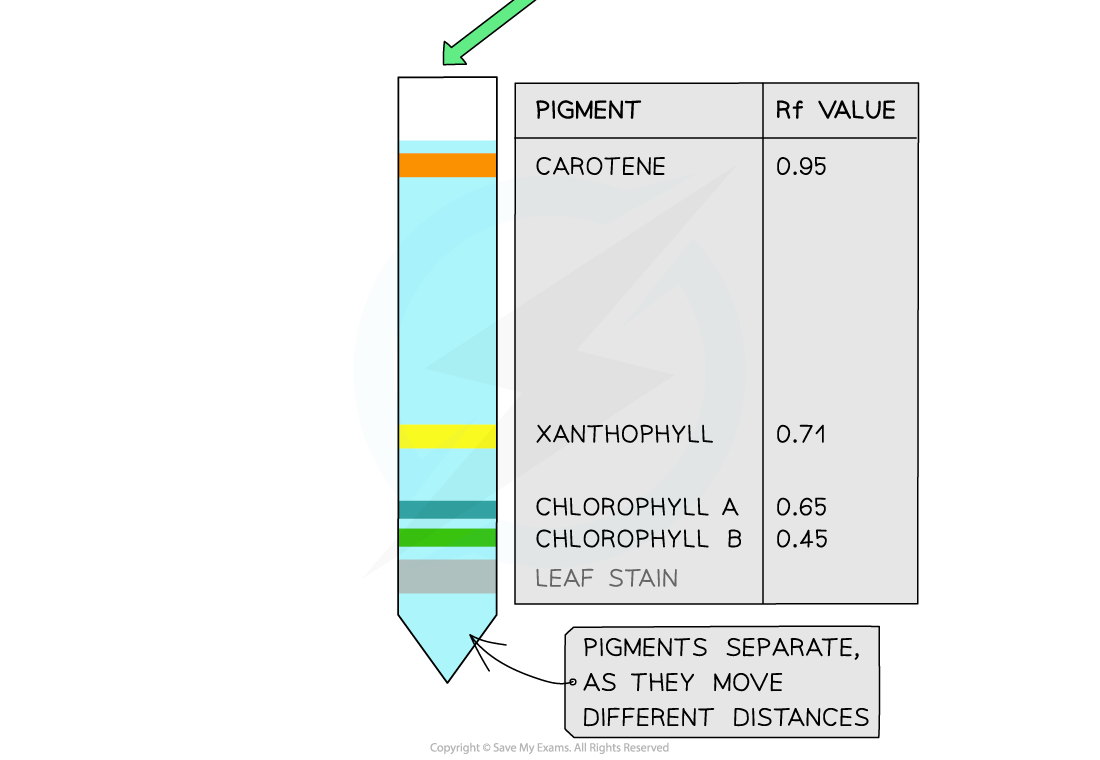
Paper chromatography is used to separate photosynthetic pigments. These pigments can be identified by their Rf values. In this example, a line of the mixture (rather than a spot) is added to the paper.
Limitations
- Paper chromatography is not as specific as other chromatography techniques
- It is sufficient to separate and distinguish different pigments and to calculate their Rf value
Chromatography does not give data on the amount of each pigment present or the wavelengths that they absorb
- Colorimetry can be used to calculate these values
Exam Tip
Remember – the pigments themselves have colour (as described in the table). This is different from the colours of light that they absorb. You don't have to remember specific Rf values, just know that they differ between each type of pigment.
转载自savemyexams
以上就是关于【IB DP Biology: HL复习笔记2.8.4 Skills: Separating Photosynthetic Pigments】的解答,如需了解学校/赛事/课程动态,可至翰林教育官网获取更多信息。
往期文章阅读推荐:
翰林独家 | 经济学竞赛核心精讲,一册打通NEC/IEO/USAEBO!
2026 AMC10/12美国数学竞赛新赛季!【翰林教育 × 清华大学出版社】独家教材全面发售!


翰林AMC8视频课重磅上线!

国际竞赛真题资源免费领取






